

 English
 日本語
日本語 русский


What Is a Side Entry Mixer and How Does It Work in Industrial Tanks?
Content
- 1 ▎ Direct Answer: What Is a Side Entry Mixer?
- 2 ▎ Side Entry Mixer Working Principle — How It Moves Fluid
- 3 ▎ Why Choose a Side Entry Mixer? — Key Advantages
- 4 ▎ Performance Data — Side Entry Mixer in Numbers
- 5 ▎ Industrial Applications — Where Side Entry Mixers Excel
- 6 ▎ CFD-Optimized Design — Precision Engineering
- 7 ▎ How to Select the Right Side Entry Mixer
- 8 ▎ Maintenance & Reliability — Built to Last
- 9 ▎ Frequently Asked Questions
- 10 ▎ About WUXI TOP MIXER — Your Trusted Side Entry Mixer Manufacturer
▎ Direct Answer: What Is a Side Entry Mixer?
A side entry mixer is an industrial agitation device mounted horizontally through the sidewall of a tank or vessel, near the bottom. Its primary function is to generate a powerful horizontal liquid jet that drives full-volume circulation, prevents solids from settling, and maintains temperature uniformity in large storage tanks — typically from 100 m³ up to 200,000 m³ .
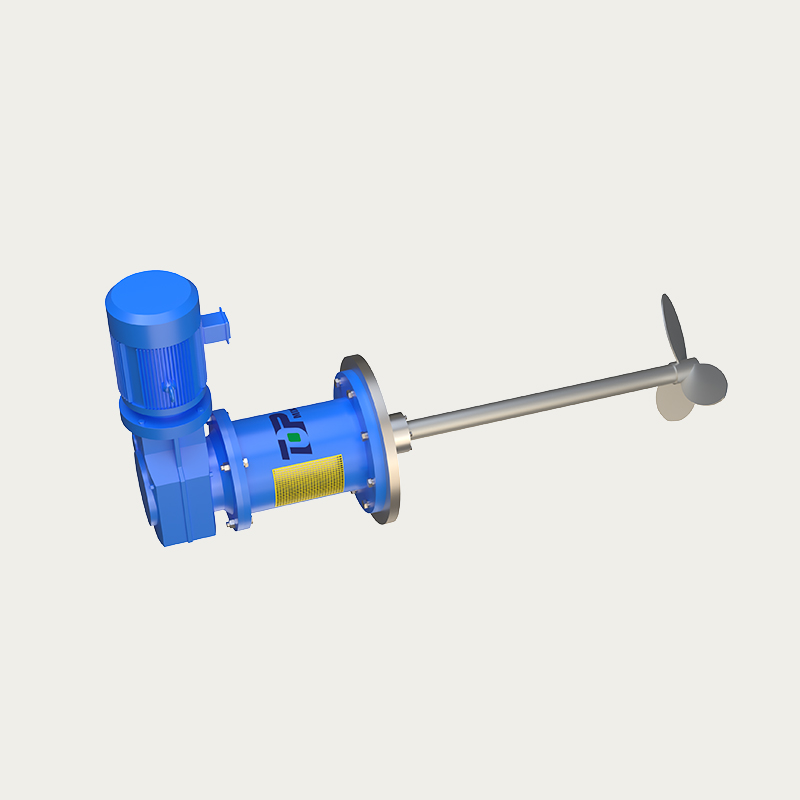
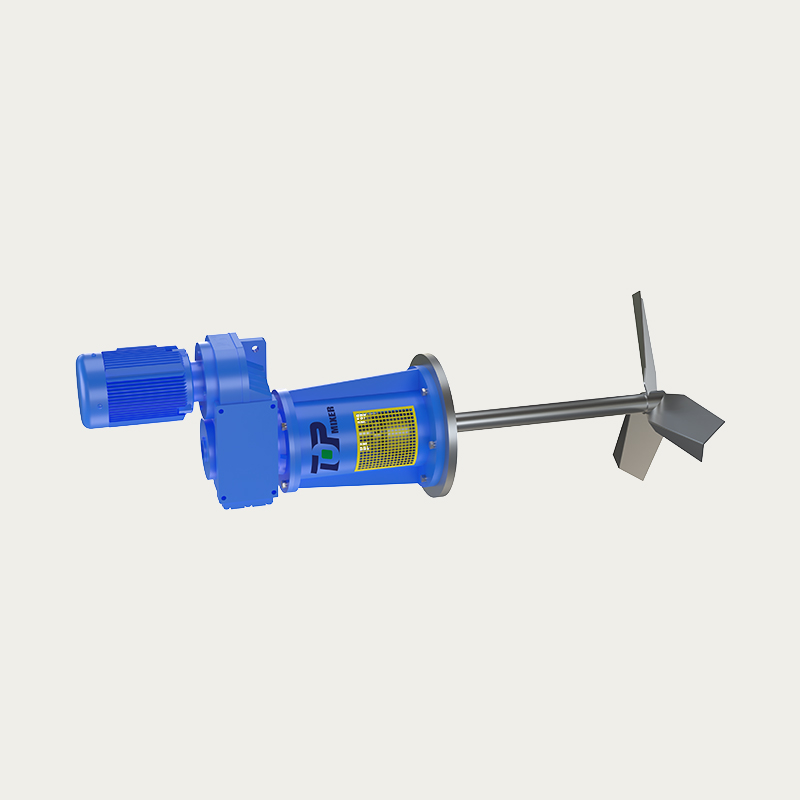
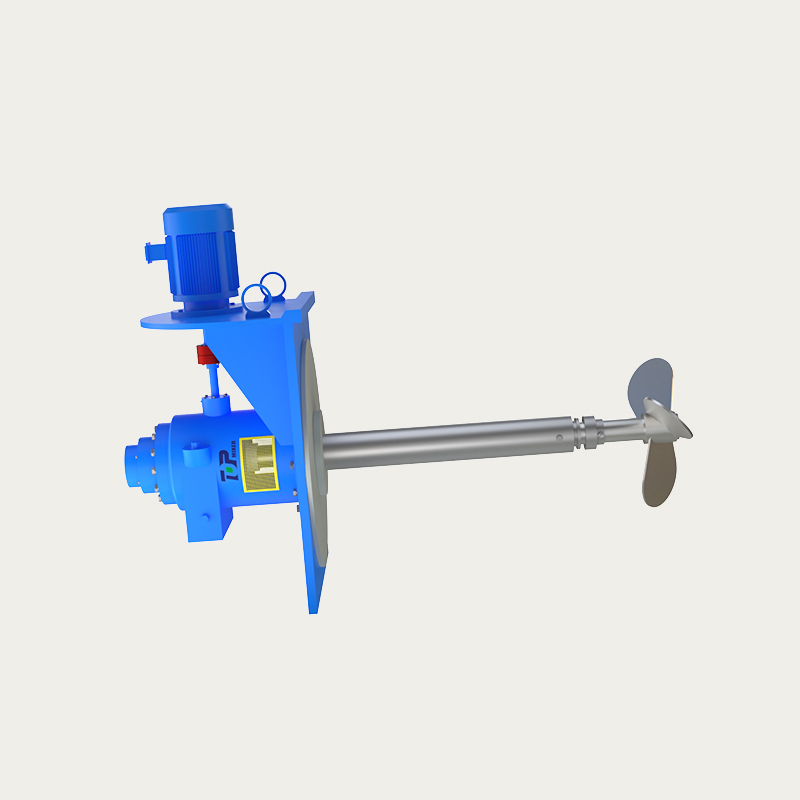
The side entry mixer working principle revolves around an externally mounted motor driving a shaft with a high-efficiency impeller (often hydrofoil or propeller type). The impeller creates an axial or mixed-flow pattern that sweeps the tank floor, suspending solids and eliminating dead zones. Unlike top-entry agitators, side-entry designs are compact, energy-efficient, and serviceable without draining the tank — making them the preferred choice for crude oil terminals, chemical storage, wastewater treatment, and biofuel facilities.
▎ Side Entry Mixer Working Principle — How It Moves Fluid
The side entry mixer working principle can be broken down into five sequential stages that together create a continuous, energy-efficient circulation loop inside the tank.
- Motor drives the shaft — An external motor (0.75–90 kW) rotates the horizontal shaft that enters the tank through a wall-mounted nozzle.
- Impeller generates axial jet — A hydrofoil or marine propeller impeller converts rotational energy into a high-velocity axial flow jet.
- Jet sweeps the tank floor — Mounted near the bottom (often angled 10°–15° downward), the jet prevents sediment accumulation and keeps solids in suspension.
- Full-volume circulation — The jet travels across the tank, rises along the opposite wall, and returns along the top, creating a toroidal flow pattern that homogenizes the entire contents.
- Continuous motion eliminates dead zones — CFD-optimized mixer placement ensures no stagnant areas, maintaining uniform temperature, density, and composition.
Flow Distribution: Side Entry vs. Static Tank
▎ Why Choose a Side Entry Mixer? — Key Advantages
Energy Efficiency
Proprietary impellers like the SABRE 4-blade deliver 15–20% energy savings over traditional designs. Field performance tests confirmed 16% annual power cost reduction in 5,000 m³ crude oil tanks.
Maintenance Without Draining
Tank shut-off devices and cartridge seals allow seal and bearing replacement while the tank remains full. Downtime is minimized to under 2 hours for routine service.
Space-Saving Design
Compact side-entry mixers fit thin-walled tanks and confined spaces where top-entry units cannot be installed. No structural reinforcements or overhead clearance required.
Superior Sediment Control
Continuous horizontal sweeping prevents BS&W (bottom sediment & water) buildup, eliminating costly tank cleanouts and maximizing working volume.
▎ Performance Data — Side Entry Mixer in Numbers
The side entry mixer working principle translates into measurable performance metrics. Below are key data points drawn from industry CFD studies and field reports.
Power Consumption Comparison (Relative Units)
| Parameter | Small / Compact | Medium Duty | Heavy Duty |
|---|---|---|---|
| Motor Power | 0.75 – 5.5 kW | 1.5 – 15 kW | 4 – 90 kW |
| Tank Capacity | Up to 5,000 m³ | Up to 20,000 m³ | Up to 200,000 m³ |
| Impeller Diameter | 200 – 400 mm | 400 – 600 mm | Up to 1,200 mm |
| Max Temperature | 100 °C | 150 °C | 250 °C |
▎ Industrial Applications — Where Side Entry Mixers Excel
The side entry mixer working principle makes it particularly effective for large-volume, low-to-medium viscosity liquids. Key industries include:
- Oil & Gas — Crude oil storage, BS&W control, preventing sanding-in
- Chemical Processing — Homogenization, blending, temperature uniformity
- Water & Wastewater Treatment — Sludge suspension, aerobic digestion
- Biofuels & Renewable Oils — Additive preparation, storage homogenization
- Food & Edible Oils — Preventing crystallization, maintaining consistency
Global Side-Entry Mixer Market Growth (USD Billion)
▎ CFD-Optimized Design — Precision Engineering
Modern side entry mixer selection relies on Computational Fluid Dynamics (CFD) to predict flow patterns, optimize impeller placement, and validate performance before manufacturing. CFD simulations analyze variables such as:
- Stirrer entry angle (typically 0°–45°)
- Impeller type and diameter
- Tank geometry and liquid height-to-diameter ratio
- Fluid viscosity and density
Side Entry Mixer — Performance Radar
▎ How to Select the Right Side Entry Mixer
Choosing the correct industrial side entry mixer requires evaluating five key parameters:
- Tank volume and geometry — From 100 m³ to 200,000 m³
- Fluid viscosity — Low to medium (up to ~5,000 cP)
- Mixing objective — Solids suspension, blending, heat transfer, or BS&W control
- Installation constraints — Wall thickness, access space, floating roof
- Maintenance strategy — Need for seal replacement without draining
| Application | Recommended Type | Key Feature |
|---|---|---|
| Crude oil storage | Heavy-duty swivel | BS&W suspension |
| Chemical blending | Fixed-angle propeller | Homogeneity |
| Wastewater treatment | Compact SRMix | Space-saving |
| Biofuel storage | Belt-drive STM | Low shear |
▎ Maintenance & Reliability — Built to Last
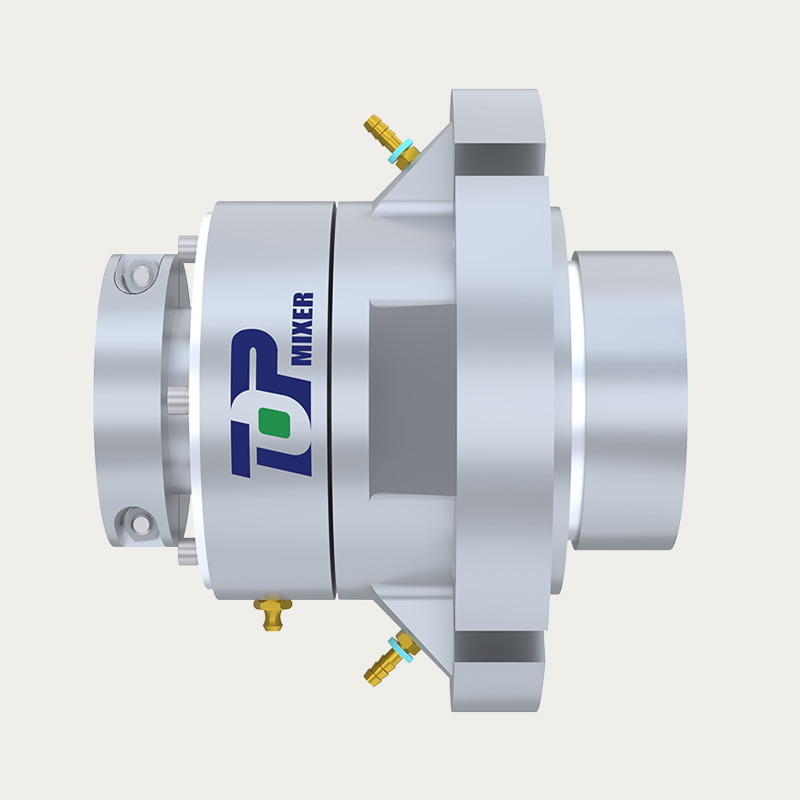
Side entry mixer reliability is further enhanced by stainless steel shafts that eliminate corrosion, cartridge mechanical seals for leak prevention, and tank shut-off mechanisms that allow safe maintenance under full-tank conditions.
▎ Frequently Asked Questions
Q1 — What is a side entry agitator used for?
It is used for blending, homogenization, solids suspension, and temperature uniformity in large storage tanks, particularly in oil, chemical, and wastewater applications.
Q2 — How deep can a side entry mixer work?
Depth is determined by tank liquid level, not by mixer itself. Side entry mixers are mounted near the bottom and can operate in tanks with liquid heights exceeding 20 meters.
Q3 — What is the difference between an agitator and a mixer?
The terms are often used interchangeably. In industrial contexts, "mixer" typically refers to the complete assembly (motor, shaft, impeller), while "agitator" emphasizes the impeller's action on the fluid.
Q4 — How much power does a side entry mixer need?
Motor power ranges from 0.75 kW for compact models up to 90 kW for heavy-duty industrial applications.
Q5 — Can side entry mixers be customized for different tanks?
Yes. Side entry mixer manufacturers offer custom impeller diameters, shaft lengths, motor powers, and materials (304L, 316L stainless steel).
Q6 — What materials are used for side entry mixer components?
Wetted parts are typically 304L or 316L stainless steel. Shafts are stainless steel for corrosion resistance. Carbon steel options are also available.
▎ About WUXI TOP MIXER — Your Trusted Side Entry Mixer Manufacturer
WUXI TOP MIXER EQUIPMENT CO., LTD., established in 2003, is a professional side entry mixer manufacturer and supplier based in Wuxi, China — in the Yangtze River Delta economic zone. As a technical company specializing in fluid, powder, and slurry mixing equipment R&D, design, and production, TOP MIXER serves industries worldwide with industrial side entry mixers for storage tanks, large tanks, and process vessels.
The company operates four dedicated divisions: Powder Slurry, Biomass Energy & Environmental Protection, Food & Pharmaceutical, and Fine Chemical Mixing. With ISO9001 certification and 5S management, TOP MIXER delivers side entry tank mixers and horizontal side entry mixers that are reliable, economical, and tailored to demanding industrial environments.
Products exported to USA, Russia, Europe, Southeast Asia & 30+ Chinese provinces


- No. 118, Chuangye Road, Jieshou Town, Gaoyou City, Yangzhou, Jiangsu Province, China
- [email protected]
- Landline: +86-0510-83383966 +86-0510-83390667
- Telphone: +86-0510-83390667
- Mr. Chen: +86-18061519769 Mr. Xu: +86-13706183972
- Mr. Lu: +86-18915337056
- Product Link
- Top-Entry Mixer
- Bottom-Entry Mixer
- Side-Entry Mixer
- SIGN UP
- Sign up to be the first to find out the latest news from Top Intelligent Technology
- Subscribe

