

 English
 日本語
日本語 русский


Top Entry Mixer Buying Guide: Everything Engineers Need to Know
Content
- 1 What a Top Entry Mixer Does and When Engineers Should Specify One
- 2 Top-Entry Mixer, Top-Feed Mixer, and Related Terms Explained
- 3 How an Industrial Top Entry Mixer Works: Core Components
- 4 Selecting the Right Top Entry Mixer: Key Engineering Parameters
- 5 Matching Mixing Speed to Fluid Viscosity for a High Viscosity Tank Mixer
- 6 Industry Applications of Top Entry and Top-Feed Mixers
- 7 Material and Enclosure Selection: Stainless Steel and Explosion Proof Options
- 8 Comparing Mounting Types: Top Entry, Side Entry, and Bottom Entry Mixers
- 9 Maintenance Planning and Reliability for Top Mounted Mixers
- 10 Installation Guidelines for Heavy Duty Industrial Mixer Systems
- 11 Working With a Top Entry Mixer Manufacturer
- 12 Frequently Asked Questions
- 12.1 Q1: What is a top entry mixer
- 12.2 Q2: How does a top entry mixer work
- 12.3 Q3: What is a top-feed mixer
- 12.4 Q4: What is an industrial agitator
- 12.5 Q5: What is tank agitation
- 12.6 Q6: How do I choose the right top entry mixer for my tank
- 12.7 Q7: What is the difference between a top entry mixer and a side entry mixer
- 12.8 Q8: Can a top entry mixer handle high viscosity fluids
- 12.9 Q9: What industries use top entry mixers
- 12.10 Q10: How often should a top entry mixer be serviced
- 12.11 Q11: Does a top entry mixer manufacturer offer custom designs
- 12.12 Q12: What is the role of the gear reducer in a top mounted agitator
What a Top Entry Mixer Does and When Engineers Should Specify One
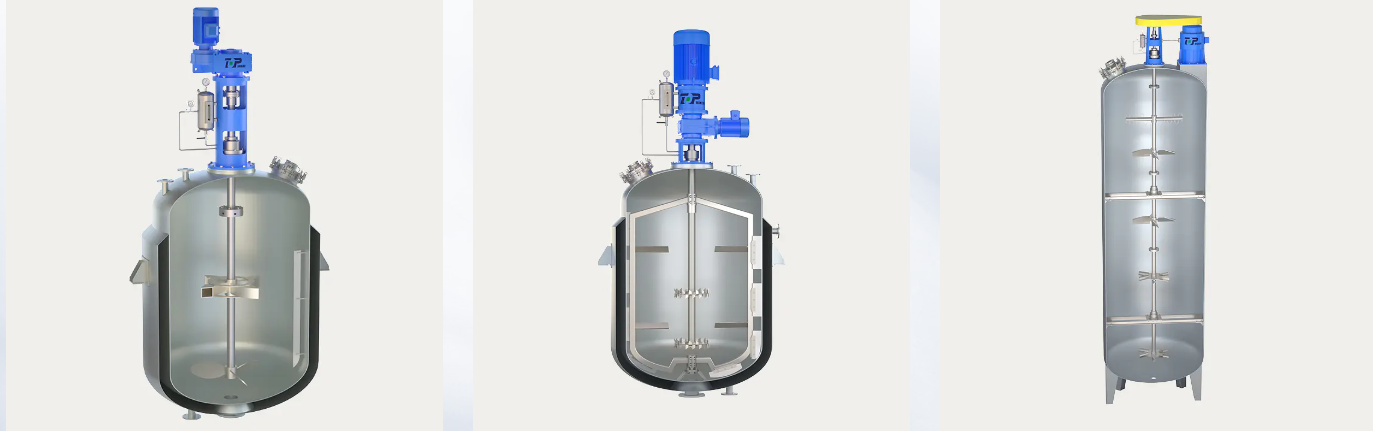
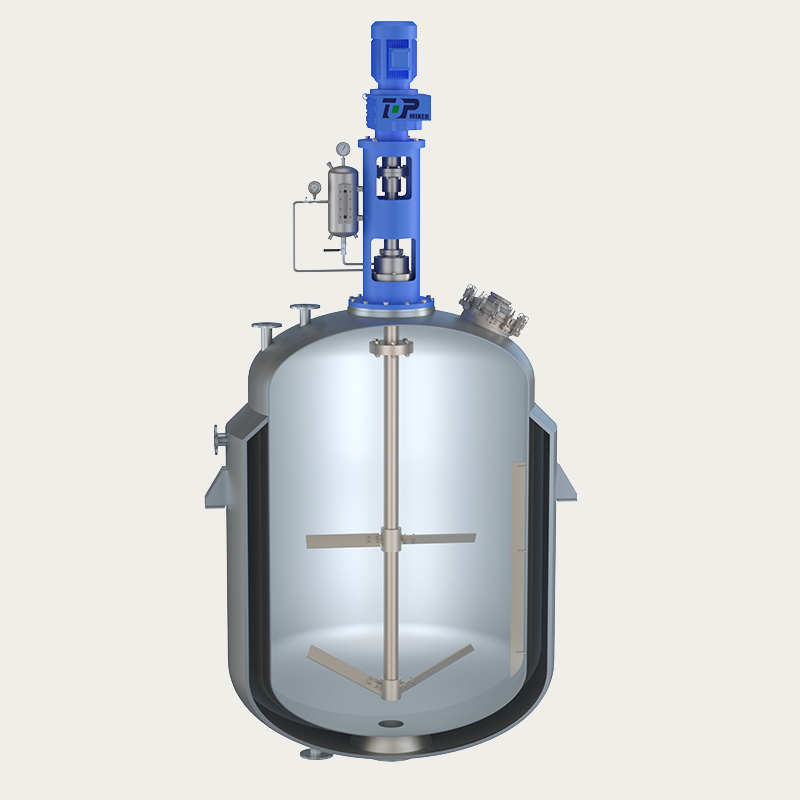
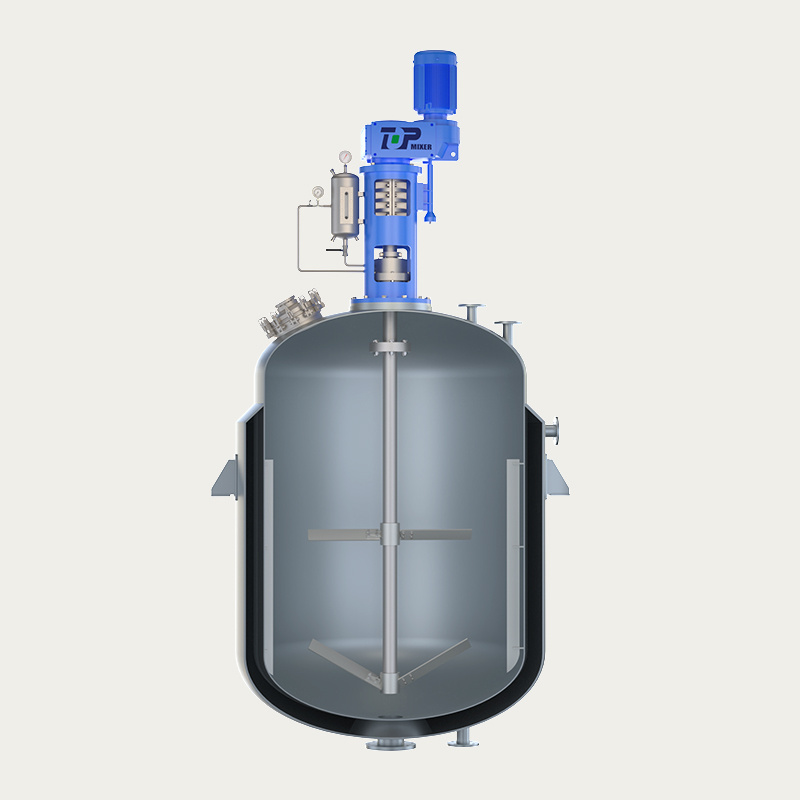
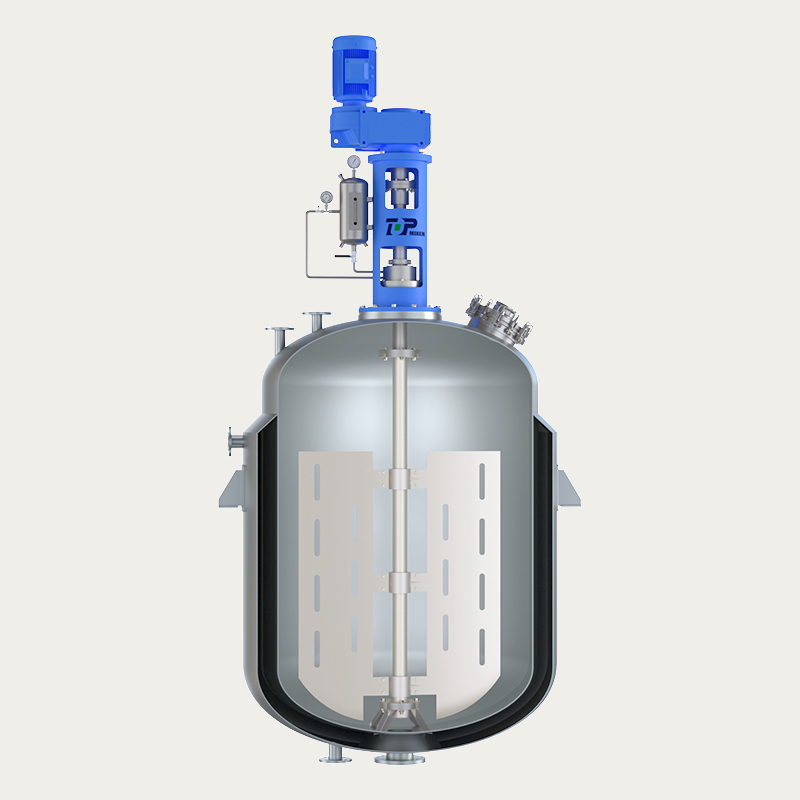
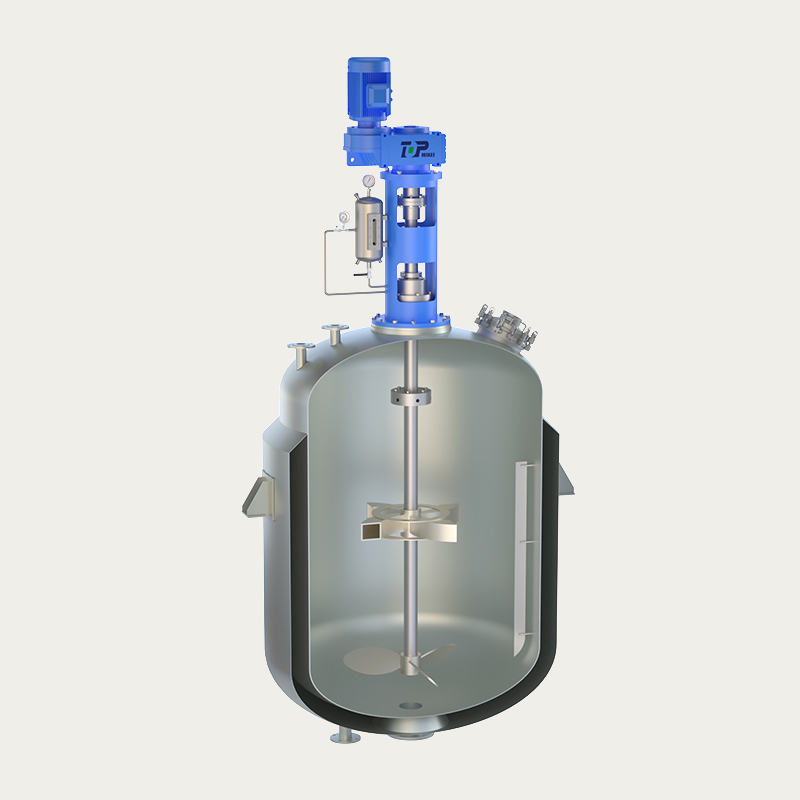
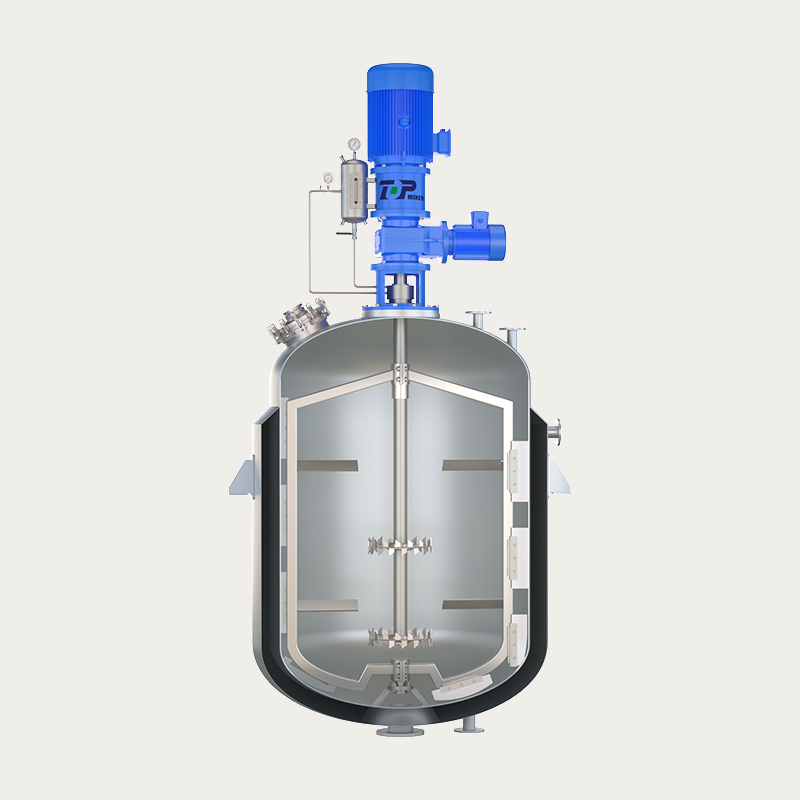
A top entry mixer is an agitator assembly mounted through an opening in the top of a tank or vessel, with a vertical shaft running down into the process fluid and one or more impellers submerged in the liquid. The drive motor and gear reducer sit above the tank roof or on a support bridge, turning the shaft from above rather than from the side or bottom. In many procurement documents and mechanical data sheets the same equipment is labeled a top-feed mixer, a term that emphasizes how material, powder, or additive streams often enter the vessel from the top while the impeller blends the contents below.
For engineers comparing agitation configurations, the short answer is this: a top entry mixer is generally the configuration to specify when a tank holds more than a few thousand liters, when the process calls for more than one impeller stage along the shaft, when full access to the tank bottom is needed for other nozzles or cleaning equipment, or when the fluid viscosity and solids loading vary across a wide range during the batch cycle. Side entry and bottom entry mixers remain useful in narrower application windows, but the top-entry and top-feed families cover the largest share of general industrial blending, storage tank mixing, and reactor agitation duties.
The sections below walk through sizing logic, impeller selection, material choices, mounting practices, and maintenance planning that engineers typically need before finalizing a top entry mixer specification for a chemical tank, a wastewater basin, a food batching vessel, or a bulk water storage tank.
Top-Entry Mixer, Top-Feed Mixer, and Related Terms Explained
Procurement paperwork for mixing equipment uses several overlapping terms, and engineers new to a project sometimes assume they refer to different machines when they do not. The table below summarizes how the terminology is commonly applied across mechanical drawings, tender documents, and maintenance manuals.
| Term | What It Usually Means | Typical Usage Context |
|---|---|---|
| Top-Entry Mixer | Agitator mounted through the tank top, shaft and impeller extending downward | Chemical, water, food, and biomass processing tanks |
| Top-Feed Mixer | Same top-mounted configuration, often used when material feeds into the vessel from above | Powder and slurry blending, batch tank specifications |
| Top Mounted Agitator | Alternative wording for the same equipment family | Mechanical drawings and engineering data sheets |
| Top Mounted Mixer | General descriptive term covering top-entry and top-feed configurations together | Plant layout drawings and maintenance manuals |
In practice, a purchasing engineer will see all four terms used almost interchangeably within the same request for quotation. What matters more than the label is the underlying mechanical detail: shaft length, impeller stages, seal type, and mounting flange rating, all of which are covered in the sections that follow.
How an Industrial Top Entry Mixer Works: Core Components
An industrial top entry mixer is built from a small set of components that repeat across almost every size and application. Understanding each part helps engineers read a mechanical data sheet quickly and spot mismatches between the process requirement and the proposed hardware.
Motor and Gear Reducer
The motor supplies rotational power, and because process mixing usually requires far lower shaft speed than a standard motor produces, a gear reducer steps the speed down while multiplying torque. Reducer selection is one of the most important decisions in the whole assembly because torque, not raw horsepower, is what actually moves a viscous or solids-laden fluid.
Mixer Shaft and Coupling
The shaft carries torque from the reducer down through the tank top into the fluid. Shaft length, diameter, and the number of support bearings all depend on liquid depth and the natural whip frequency of the shaft under load. Long shafts on tall tanks often need an intermediate steady bearing to avoid resonance near operating speed.
Impeller Configurations
Impeller choice depends on the mixing objective and the fluid rheology. Common types include:
- Pitched blade turbines for general blending and moderate solids suspension
- Hydrofoil impellers for energy efficient bulk flow in low to medium viscosity fluids
- Flat blade or Rushton style turbines for gas dispersion and higher shear duties
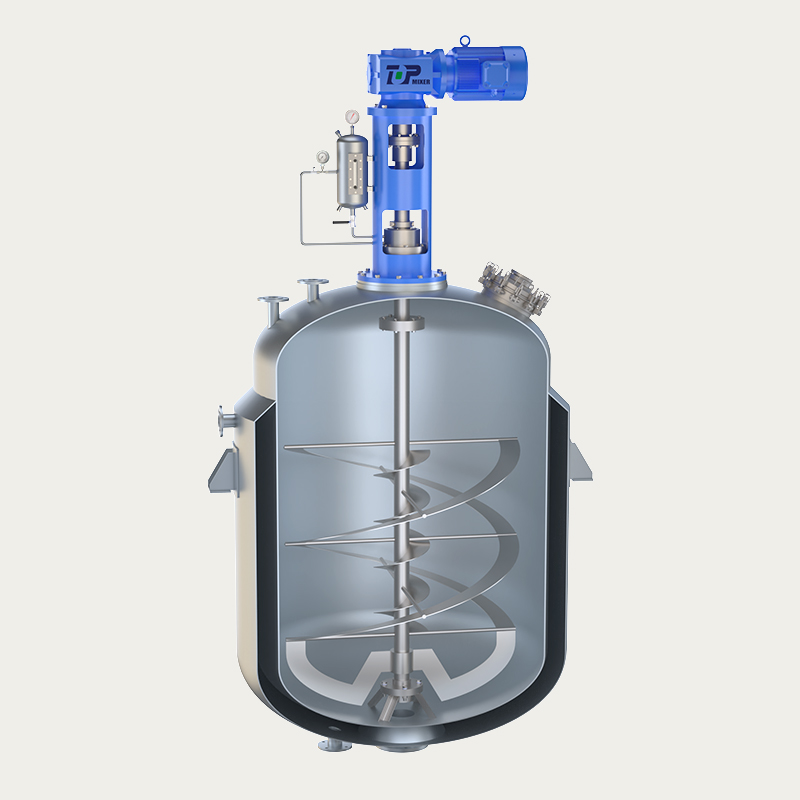
- Anchor and helical ribbon impellers for high viscosity tank mixer service where fluid barely moves away from the wall
Mounting Flange and Shaft Seal
The mounting flange transfers the full weight and bending moment of the mixer into the tank structure, so flange rating and bolt pattern must match both the mixer load and the tank roof design. The shaft seal, whether a simple lip seal, a stuffing box, or a mechanical seal, keeps the process fluid contained and keeps outside contamination out of open tanks.
Selecting the Right Top Entry Mixer: Key Engineering Parameters
Before requesting a quotation, an engineer typically gathers a short list of process parameters. Tank geometry, fluid viscosity, specific gravity, and solids content together determine the torque and power a top entry mixer needs to deliver, and skipping any one of them tends to produce an undersized or oversized machine.
| Parameter | Typical Range | Engineering Consideration |
|---|---|---|
| Tank Diameter | 1 m to 12 m | Sets impeller diameter ratio and shaft length |
| Liquid Depth | 0.8 to 1.5 times tank diameter | Influences how many impeller stages are needed |
| Fluid Viscosity | 1 cP to over 50,000 cP | Determines impeller style and mixing speed range |
| Specific Gravity | 0.6 to 1.9 | Feeds directly into torque and power calculations |
| Solids Content | Up to 40 percent by weight for slurry duty | Affects impeller clearance and wear allowance |
| Torque Requirement | 50 Nm to over 20,000 Nm | Drives gear reducer frame and output rating |
As tank volume grows, required motor power grows with it, but not in a straight line, since larger vessels usually run at lower shaft speed with proportionally higher torque. The chart below shows typical motor power bands engineers reference when scoping a top entry mixer or top-feed mixer against tank volume.
Figure 1: General reference bands for top entry mixer motor power against tank volume. Actual power depends on viscosity, specific gravity, and impeller selection.
Matching Mixing Speed to Fluid Viscosity for a High Viscosity Tank Mixer
Shaft speed and fluid viscosity move in opposite directions. Thin, water-like fluids can be blended effectively at relatively high RPM, while thick pastes and slurries need a high viscosity tank mixer running at low RPM with substantially more torque to avoid stalling the drive train or overloading the shaft. Running a viscous fluid too fast wastes energy and increases shear stress without improving blend quality, while running a thin fluid too slowly extends batch cycle time without benefit.
Figure 2: Speed generally falls as viscosity rises, which is why torque, not speed, becomes the limiting design factor for thick fluids.
Two dimensionless numbers guide this relationship in mixing engineering practice: the mixing Reynolds number, which compares inertial force to viscous force in the tank, and the power number, which links impeller geometry to the power drawn at a given speed. Flow tends to stay laminar at low Reynolds numbers, meaning a helical ribbon or anchor impeller working close to the tank wall becomes far more effective than a small high-speed turbine that would otherwise leave stagnant zones untouched.
Industry Applications of Top Entry and Top-Feed Mixers
Top entry and top-feed mixers appear across a wide span of process industries. The specific impeller, seal, and material selection shifts from one application to the next even though the basic mounting configuration stays the same.
Top Entry Mixer for Chemical Tank Blending
In chemical processing, a top entry mixer for chemical tank duty typically handles reagent blending, pH adjustment tanks, and reaction vessels. Corrosion resistance and seal integrity tend to matter more here than raw power, since many chemical streams are aggressive toward standard carbon steel wetted parts.
Top Entry Mixer for Wastewater Treatment
A top entry mixer for wastewater treatment is commonly installed in equalization basins, neutralization tanks, and chemical dosing tanks at treatment plants. These units usually run continuously, so bearing and seal durability under constant duty becomes a central selection factor.
Top Entry Mixer for Sludge Mixing
Anaerobic digesters and thickening tanks rely on a top entry mixer for sludge mixing to keep solids suspended and prevent stratification. Sludge service often combines moderate viscosity with abrasive solids, favoring robust impeller coatings and wider shaft clearances.
Top Entry Mixer for Water Tank Storage
Potable and process water storage facilities use a top entry mixer for water tank applications mainly to prevent thermal stratification and to keep disinfectant residual evenly distributed throughout the stored volume. Power requirements here are usually modest since the fluid itself is close to water viscosity.
Top Entry Mixer for Food Processing
A top entry mixer for food processing typically prioritizes hygienic design, smooth internal surfaces, and materials that tolerate frequent washdown cycles. Batch consistency and gentle shear control matter as much as raw mixing intensity in this sector.
| Application | Typical Impeller | Primary Mixing Objective |
|---|---|---|
| Chemical Tank Blending | Pitched blade turbine | Uniform reagent distribution |
| Wastewater Equalization | Hydrofoil impeller | Flow blending and solids suspension |
| Sludge Digestion | Wide pitched blade or anchor | Preventing stratification and settling |
| Water Tank Storage | Low speed axial impeller | Preventing thermal stratification |
| Food Batch Processing | Hygienic pitched or anchor blade | Gentle, consistent blending |
Material and Enclosure Selection: Stainless Steel and Explosion Proof Options
Stainless Steel Top Entry Mixer
A stainless steel top entry mixer is generally specified whenever the process fluid is corrosive, saline, or requires a hygienic surface finish. Food and beverage, pharmaceutical intermediate, and fine chemical processing lines lean toward stainless wetted parts because they tolerate frequent washdown and clean-in-place cycles without surface degradation.
Explosion Proof Top Entry Mixer
An explosion proof top entry mixer uses a sealed and rated motor enclosure designed to contain potential ignition sources when the mixer operates in an area handling flammable solvents, combustible dust, or other hazardous atmospheres. Engineers working on these projects typically coordinate enclosure selection with the plant's area classification study early in the design phase, since enclosure type influences motor frame size and mounting arrangement.
| Feature | Stainless Steel | Carbon Steel |
|---|---|---|
| Corrosion Resistance | Suited to acidic, saline, or high purity fluids | Suited to neutral, non-corrosive service |
| Surface Finish | Polished or passivated for hygienic duty | Coated or painted finish |
| Typical Sectors | Food, pharmaceutical intermediates, fine chemicals | Wastewater, water storage, general chemical blending |
| Cleaning Requirement | Frequent washdown, clean-in-place cycles | Periodic inspection and routine cleaning |
Comparing Mounting Types: Top Entry, Side Entry, and Bottom Entry Mixers
Choosing between mounting types is one of the earliest decisions in a mixing system layout. An industrial top entry mixer generally offers the widest flexibility across tank sizes and process duties, which is why it remains the default choice for most heavy duty industrial mixer specifications, though side entry and bottom entry configurations still fit specific layouts better in some plants.
Figure 3: Relative comparison across five practical factors, scored on a general five-point engineering reference scale rather than a fixed standard.
Side entry mixers can suit very large open tanks where a top entry shaft would need to be impractically long, and bottom entry mixers occasionally fit tight headroom situations. Even so, a top mounted agitator arrangement usually wins out once maintenance access and sealing reliability are weighed alongside mixing performance, since the drive components remain above the liquid line and are reachable without draining the vessel.
Maintenance Planning and Reliability for Top Mounted Mixers
Reliability planning for a top mounted mixer generally centers on three wear points: the shaft seal, the gear reducer lubrication, and the impeller attachment hardware. Seal condition is usually the first thing to check during a scheduled inspection, since a degrading seal often shows up as fluid seepage around the mounting flange well before any drive train symptoms appear.
Figure 4: General inspection interval reference points, adjusted in practice based on duty cycle, fluid abrasiveness, and continuous versus intermittent operation.
Continuous duty in wastewater or sludge service tends to shorten these intervals compared with intermittent batch tanks, and abrasive solids content accelerates impeller and shaft coating wear regardless of mounting type. Recording vibration trends and gearbox oil condition over time gives an early warning well before a seal or bearing actually fails.
Installation Guidelines for Heavy Duty Industrial Mixer Systems
Installation quality has a direct effect on long-term reliability for any heavy duty industrial mixer, and most field issues trace back to one of the following steps being rushed or skipped during commissioning.
- Confirm the tank roof or support structure can carry the full static weight plus the bending moment generated during operation, not just the mixer's dry weight.
- Verify shaft alignment between the gear reducer output and the mixer shaft coupling before the vessel is filled, since misalignment under load is far harder to correct later.
- Check impeller clearance from the tank wall and bottom against the drawing tolerance, particularly on vessels with internal baffles or coils.
- Torque all mounting flange bolts to the specified sequence and value rather than tightening in a single pass around the flange.
- Run an initial no-load test to confirm rotation direction and check for shaft whip before introducing process fluid.
- Record baseline vibration and current draw readings once the mixer is running under normal process conditions, since these numbers become the reference point for future maintenance checks.
Structural support deserves particular attention on retrofit projects, where an existing tank roof designed for a lighter agitator or no agitator at all may need reinforcement before a larger top mounted mixer can be installed safely.
Working With a Top Entry Mixer Manufacturer
Selecting a top entry mixer manufacturer involves more than comparing a data sheet against a process requirement. Engineering support during the specification phase, the ability to model non-standard tank geometry, and access to application experience across multiple industries all shape how well the final equipment performs once it reaches the field.
Wuxi Top Mixer Equipment Co., Ltd. is one example of an industrial agitator manufacturer with a dedicated engineering team spanning fluid, powder, and slurry mixing equipment. Established in 2003 with its production base in Wuxi, within the Yangtze River Delta industrial region, the company organizes its work across several application divisions, including powder and slurry mixing, biomass energy and environmental protection, food and pharmaceutical intermediate processing, and fine chemical mixing. This kind of divisional structure is common among manufacturers that serve a broad customer base, since impeller geometry, seal type, and material selection differ substantially between a food batching tank and a fine chemical reactor.
When engineers evaluate a top entry mixer manufacturer, a few practical questions tend to surface early in the conversation: can the manufacturer model shaft critical speed for a non-standard tank height, can they source impeller materials matched to an unusual fluid chemistry, and can they support commissioning and troubleshooting once the unit is installed. Manufacturers with experience across chemical, water treatment, food, and biomass sectors generally bring a wider frame of reference to these questions than a supplier working from a single catalog configuration.
Frequently Asked Questions
-
Q1: What is a top entry mixer
A: It is an agitator mounted through the top of a tank, with the shaft and impeller extending downward into the process fluid while the motor and reducer remain above the vessel.
-
Q2: How does a top entry mixer work
A: The motor drives a gear reducer that lowers speed and raises torque, turning a vertical shaft connected to one or more impellers that create flow patterns inside the tank to blend or suspend the contents.
-
Q3: What is a top-feed mixer
A: The term describes the same top-mounted configuration, often used when the process involves feeding powder, additive, or liquid streams into the vessel from above while the impeller blends the mixture.
-
Q4: What is an industrial agitator
A: It is a general term for equipment that creates motion inside a tank or vessel to blend fluids, suspend solids, or maintain uniform temperature and composition throughout a process batch.
-
Q5: What is tank agitation
A: Tank agitation refers to the mechanical process of creating flow inside a vessel, typically through a rotating impeller, to achieve blending, suspension, heat transfer, or reaction uniformity.
-
Q6: How do I choose the right top entry mixer for my tank
A: Start with tank geometry, fluid viscosity, specific gravity, and solids content, then match torque and impeller type to those parameters before selecting motor power and seal configuration.
-
Q7: What is the difference between a top entry mixer and a side entry mixer
A: A top entry mixer mounts through the tank top with the drive above the liquid line, while a side entry mixer mounts through the tank wall near the bottom, which suits certain large open tank layouts.
-
Q8: Can a top entry mixer handle high viscosity fluids
A: Yes, with the right impeller such as an anchor or helical ribbon design and a gear reducer sized for low speed and high torque, a high viscosity tank mixer configuration can handle thick fluids effectively.
-
Q9: What industries use top entry mixers
A: Chemical processing, wastewater treatment, sludge digestion, water storage, food and beverage processing, and biomass energy facilities all commonly use top entry and top-feed mixers.
-
Q10: How often should a top entry mixer be serviced
A: Inspection intervals vary with duty cycle and fluid abrasiveness, but many continuous duty units are checked on a roughly six to twelve month cycle, with seal and gearbox oil condition as primary checkpoints.
-
Q11: Does a top entry mixer manufacturer offer custom designs
A: Many manufacturers, including Wuxi Top Mixer Equipment Co., Ltd., work with engineers to model non-standard tank geometry and adjust shaft length, impeller type, and seal configuration around the specific process.
-
Q12: What is the role of the gear reducer in a top mounted agitator
A: The gear reducer converts motor speed into the lower shaft speed and higher torque that most mixing duties require, and its rating largely determines how much load the mixer can handle in service.


- No. 118, Chuangye Road, Jieshou Town, Gaoyou City, Yangzhou, Jiangsu Province, China
- [email protected]
- Landline: +86-0510-83383966 +86-0510-83390667
- Telphone: +86-0510-83390667
- Mr. Chen: +86-18061519769 Mr. Xu: +86-13706183972
- Mr. Lu: +86-18915337056
- Product Link
- Top-Entry Mixer
- Bottom-Entry Mixer
- Side-Entry Mixer
- SIGN UP
- Sign up to be the first to find out the latest news from Top Intelligent Technology
- Subscribe

