

 English
 日本語
日本語 русский


Industrial Wastewater Treatment Mixers: Types, Efficiency, and Buying Guide
Content
- 1 Why Mixers Are the Workhorse of Wastewater Plants
- 2 Mixer Configurations Built for Operating Realities
- 3 Selection Matrix and Typical Power Densities
- 4 The Energy Economics of High-Efficiency Mixers
- 5 Practical Design and Maintenance Considerations
- 6 Frequently Asked Questions (FAQ)
- 6.1 Q1. What is a wastewater treatment mixer?
- 6.2 Q2. What types of mixers are used in wastewater treatment?
- 6.3 Q3. How do I choose the right wastewater mixer?
- 6.4 Q4. Can high-efficiency mixers save energy?
- 6.5 Q5. How does a submersible sewage mixer work?
- 6.6 Q6. What maintenance do wastewater mixers need?
Choosing the right wastewater treatment mixers is a critical decision that directly shapes energy bills, effluent quality, and plant maintenance schedules. At Wuxi Top Mixer Equipment Co., Ltd., we build and install mixing equipment for municipal plants and industrial facilities across the chemical, pharmaceutical, food, and environmental sectors. This guide explains how mixers are selected, the real energy numbers behind different designs, and what questions to ask before purchase.
Why Mixers Are the Workhorse of Wastewater Plants
Mixer failure is rarely a small incident. In a disturbed biological process, it often leads to septic zones, rising sludge, and uneven chemical dosing. A well-designed mixing system performs four critical duties within a treatment plant: solids suspension, blending and homogenization, flocculation support, and heat or mass transfer. According to operational data compiled from utilities in Europe and the US, mixing can account for up to 10% of a wastewater treatment plant's total energy consumption. More importantly, replacing oversized, low-efficiency agitators with purpose-built hydrofoil designs has reduced sludge tank mixing energy by as much as 50% in retrofit cases.
For flocculation and coagulation basins, precise slow mixing is required to build flocs without breaking them. Our TOP1002 flocculation series achieves this using large-diameter, low-speed impellers that deliver the exact G value needed for dense floc formation.
Check out the flocculation tank mixer for a solution engineered around chemical dosing and hydraulic retention.
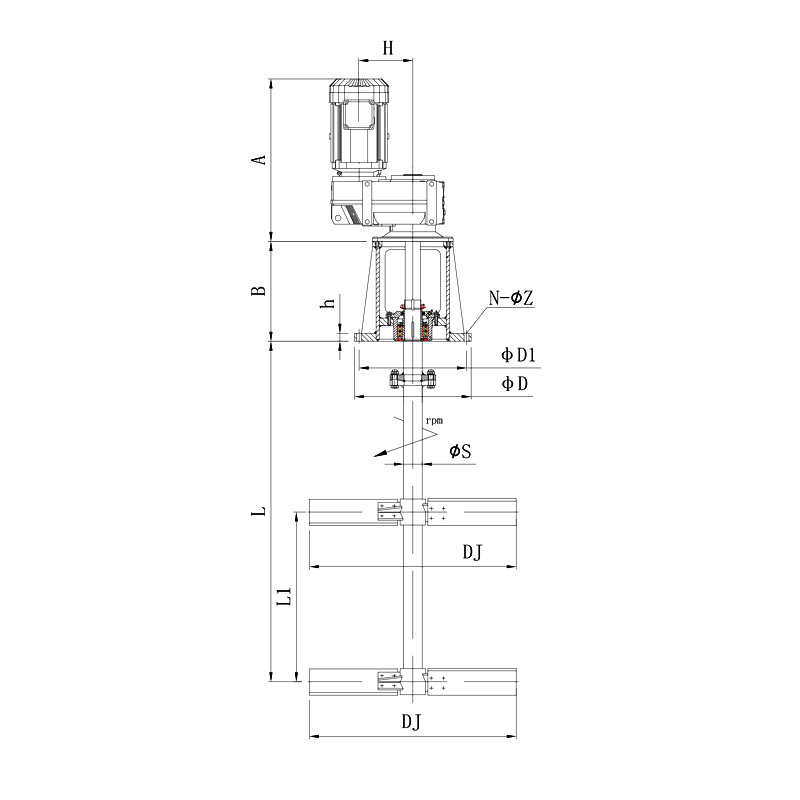 TOP1002 Flocculation Tank Mixer Manufacturers, OEM suppliers - Jiangsu Top IntelJiangsu Top Intelligent Technology Co., Ltd is China TOP1002 Flocculation Tank Mixer manufacturers and suppliers,provide OEM wholesale cu...View Product →
Mixer Configurations Built for Operating Realities
Wastewater tanks come in all geometries, so the mixer configuration must follow the hydraulic profile and the operator's maintenance strategy.
- Top-entry mixers suit variable liquid levels and closed tanks. They are widely used in balancing tanks, reaction tanks, and sludge holding tanks.
- Side-entry mixers work best in large-volume storage tanks and anaerobic digesters where top access is restricted. They operate with a compact motor footprint and deliver high axial flow.
- Submersible mixers are mounted on guide rails, making installation and retrieval simple without draining the tank. They generate horizontal thrust to keep solids suspended in wide basins.
- Bottom-entry mixers are ideal for reactors with limited headspace and often use magnetic drives for zero-leakage operation.
A 3D cutaway helps visualize how these installations actually fit into a real tank. The illustration below shows a tank with both side-entry and submersible mixers, two of the most common configurations in municipal wastewater plants.
Selection Matrix and Typical Power Densities
Selecting the right mixer is a structured process. In practice, our application engineers define the tank dimensions, fluid properties (viscosity, solids content, temperature), and the mixing goal (homogenization, suspension, flocculation). We then calculate the required power density and select the impeller geometry that achieves the target flow and shear without wasting energy.
Typical Power Density Requirements
To make the initial screening easier, we use the following selection matrix:
| Tank Geometry | Depth (m) | Typical Volume (m³) | Recommended Mixer |
|---|---|---|---|
| Cylindrical open top | 3 - 6 | 50 - 500 | Top-entry or submersible |
| Deep cylindrical | 6 - 12 | 200 - 2,000 | Side-entry or top-entry with draft tube |
| Large storage tanks | 8 - 15 | 1,000 - 10,000 | Side-entry with magnetic drive |
| Rectangular basins | 2 - 5 | 100 - 1,500 | Submersible mixers on guide rails |
| Sludge holding tanks | 4 - 8 | 100 - 1,000 | Submersible or top-entry with cutting option |
If the tank fluid is shear-sensitive, such as biological flocs, low-speed axial impellers are the preferred solution. In industrial pre-treatment lines where pH adjustment is critical, higher mixing intensity may be required to ensure instantaneous chemical dispersion.
The Energy Economics of High-Efficiency Mixers
Energy cost is often the largest line item in the lifecycle cost of a mixer, frequently exceeding the initial purchase price within the first two years of operation. A standard pitched-blade turbine draws constant power across its lifespan. In contrast, a hydrofoil impeller matches its thrust to the process flow demand, enabling substantial energy savings. The chart below compares typical annual energy consumption for conventional versus high-efficiency mixers.
According to an industry case collection for water utilities, three independent wastewater operators achieved a 30%–50% reduction in mixer energy costs after switching to high-efficiency units with adaptive speed control. Beyond energy savings, these retrofits reduced seal and gearbox failures, cutting total maintenance costs by an equally significant margin.
In basins with fluctuating water levels, a guide-rail mounted submersible mixer offers easy maintenance and flexible positioning. The TOP1010 series submersible mixer provides efficient mixing for balancing tanks and denitrification basins while avoiding the need to empty the tank for rigging repairs.
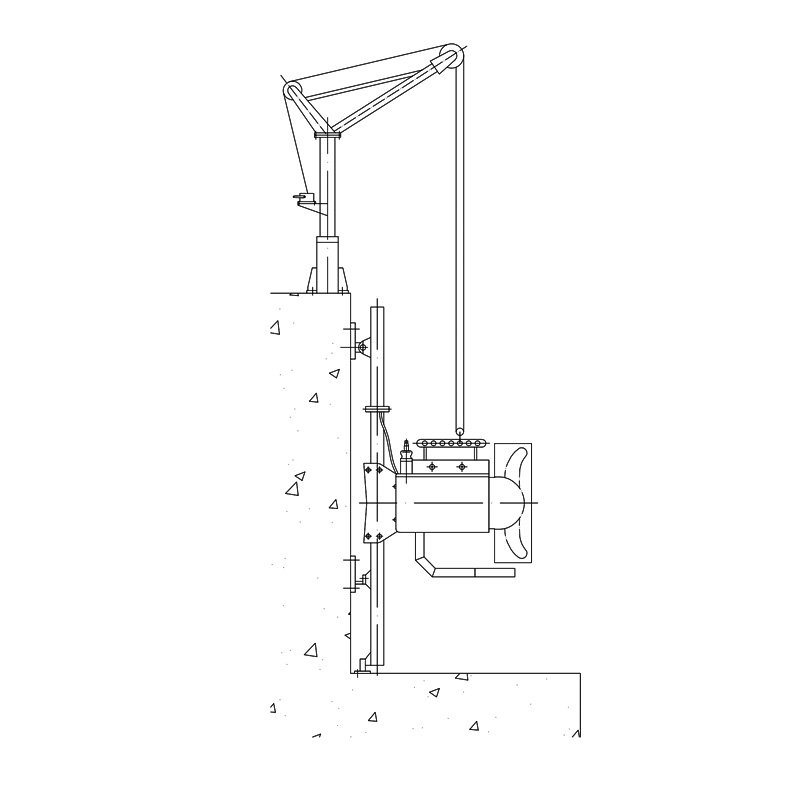 TOP1010 Submersible Mixer Manufacturers, OEM suppliers - Jiangsu Top IntelligentJiangsu Top Intelligent Technology Co., Ltd is ChinaTOP1010 Submersible Mixer manufacturers and suppliers,provide OEM wholesale customiza...View Product →
Practical Design and Maintenance Considerations
Bridging the gap between process design and equipment reliability requires focus on three areas: impeller design, sealing, and materials of construction. Impellers should be selected based on the flow and shear required by the process, not just a shaft torque calculation. Up to 70% of mixer failures in wastewater service are related to seal leakage. For hazardous or odorous environments, a double mechanical seal with a barrier fluid is the recommended choice. Our online-replacement mechanical seal design significantly shortens maintenance windows and allows retrofits in confined spaces.
Materials of construction must address both abrasion and corrosion. Common wastewater applications use SS304, SS316L, or coated carbon steel. For highly abrasive slurries encountered in mining and lithium battery materials processing, we apply tungsten carbide or polyurethane coatings to the impeller wetted surfaces.
Anaerobic digestion is a particularly harsh environment, with high H₂S levels and frequent solids settling. The TOP3001 anaerobic mixer is built for robust, low-maintenance service in this type of digestion unit. It is engineered to handle high solids concentration while maintaining homogeneous conditions throughout the reactor.
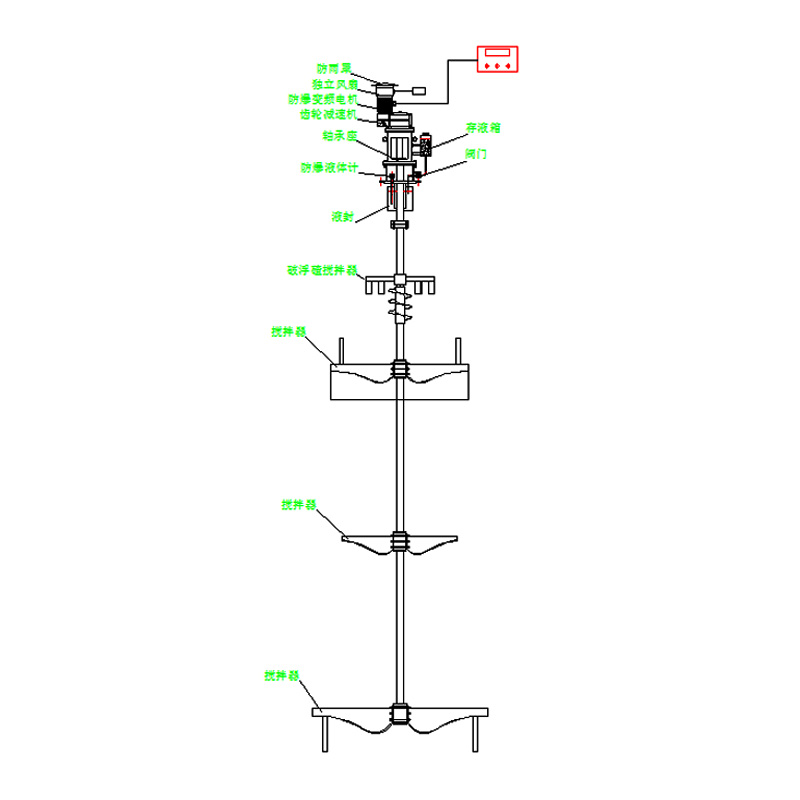 TOP3001 Anaerobic Mixer Manufacturers, OEM suppliers - Jiangsu Top Intelligent TJiangsu Top Intelligent Technology Co., Ltd is ChinaTOP3001 Anaerobic Mixer manufacturers and suppliers,provide OEM wholesale customizati...View Product →
Our project experience spans municipal and industrial water treatment projects. We routinely use CFD fluid dynamics analysis on every custom design to verify the placement, power output, and flow pattern before the equipment quote is finalized.
Frequently Asked Questions (FAQ)
Q1. What is a wastewater treatment mixer?
It is an industrial device that blends chemicals, suspends solids, and homogenizes liquids in water and wastewater treatment processes to keep biological and chemical reactions uniform.
Q2. What types of mixers are used in wastewater treatment?
Common types include submersible mixers, top-entry mixers, side-entry mixers, and bottom-entry mixers. Each type matches different tank depths, volumes, and mixing intensity requirements.
Q3. How do I choose the right wastewater mixer?
Start with tank volume and process goal. Calculate the required power density in watts per cubic meter and compare mixer configurations for level tolerance, viscosity, and access for maintenance.
Q4. Can high-efficiency mixers save energy?
Yes. Hydrofoil impellers with a high thrust-to-power ratio can reduce mixing energy by 20–50%, as confirmed by utility case studies in Europe and the US, while improving solids suspension.
Q5. How does a submersible sewage mixer work?
It sits on a guide rail underwater and drives an axial propeller, creating a horizontal thrust that keeps solids in suspension and the basin fully mixed without needing to drain the tank.
Q6. What maintenance do wastewater mixers need?
Annual checks of gearbox oil, shaft seal, and bearing temperature are standard practice. Schedule impeller inspections for wear and debris every 8,000 to 10,000 operating hours.


- No. 118, Chuangye Road, Jieshou Town, Gaoyou City, Yangzhou, Jiangsu Province, China
- [email protected]
- Landline: +86-0510-83383966 +86-0510-83390667
- Telphone: +86-0510-83390667
- Mr. Chen: +86-18061519769 Mr. Xu: +86-13706183972
- Mr. Lu: +86-18915337056
- Product Link
- Top-Entry Mixer
- Bottom-Entry Mixer
- Side-Entry Mixer
- SIGN UP
- Sign up to be the first to find out the latest news from Top Intelligent Technology
- Subscribe

