

 English
 日本語
日本語 русский


How to Select a High Viscosity Mixer: Impeller Types, Torque, and Design
Content
- 1 What Makes High-Viscosity Mixing Different
- 2 Choosing the Right Impeller for Thick Fluids
- 3 Geometry, Mounting and Application Fit
- 4 Power, Torque and Common Specification Mistakes
- 5 What to Specify Before You Buy
- 6 Frequently Asked Questions About High Viscosity Mixers
- 6.1 Q1. What is the maximum viscosity a high viscosity mixer can handle?
- 6.2 Q2. How do I choose between an anchor and a helical ribbon mixer?
- 6.3 Q3. Can an existing tank be retrofitted with a high viscosity mixer?
- 6.4 Q4. What is the difference between a high viscosity mixer and a planetary mixer?
- 6.5 Q5. How do I estimate power and torque for high viscosity mixing?
- 6.6 Q6. What maintenance does a high viscosity mixer need?
Stand in front of a 5,000-litre reactor holding lithium-battery anode slurry and the problem becomes obvious: the impeller turns, the surface barely moves, and only a small zone around the shaft looks well mixed. This is the cavern effect, and it is the reason ordinary low-viscosity agitators fail as soon as the product passes a few thousand centipoise. The practical conclusion is simpler than the fluid mechanics behind it — a high viscosity mixer is selected by impeller geometry, gear-reduced torque, and near-wall clearance, not by motor size alone.
What Makes High-Viscosity Mixing Different
Laminar Flow Changes the Rules
Water has a viscosity of about 1 cP. Honey sits near 10,000 cP. A spreadable coating can reach 100,000 cP or more. Once the product exceeds roughly 5,000 cP, turbulent flow essentially disappears. The fluid moves in smooth, parallel layers, and mixing happens by shear and bulk circulation instead of eddies. This is why a high viscosity mixer cannot simply be a bigger version of a water agitator — it must be designed for laminar conditions from the start.
The Cavern Effect and Dead Zones
In a tank of thick fluid, a rotating impeller creates a relatively well-mixed "cavern" around itself while the rest of the product rotates slowly or stays nearly stationary. The result is dead zones at the tank wall, under the impeller, and near the surface. The standard countermeasure is to increase the impeller diameter relative to the tank diameter (D/T ratio) and add wiping elements that continuously scrape the vessel wall and return product into the mixing zone.
Relative shaft power demand climbs steeply as viscosity increases for a fixed impeller geometry.
Choosing the Right Impeller for Thick Fluids
There is no single "best" high viscosity mixer impeller. The correct choice depends on how thick the product is, whether you need heat transfer, whether the product sticks to the wall, and how often you change batches. The table below summarises the most common designs used in industry.
| Impeller design | Typical range (cP) | Strengths | Main limitation |
|---|---|---|---|
| Anchor | 1,000 – 100,000 | Near-wall motion, heat transfer, simple construction | Limited radial mixing away from the wall |
| Frame with scraper | 2,000 – 300,000 | Continuous wall wiping, prevents build-up, works in coated reactors | Higher torque demand, scraper wear |
| Helical ribbon | 5,000 – 1,000,000 | Strong top-to-bottom circulation, uniform bulk movement | Expensive to build, harder to clean |
| Planetary | 10,000 – 5,000,000 | Multiple impellers cover the full tank bottom, handles pastes | High cost, more moving parts, slower cycle times |
Anchor and Frame Agitators
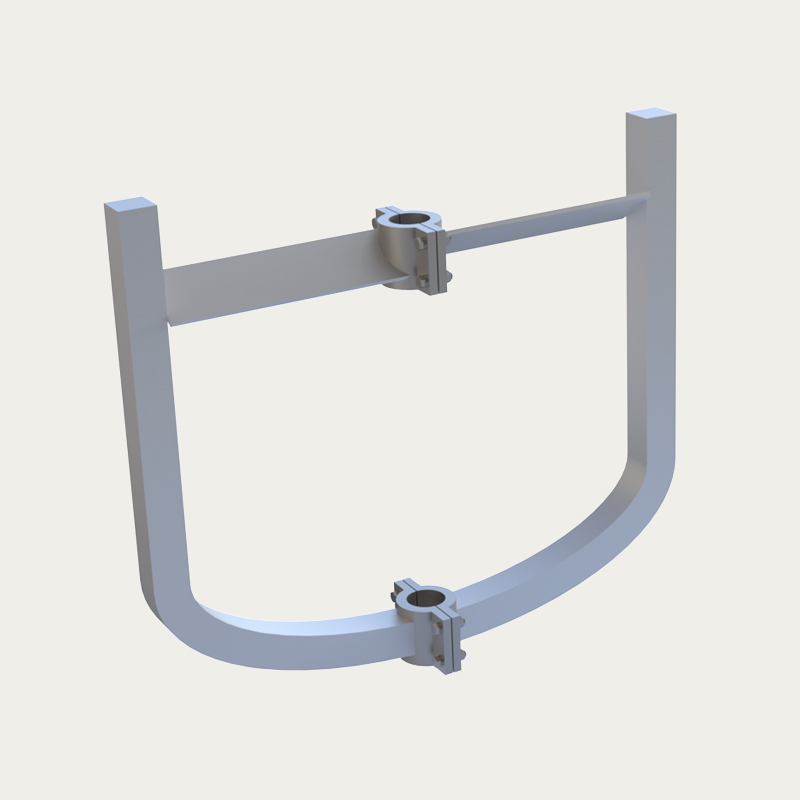
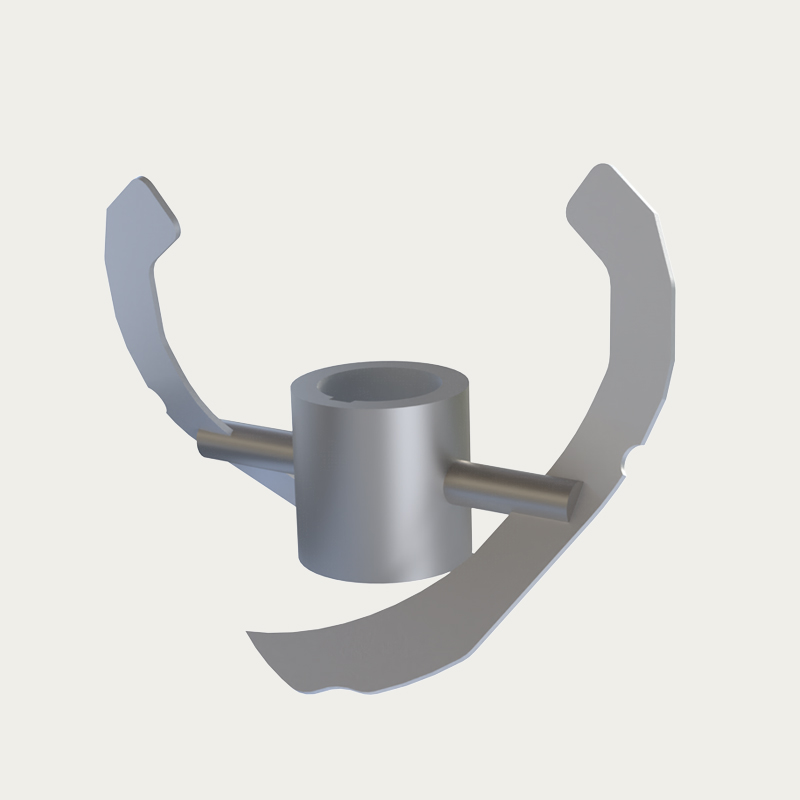
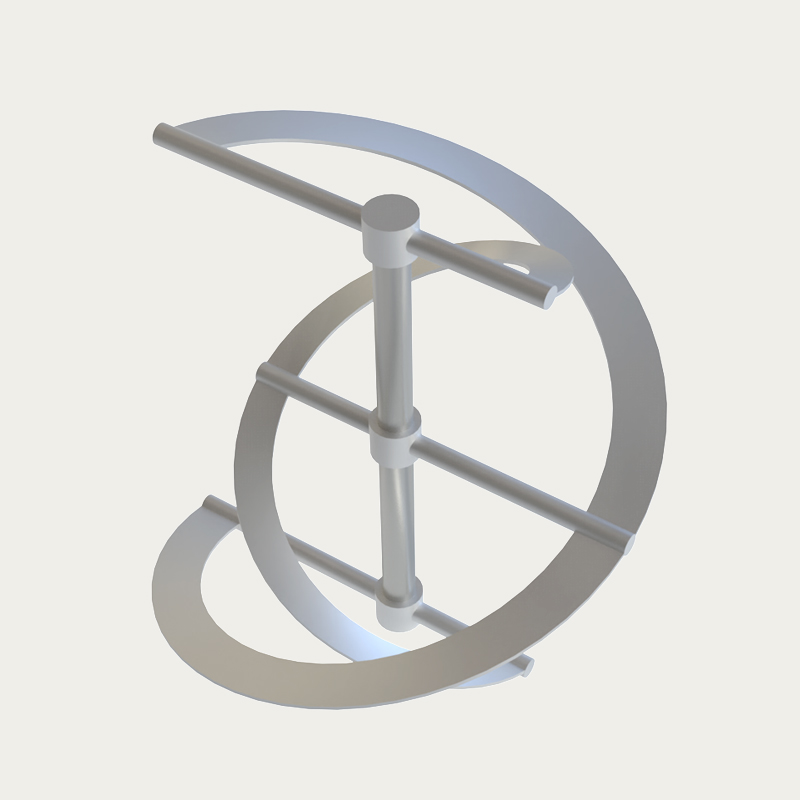
Anchor impellers follow the internal contour of the vessel, so they keep product moving along the wall and promote heat transfer through the jacket. When the product is sticky or tends to bake onto the wall, a frame agitator with scraper blades for high-viscosity products is the more reliable option because the scrapers continuously peel material off the surface. These designs suit reactors, storage tanks and coating kettles in the 10,000 to 100,000 cP range.
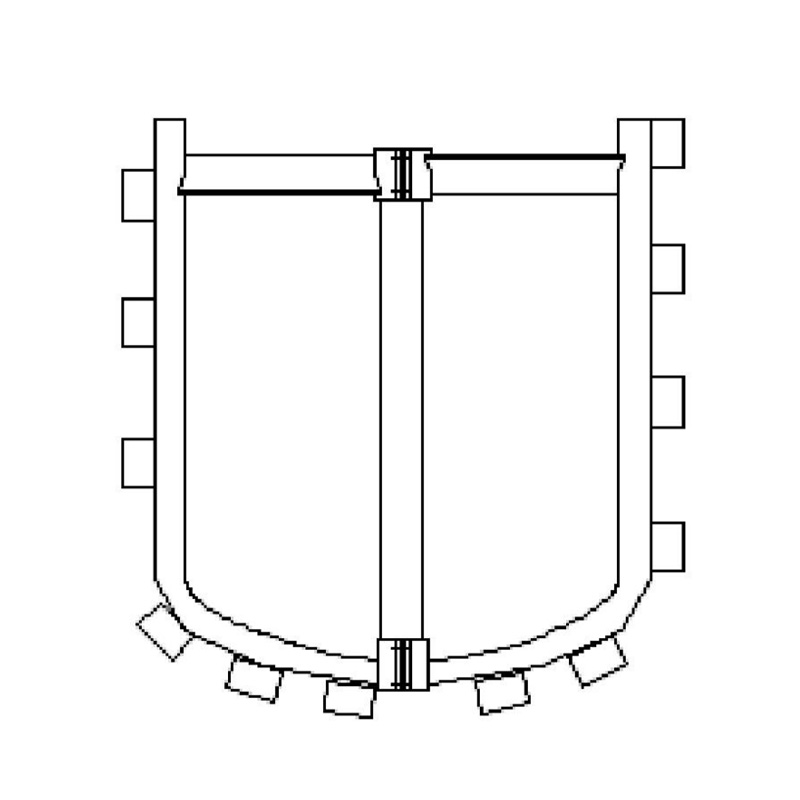 KSG Frame Type Stirring Paddle With Scraper For High Viscosity Manufacturers, OEJiangsu Top Intelligent Technology Co., Ltd is ChinaKSG Frame Type Stirring Paddle With Scraper For High Viscosity manufacturers and supp...View Product →
Helical Ribbon Impellers
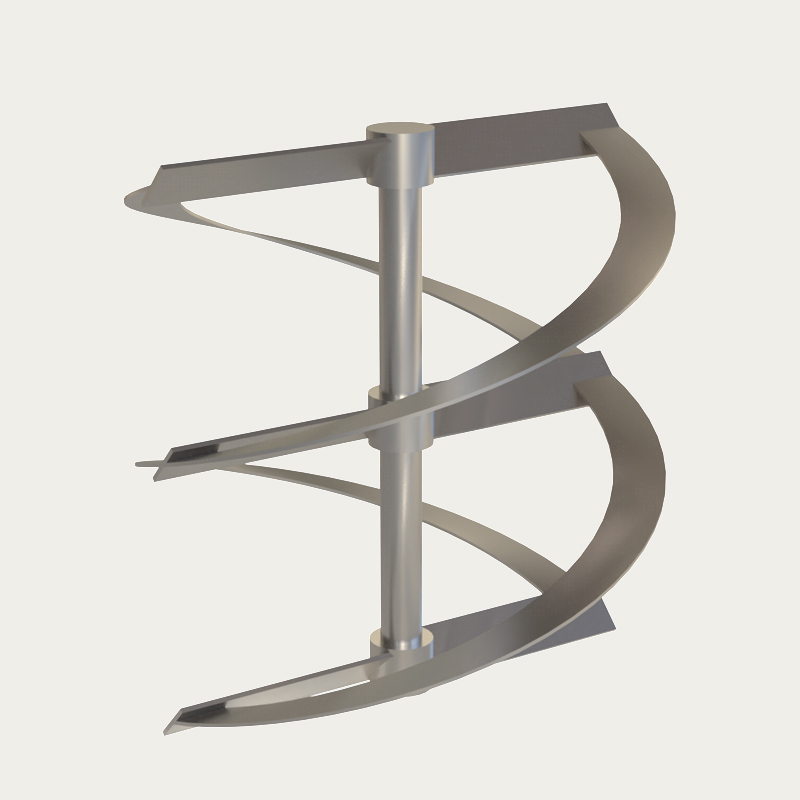
When the batch becomes thicker than about 50,000 cP, a single anchor or frame often cannot generate enough top-to-bottom turnover. A helical ribbon forces the entire mass upward along the shaft and downward at the wall, giving the circulation that anchor designs lack. This makes the spiral-ribbon combined stirring paddle for high-viscosity agitators a common choice for polymer solutions, sealants, battery slurries and heavy pastes up to 1,000,000 cP.
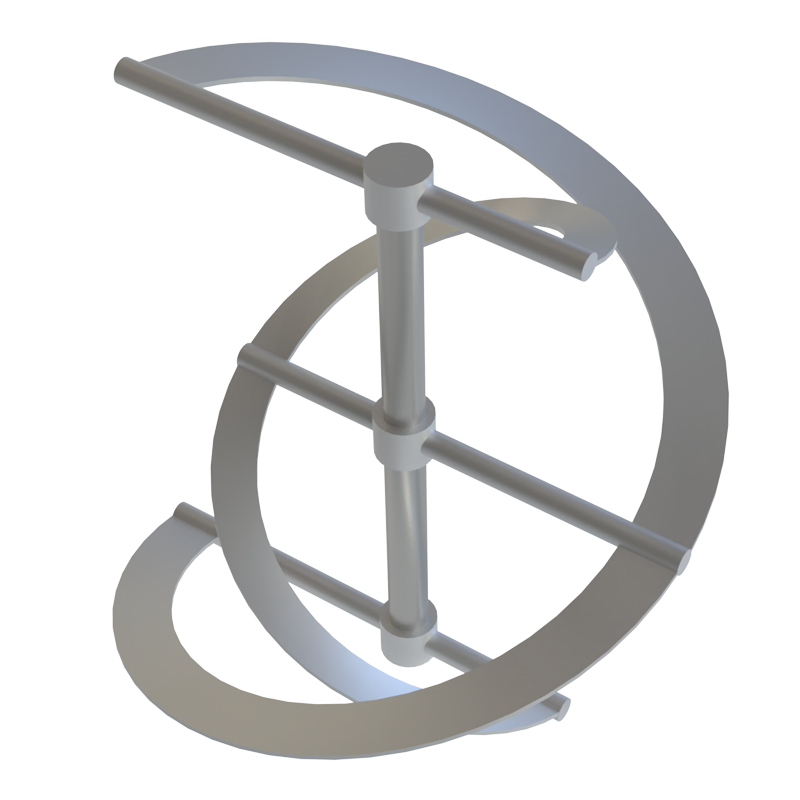 ZLG Spiral Ribbon Combined Stirring Paddle High Viscosity Agitator ManufacturersJiangsu Top Intelligent Technology Co., Ltd is ChinaZLG Spiral Ribbon Combined Stirring Paddle High Viscosity Agitator manufacturers and ...View Product →
Planetary Mixers: When the Batch Goes Further
Above several hundred thousand centipoise, or when the product contains large amounts of dry powder, planetary mixers become practical. Their impellers rotate on their own axes while orbiting the tank, sweeping the entire vessel volume with no dead zones. The trade-off is mechanical complexity and cost, which is why they should only be selected when simpler geometries have proven insufficient.
Practical viscosity coverage of common impeller designs. Ranges are indicative and overlap because tank size, RPM and product rheology also matter.
Geometry, Mounting and Application Fit
Top-Entry vs. Bottom-Entry vs. Side-Entry
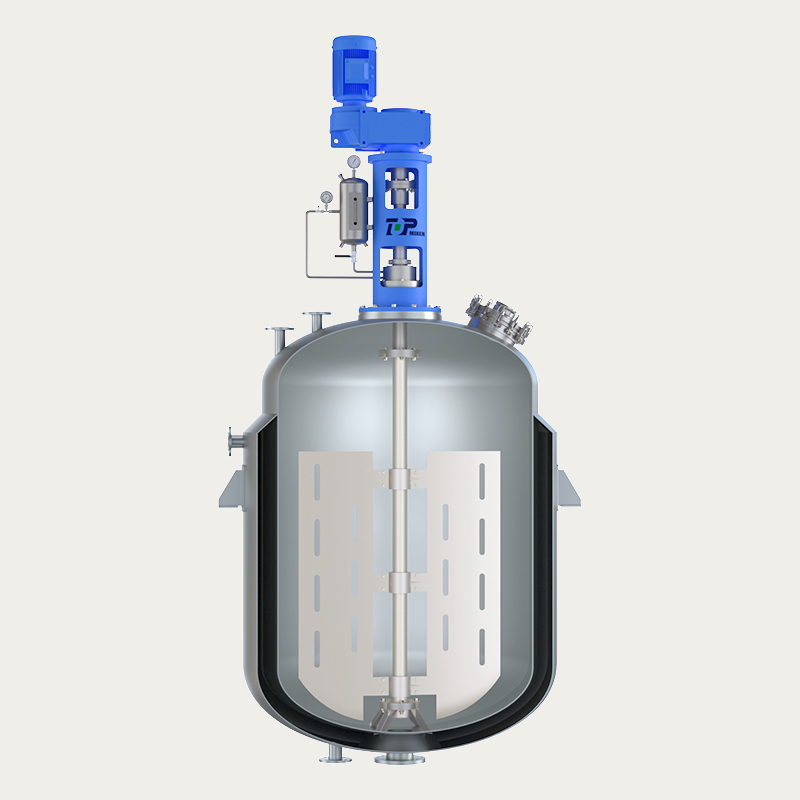
Mounting configuration is often decided by the tank itself. Top-entry mixers are the most common for reactors and pressure vessels because the shaft goes straight through the manhole or a dedicated nozzle. When the product is extremely viscous, a high-viscosity frame top-entry mixer keeps the drive above the liquid and allows the impeller diameter to be sized close to the vessel wall. Bottom-entry and side-entry mixers are more compact but create seal and maintenance challenges, especially with abrasive slurries or products that settle.
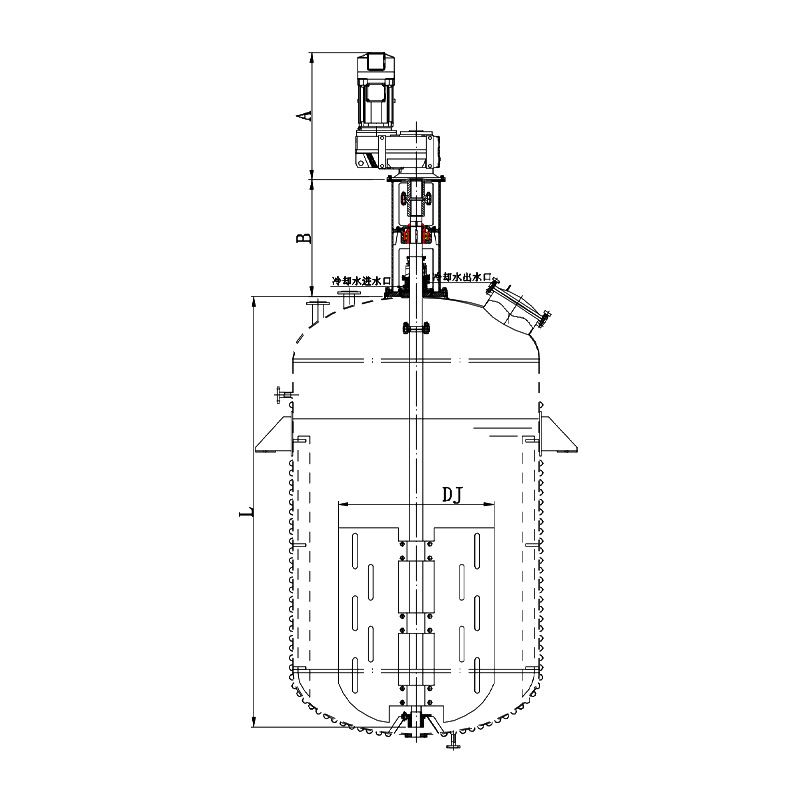 TOPA002 High Viscosity Frame Top-Entry Mixer Manufacturers, OEM suppliers - JianJiangsu Top Intelligent Technology Co., Ltd is ChinaTOPA002 High Viscosity Frame Top-Entry Mixer manufacturers and suppliers,provide OEM ...View Product →
The ratio between impeller diameter and tank diameter becomes the most visible design difference between low-viscosity and high-viscosity installations. A standard turbine impeller uses only about one-third of the tank diameter; a high-viscosity impeller should cover more than nine-tenths of it.
The D/T ratio rises sharply from low-viscosity turbines to high-viscosity wiping geometries.
Real Process Examples
In the chemical industry, frame and ribbon mixers handle resin kettles, adhesives and pastes where product quality depends on uniform temperature and the absence of dead zones. The chemical industry project references on this site show how the same frame geometry adapts to different reactor sizes and seal requirements. In lithium-battery production, the anode and cathode slurries are typically non-Newtonian, meaning their viscosity changes with shear rate; the lithium battery industry project references illustrate why CFD analysis and material selection matter more than a simple cP rating. In coatings, the common demand is for a high viscosity mixer that can disperse pigment into a resin without aerating the batch.
Cutaway view of a top-entry high viscosity mixer combining a helical ribbon for turnover and an anchor scraper for wall cleaning.
Power, Torque and Common Specification Mistakes
Think Torque First
The single most common error is to specify a high viscosity mixer by motor power alone. In viscous mixing, torque is what does the work. A 30 kW motor connected to a high-speed shaft delivers very little torque; the same motor behind a gearbox producing 30 RPM can turn a large anchor with ease. Always check the rated torque at the output shaft, not the motor nameplate. Gear-reduced drive trains are non-negotiable for this reason, and the reduction ratio must be matched to the maximum expected viscosity.
Five Specification Errors That Cost Money
- Sizing the impeller too small to fit through an existing manhole. The mixer then runs for hours without moving the outer material.
- Ignoring near-wall clearance. Without scraper or anchor coverage, the product near the jacket overheats or forms a crust.
- Specifying only viscosity in cP while ignoring yield stress and shear-thinning behaviour. A paste can look like 20,000 cP at rest but behave like 200,000 cP under a scraper load.
- Forgetting about the mechanical seal. Viscous products create radial loads that push the shaft sideways; standard cartridge seals are not always sufficient.
- No provision for testing. CFD and pilot trials are the cheapest insurance against a full-scale mixer that cannot achieve the required homogeneity.
Non-Newtonian Behaviour Changes the Calculation
Most industrial high-viscosity products — coatings, adhesives, pastes, battery slurries — are non-Newtonian. Their apparent viscosity falls or rises as the impeller speed changes. This is why a curve of viscosity versus shear rate is more valuable than a single cP number. When the manufacturer asks for a product sample and runs a rheology test, consider that a sign of professional practice rather than an unnecessary delay.
What to Specify Before You Buy
The Short Specification List
Before requesting a quotation, prepare a clear statement of the following: fluid composition, viscosity range at operating temperature, density, required batch size, tank dimensions, available nozzle size, operating pressure and temperature, whether the vessel is jacketed, and whether the product is abrasive, corrosive, or food-grade. Also state whether the mixer must run continuously or intermittently, and whether CIP (clean-in-place) is required.
Use CFD Before You Sign
Computational fluid dynamics analysis has become a standard part of high-viscosity mixer design. A CFD model can reveal dead zones, estimate the power draw at different speeds, and compare two impeller geometries without building either one. Many equipment suppliers, including the engineers behind this site, publish their CFD fluid dynamics analysis technology as part of the design service. If a supplier cannot show flow patterns or torque predictions for your specific product, treat that as a warning sign.
Plan for Maintenance Access
High-viscosity mixers are heavy, and their seals face higher wear than their low-viscosity counterparts. Check that the mechanical seal can be serviced without lifting the entire drive train, that scraper blades are replaceable, and that the gearbox has adequate oil cooling for continuous duty. These details determine whether a routine seal change takes four hours or two days.
Frequently Asked Questions About High Viscosity Mixers
Q1. What is the maximum viscosity a high viscosity mixer can handle?
There is no single cap because torque, gear reduction and tank size all influence the limit. Anchor agitators generally stay effective to about 100,000 cP, helical ribbon designs to roughly 1,000,000 cP, and planetary mixers beyond that. The practical limit for a given installation is set by the output torque available at the shaft.
Q2. How do I choose between an anchor and a helical ribbon mixer?
Choose an anchor or frame design when near-wall heat transfer, crust prevention and simple construction matter most. Choose a helical ribbon when the entire batch needs strong circulation and the product exceeds roughly 50,000 cP. A ribbon design is more expensive but also more effective for thick, uniform pastes.
Q3. Can an existing tank be retrofitted with a high viscosity mixer?
Yes, for many reactors and mixing tanks. You need to confirm the nozzle size, flange rating, vessel support structure and the shaft length below the mounting point. A top-entry high viscosity mixer may be designed specifically to fit an existing manhole or standard nozzle opening.
Q4. What is the difference between a high viscosity mixer and a planetary mixer?
A high viscosity mixer has a fixed central shaft and relies on impeller geometry to move the fluid. A planetary mixer uses two or more impellers that rotate on their own axes while orbiting the tank, so the impellers cover the full tank volume. Planetary designs handle thicker, more complex products but cost more and take longer per batch.
Q5. How do I estimate power and torque for high viscosity mixing?
Use the relationship Power = torque x rotational speed, and calculate torque from the fluid viscosity, impeller diameter, shaft speed and impeller geometry factor. Because most products are non-Newtonian, a simple cP value is not enough. The reliable route is to supply the manufacturer with a viscosity-versus-shear-rate curve or a sample for testing.
Q6. What maintenance does a high viscosity mixer need?
The mechanical seal is the highest-wear component and usually requires the most frequent inspection. Also check scraper blade clearance, gearbox oil level and seal-flush system pressure. In sticky or crystallising products, plan a regular cleaning cycle to prevent hardened material on the impeller.


- No. 118, Chuangye Road, Jieshou Town, Gaoyou City, Yangzhou, Jiangsu Province, China
- [email protected]
- Landline: +86-0510-83383966 +86-0510-83390667
- Telphone: +86-0510-83390667
- Mr. Chen: +86-18061519769 Mr. Xu: +86-13706183972
- Mr. Lu: +86-18915337056
- Product Link
- Top-Entry Mixer
- Bottom-Entry Mixer
- Side-Entry Mixer
- SIGN UP
- Sign up to be the first to find out the latest news from Top Intelligent Technology
- Subscribe

