

 English
 日本語
日本語 русский


What are the differences between a Bottom-Entry Mixer and a Regular Mixer?
Content
- 0.1 1. Structural Differences
- 0.2 2. Mixing Effectiveness
- 0.3 3. Applications
- 0.4 4. Energy Efficiency and Cost
- 0.5 5. Cleaning and Maintenance
- 0.6 Comparison Table of Bottom-Entry Mixer vs Regular Mixer:
- 1 Advantages of the Bottom-Entry Mixer
- 1.1 1. Efficient Mixing, Ensuring Uniformity
- 1.2 2. Suitable for High-Viscosity Materials
- 1.3 3. Energy Savings, Reducing Operating Costs
- 1.4 4. Increased Production Efficiency, Reduced Production Cycle
- 1.5 5. Reduced Equipment Maintenance and Cleaning Costs
- 1.6 6. Wide Range of Industrial Applications
- 1.7 7. Improving Product Quality, Enhancing Market Competitiveness
- 1.8 Summary Table of the Bottom-Entry Mixer Advantages:
- 2 How the Bottom-Entry Mixer Improves Mixing Efficiency
- 2.1 1. Bottom-Entry Design Reduces Material Sedimentation and Improves Mixing Efficiency
- 2.2 2. Optimized Mixing Blade Design Enhances Mixing Effectiveness
- 2.3 3. Increased Mixing Speed and Reduced Mixing Time
- 2.4 4. Reducing Material Re-mixing Phenomenon and Improving Mixing Stability
- 2.5 5. Adapting to Different Material Mixing Requirements
- 2.6 6. Improving Production Automation and Reducing Labor Costs
- 3 How to Improve Equipment Durability Using the Bottom-Entry Mixer
- 3.1 1. Optimized Feed System Reduces Wear
- 3.2 2. Use of High-Wear-Resistant Materials to Extend Equipment Life
- 3.3 3. Reducing the Impact of High-Viscosity Materials on Equipment
- 3.4 4. Reducing Cleaning Frequency and Maintenance Costs
- 3.5 5. Enhancing Automation to Reduce Damage from Operational Errors
- 3.6 6. Good Thermal Management Design to Reduce Overheating of Equipment
- 3.7 Summary Table of How the Bottom-Entry Mixer Improves Durability:
The Bottom-Entry Mixer and regular mixers differ significantly in structure and application, and these differences determine their suitability for different scenarios. As the name suggests, the Bottom-Entry Mixer uses a bottom-feed system, allowing it to more efficiently introduce materials from the bottom into the mixing tank for uniform mixing. This design reduces material settlement and improves mixing efficiency. In contrast, regular mixers generally use top or side feed and have a broader range of applications, but may not match the Bottom-Entry Mixer when handling high-viscosity materials.
1. Structural Differences
The key feature of the Bottom-Entry Mixer is its unique feeding system. In this type of mixer, materials enter the mixing tank through a bottom feed inlet, and with specially designed mixing blades, it ensures the material is mixed uniformly in a short period, preventing deposition. Regular mixers, on the other hand, typically use top or side feeds. Although they can perform basic mixing tasks, their efficiency and uniformity, particularly when handling high-viscosity materials, are often inferior to the Bottom-Entry Mixer.
2. Mixing Effectiveness
The Bottom-Entry Mixer can mix materials more evenly, making it particularly suitable for high-viscosity materials that require thorough mixing. Studies show that the Bottom-Entry Mixer significantly improves mixing efficiency and reduces mixing time when dealing with viscous liquids or slurries. For example, in industries like paints and gypsum slurries, the Bottom-Entry Mixer can achieve a mixing uniformity of over 98%, which is considerably better than the 85%-90% uniformity of regular mixers.
3. Applications
Bottom-Entry Mixer: Primarily used for materials that require uniform mixing and have higher viscosity, such as paints, food products, chemical raw materials, etc. It is especially suitable for production environments that require fast and even mixing.
Regular Mixer: Widely used for mixing liquids, powders, and some low-viscosity materials in applications such as water treatment, petroleum chemicals, and light industries. They provide sufficient mixing results for general liquids and powders but are less effective with high-viscosity materials.
4. Energy Efficiency and Cost
Due to its unique design, the Bottom-Entry Mixer typically has a higher energy efficiency than regular mixers. According to market data, the Bottom-Entry Mixer can reduce energy consumption by about 15%-20% for the same mixing load. Regular mixers usually require longer mixing times and higher energy consumption.
5. Cleaning and Maintenance
Cleaning and maintenance for the Bottom-Entry Mixer are slightly more complex than regular mixers. Since the material enters the mixing tank from the bottom, it can accumulate more residual materials inside the mixer, requiring regular cleaning. However, this design has significant advantages in preventing material settlement and internal contamination during mixing.
Comparison Table of Bottom-Entry Mixer vs Regular Mixer:
| Features | Bottom-Entry Mixer | Regular Mixer |
| Feeding Method | Bottom feed | Top/Side feed |
| Mixing Efficiency | High, suitable for high-viscosity materials | Average, suitable for low-viscosity materials |
| Mixing Uniformity | High (>98%) | Medium (85%-90%) |
| Applicable Industries | Paints, Food, Chemicals, Gypsum slurries | Water treatment, Petroleum chemicals, Light industries |
| Energy Efficiency | Higher, 15%-20% energy reduction | Lower, requires longer mixing time |
| Maintenance and Cleaning | Relatively complex, requires regular cleaning | Simple, easy daily maintenance |
The Bottom-Entry Mixer has the greatest advantage in handling high-viscosity materials and its mixing efficiency, especially in industrial applications that require efficient and uniform mixing. If your production line requires fast, even mixing for slurries, paints, and other high-viscosity materials, the Bottom-Entry Mixer is undoubtedly the better choice. On the other hand, regular mixers are suitable for handling general low-viscosity liquids or powders, are more cost-effective, and are easier to maintain. Choosing the appropriate mixing equipment based on specific needs will help improve production efficiency and reduce operational costs.
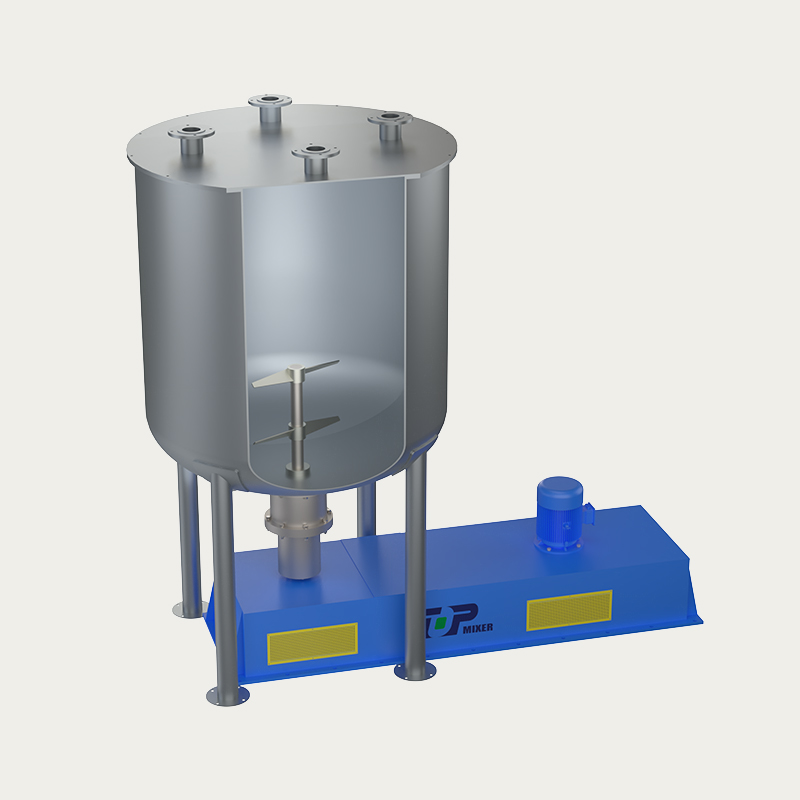
Advantages of the Bottom-Entry Mixer
The Bottom-Entry Mixer has become an indispensable piece of equipment in various industrial sectors due to its unique design and high mixing capabilities. Compared to traditional mixers, the Bottom-Entry Mixer demonstrates significant advantages in handling high-viscosity materials, improving mixing efficiency, and reducing energy consumption.
1. Efficient Mixing, Ensuring Uniformity
The greatest advantage of the Bottom-Entry Mixer is its ability to efficiently handle higher viscosity materials and ensure uniform mixing. Since materials are introduced from the bottom into the mixing tank, this feeding method ensures that materials start mixing thoroughly as they enter the mixing area, thus preventing material settlement or uneven mixing.
Example Analysis: In the paint industry, the Bottom-Entry Mixer can help companies significantly improve production efficiency and ensure uniformity of the paint. For example, after a paint manufacturer adopted the Bottom-Entry Mixer, the mixing efficiency improved by 30%, and the paint uniformity increased from 85% to over 98%, greatly enhancing product quality and market competitiveness.
2. Suitable for High-Viscosity Materials
The Bottom-Entry Mixer is especially suited for mixing high-viscosity materials such as slurries, paints, fertilizers, and food products. Compared to traditional regular mixers, the Bottom-Entry Mixer effectively reduces the resistance when mixing high-viscosity materials, allowing for quicker completion of the mixing task.
Specific Data: When handling chemical raw materials with a viscosity of over 20,000 cps, the Bottom-Entry Mixer can reduce mixing time by approximately 20% compared to regular mixers, while achieving higher uniformity (more than 10% higher). This makes it an ideal choice for improving production efficiency and ensuring product quality in industries like chemicals, food processing, and paint production.
3. Energy Savings, Reducing Operating Costs
The Bottom-Entry Mixer can effectively reduce energy waste during operation, saving electricity and other resources. This is primarily due to its unique feeding design and mixing method, which enables high-efficiency material mixing in a shorter amount of time, avoiding the need for long operating hours as required by traditional mixers.
Energy Consumption Comparison: According to industry research, the Bottom-Entry Mixer reduces energy consumption by about 15%-20% when handling the same amount of material. This energy-saving effect can significantly reduce energy costs for long-term operations, improving the economic efficiency of businesses.
4. Increased Production Efficiency, Reduced Production Cycle
The Bottom-Entry Mixer achieves efficient mixing in a short amount of time, which reduces production cycles. This is especially important for businesses that require large-scale production and quick delivery, as it can effectively improve production line efficiency.
Case Study: In the food processing industry, a company producing fruit jam reduced its mixing time from 30 minutes to 20 minutes after adopting the Bottom-Entry Mixer, increasing production efficiency by 25%. At the same time, the product quality remained stable, meeting higher production demands.
5. Reduced Equipment Maintenance and Cleaning Costs
Although the Bottom-Entry Mixer has a more complex design, its ability to mix materials more evenly reduces material settlement and clumping, resulting in lower maintenance and cleaning frequency. Compared to traditional mixers, the Bottom-Entry Mixer has a longer service life and lower failure rates, meaning businesses do not need to perform frequent repairs or part replacements, thus saving on maintenance costs.
Maintenance Cost Comparison: A market survey shows that businesses using Bottom-Entry Mixers save about 12%-15% on equipment maintenance costs. These savings can be used for other production processes, improving overall operational efficiency.
6. Wide Range of Industrial Applications
The Bottom-Entry Mixer is widely used in various fields such as paints, fertilizers, food, and pharmaceuticals. Due to its strong material handling capability and efficient mixing performance, it has become the preferred equipment in many industries.
Specific Industry Applications:
Paint Industry: Ensures uniformity of paints, improving coating performance.
Food Industry: Suitable for mixing high-viscosity materials such as jams and sauces.
Fertilizer Industry: Used to mix various chemical raw materials, ensuring uniform fertilizer quality.
Pharmaceutical Industry: Ensures uniform distribution of drug ingredients during pharmaceutical production, enhancing product quality.
7. Improving Product Quality, Enhancing Market Competitiveness
The excellent mixing effect of the Bottom-Entry Mixer directly impacts product quality. Whether in chemicals, paints, food, or pharmaceuticals, uniform mixing is key to ensuring product quality. Through efficient mixing, the Bottom-Entry Mixer reduces material inconsistency, improving product uniformity and stability, thus enhancing the market competitiveness of businesses.
Market Response: After adopting the Bottom-Entry Mixer, a chemical company saw a significant improvement in product stability and uniformity, gaining more customer recognition and increasing its market share by more than 20%.
Summary Table of the Bottom-Entry Mixer Advantages:
| Advantages | Bottom-Entry Mixer |
| Mixing Effect | Efficient, suitable for high-viscosity materials, ensures uniformity and stable quality |
| Energy Saving | High energy efficiency, reduces energy consumption by 15%-20% |
| Production Efficiency | Improves production efficiency, shortens production cycle, saves time and resources |
| Maintenance Cost | Simple maintenance and cleaning, reduces maintenance costs |
| Wide Application | Suitable for paints, food, fertilizers, chemicals, etc., meeting various production needs |
| Product Quality | Enhances product consistency and quality, boosting market competitiveness |
The Bottom-Entry Mixer has become an indispensable and essential piece of equipment in modern industries due to its high-efficiency mixing, energy savings, and increased production
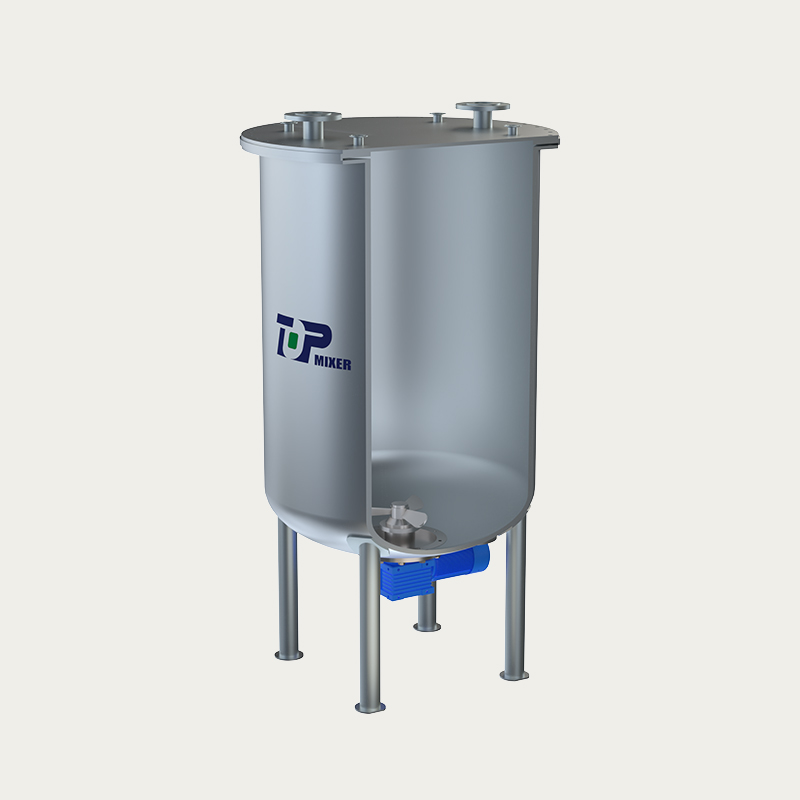
How the Bottom-Entry Mixer Improves Mixing Efficiency
The Bottom-Entry Mixer is widely used in industrial production, particularly in scenarios where high-efficiency mixing and uniform blending are required. Compared to traditional mixers, the Bottom-Entry Mixer significantly improves mixing efficiency, especially in the handling of high-viscosity materials.
1. Bottom-Entry Design Reduces Material Sedimentation and Improves Mixing Efficiency
The most prominent feature of the Bottom-Entry Mixer is that materials enter the mixing tank from the bottom. This design, compared to traditional top or side feeding methods, better prevents material sedimentation or uneven mixing during the process. The bottom-feed method ensures that materials immediately come into contact with the mixer’s blades upon entering the tank, initiating an even mixing state, which effectively improves mixing efficiency.
Supporting Data: When handling high-viscosity slurries (such as paints, coatings, and chemical raw materials), the Bottom-Entry Mixer reduces mixing time by approximately 20%-30% compared to traditional mixers. For instance, in paint production, some manufacturers have reduced their mixing cycle from 60 minutes to 40 minutes by using the bottom-entry design, significantly improving production efficiency.
2. Optimized Mixing Blade Design Enhances Mixing Effectiveness
The mixing blades of the Bottom-Entry Mixer typically employ specialized fluid dynamics principles to ensure uniform mixing of materials. When combined with the bottom-feed design, these blades generate powerful fluid forces that effectively break up the material’s viscous structure, allowing various materials to mix rapidly and uniformly, reducing the occurrence of dead zones and uneven regions during mixing.
Practical Application: For example, in fertilizer production, the Bottom-Entry Mixer ensures that chemical components are evenly distributed, improving the stability of fertilizer quality. Data shows that after adopting the Bottom-Entry Mixer, the mixing uniformity in fertilizer production increased from 90% to over 98%, significantly reducing raw material waste.
3. Increased Mixing Speed and Reduced Mixing Time
The Bottom-Entry Mixer significantly improves mixing speed due to its powerful mixing capability and efficient material flow control. Efficient mixing not only reduces the mixing time but also minimizes energy consumption by the equipment. Particularly in scenarios requiring fast production, this efficient mixing system shortens production cycles and improves overall line efficiency.
Energy Saving Effect: According to statistics from a paint factory, the Bottom-Entry Mixer reduced mixing time by 25% while also decreasing energy consumption by 15%-20%. The time and energy saved have not only boosted production efficiency but also lowered operational costs.
4. Reducing Material Re-mixing Phenomenon and Improving Mixing Stability
Traditional mixers often encounter the phenomenon of material re-mixing during the mixing process, particularly with high-viscosity materials, which may result in uneven mixing and affect product quality. The Bottom-Entry Mixer, through its bottom feed and unique mixing structure design, effectively reduces this re-mixing issue, ensuring that materials remain in a uniformly flowing state during mixing.
Technical Advantage: The Bottom-Entry Mixer’s inlet and outlet design are more scientifically optimized, reducing material retention that may occur during mixing, especially when dealing with larger particle materials and high-viscosity liquids, ensuring quick and uniform distribution, further enhancing mixing efficiency.
5. Adapting to Different Material Mixing Requirements
The Bottom-Entry Mixer is highly versatile, capable of handling a variety of materials, whether high-viscosity liquids, slurries, or granular materials, all while achieving efficient mixing. Its design is not only suitable for simple liquid mixtures but also for handling high-viscosity, dense, and coarser materials.
Case Example: In the food industry, a production company used the Bottom-Entry Mixer for jam production, ensuring even mixing of sugar, fruit particles, and other components within the jam. Compared to traditional mixers, the Bottom-Entry Mixer increased production efficiency by 35%, with the jam exhibiting higher uniformity and more consistent taste.
6. Improving Production Automation and Reducing Labor Costs
Modern Bottom-Entry Mixers are often equipped with automated control systems that can adjust mixing speed and time according to material properties and production requirements. This automation significantly reduces human intervention, lowering labor costs, and improving the overall stability of the production line.
Practical Effect: A chemical company that adopted an automated control system for the Bottom-Entry Mixer found that production no longer required much human intervention, reducing employee workload by 40%. This automation improvement made the production process more efficient and quality control more precise.
The Bottom-Entry Mixer, through its unique design and high-efficiency mixing mechanism, has significantly improved mixing efficiency, especially when handling high-viscosity and complex materials. Whether in the chemical, paint, food, or pharmaceutical industries, the Bottom-Entry Mixer helps companies improve production efficiency, save energy, ensure product quality, and reduce operational costs.
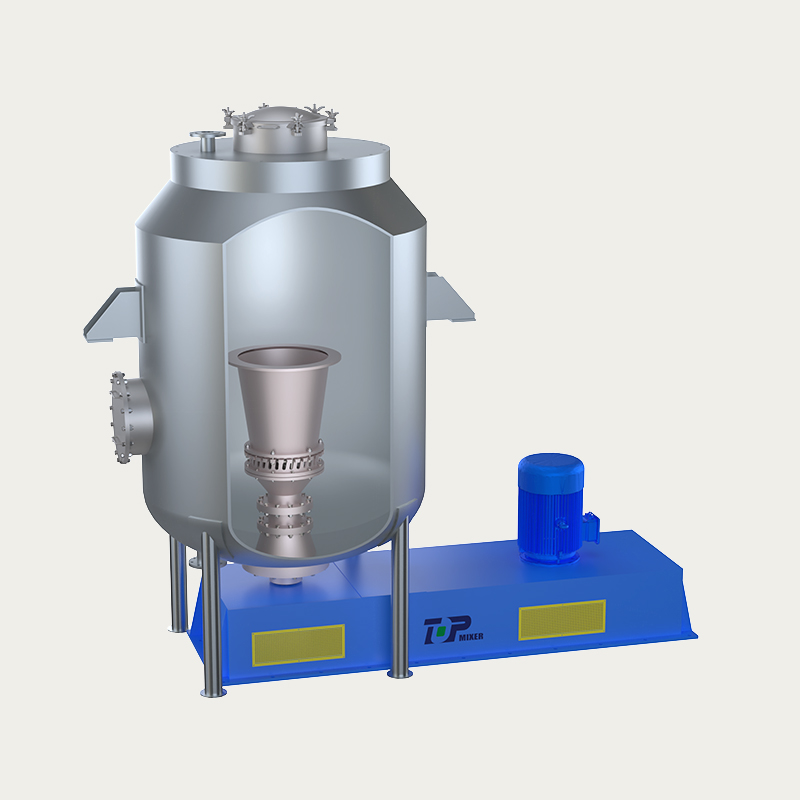
How to Improve Equipment Durability Using the Bottom-Entry Mixer
The Bottom-Entry Mixer not only excels in improving mixing efficiency and saving energy but also extends the service life of equipment, significantly improving its durability. Compared to traditional mixers, the Bottom-Entry Mixer, with its optimized feed system, advanced mixing blade design, and ability to handle high-viscosity materials, reduces equipment wear and lowers failure rates, thus enhancing the durability of the equipment.
1. Optimized Feed System Reduces Wear
One notable advantage of the Bottom-Entry Mixer is its bottom-feed design. Traditional mixers often lead to material deposition or blockages near the feed inlet, which not only affects the mixing process but also accelerates equipment wear. The bottom-feed design ensures uniform distribution of materials, reducing localized overload and thus effectively reducing friction and wear inside the mixer.
Supporting Data: A paint factory that adopted the Bottom-Entry Mixer saw its equipment lifespan extend by approximately 15%-20%. The reason was the bottom-feed design, which reduced material accumulation at the feed inlet and the tank bottom, preventing excessive friction and lowering the wear frequency of mechanical components.
2. Use of High-Wear-Resistant Materials to Extend Equipment Life
The mixing blades and tanks of the Bottom-Entry Mixer are typically made of high-wear-resistant materials, such as stainless steel or alloy materials, to withstand the demands of high-viscosity material mixing. These high-wear-resistant materials not only improve mixing efficiency but also effectively resist the friction generated during prolonged operation, extending the service life of the equipment components.
Case Analysis: In fertilizer production, the Bottom-Entry Mixer, due to its use of wear-resistant alloy steel materials, can maintain a high-efficiency working state even under continuous high-load conditions. Data shows that the wear rate of mixing blades in the Bottom-Entry Mixer is 30%-40% lower than that of traditional mixers, effectively extending equipment service life.
3. Reducing the Impact of High-Viscosity Materials on Equipment
Mixing high-viscosity materials often increases the load on equipment, causing excessive wear on mechanical components. The Bottom-Entry Mixer, through its unique feed system and mixing structure, smoothly guides materials into the mixing tank, reducing the impact force generated by the materials during mixing. This results in more even load distribution, avoiding damage caused by local overloading.
Specific Data: A gypsum production company reported a 25% decrease in equipment failure rates after adopting the Bottom-Entry Mixer, mainly due to its efficient and smooth material guiding and mixing system. Compared to traditional mixers, the Bottom-Entry Mixer reduces the severe vibrations and impacts caused by handling viscous slurries.
4. Reducing Cleaning Frequency and Maintenance Costs
The design of the Bottom-Entry Mixer not only improves equipment durability but also reduces cleaning and maintenance frequency. Since the bottom-feed system effectively reduces material buildup and sedimentation, it is easier to clean, which reduces internal corrosion and fouling. The equipment’s maintenance cycle is relatively longer, which further reduces maintenance costs for businesses.
Maintenance Cost Comparison: A market study found that the average maintenance cost of the Bottom-Entry Mixer is 18%-25% lower than that of traditional mixers. These savings not only contribute to more efficient production but can also be used for regular equipment maintenance, further extending the equipment’s service life.
5. Enhancing Automation to Reduce Damage from Operational Errors
Modern Bottom-Entry Mixers are typically equipped with intelligent control systems that automatically adjust mixing conditions based on real-time data, such as material viscosity, mixing time, and speed. This intelligent operation reduces human errors, preventing over-mixing or overloading, thus effectively reducing the risk of equipment damage and improving durability.
Automation Effect: A chemical company that implemented an automated control system for the Bottom-Entry Mixer found that the system automatically adjusted mixing strength based on real-time data, preventing damage caused by over-mixing. The company reported a 35% decrease in equipment failure rates, while production efficiency increased by 15%.
6. Good Thermal Management Design to Reduce Overheating of Equipment
The Bottom-Entry Mixer typically incorporates an optimized thermal management system in its design, using efficient cooling systems to maintain temperature stability during extended operation. Good thermal management prevents equipment from overheating, which can lead to thermal expansion and mechanical failures or damage due to high temperatures.
Cooling Effect: When handling high-temperature materials, the Bottom-Entry Mixer's cooling system effectively controls equipment temperature, preventing premature aging caused by overheating. Data shows that the cooling system in the Bottom-Entry Mixer reduces equipment failure rates in high-temperature environments by over 20% compared to traditional mixers.
Summary Table of How the Bottom-Entry Mixer Improves Durability:
| Improvement Factor | Advantages of the Bottom-Entry Mixer |
| Feed Design | The bottom-feed system reduces material sedimentation, lowering equipment wear and extending service life. |
| Wear-Resistant Materials | High-wear-resistant materials in mixing blades and tanks reduce wear and improve durability. |
| High-Viscosity Material Adaptability | Stable material guiding reduces the impact of high-viscosity materials on equipment, lowering mechanical damage. |
| Cleaning & Maintenance Costs | The feed system reduces material buildup, simplifying cleaning and maintenance, reducing operational costs. |
| Intelligent Control System | Automatically adjusts mixing conditions to reduce human errors and prevent overloading, lowering failure rates. |
| Thermal Management System | Efficient cooling system keeps equipment temperature stable, reducing mechanical failure due to overheating. |
The Bottom-Entry Mixer, through its unique design and technological optimizations, offers significant advantages in improving equipment durability. From reducing equipment wear, lowering impact loads, to improving the intelligent control system, the Bottom-Entry Mixer effectively extends service life, reduces maintenance and failure costs, and boosts operational efficiency. By implementing proper design and regular maintenance, companies can greatly enhance equipment operation and ensure stable production processes.



- No. 118, Chuangye Road, Jieshou Town, Gaoyou City, Yangzhou, Jiangsu Province, China
- [email protected]
- Landline: +86-0510-83383966 +86-0510-83390667
- Telphone: +86-0510-83390667
- Mr. Chen: +86-18061519769 Mr. Xu: +86-13706183972
- Mr. Lu: +86-18915337056
- Product Link
- Top-Entry Mixer
- Bottom-Entry Mixer
- Side-Entry Mixer
- SIGN UP
- Sign up to be the first to find out the latest news from Top Intelligent Technology
- Subscribe

