

 English
 日本語
日本語 русский


How the Side-Entry Mixer Enhances Production Line Efficiency?
Content
- 0.1 1. Efficient Material Feeding Design, Reducing Mixing Time
- 0.2 2. Uniform Mixing, Ensuring Product Quality
- 0.3 3. Reducing Energy Consumption and Lowering Production Costs
- 0.4 4. Improving Production Line Flexibility, Adapting to Different Material Mixing Needs
- 0.5 5. Simplified Cleaning and Maintenance, Reducing Downtime
- 0.6 6. Enhancing the Automation Level of the Production Line
- 0.7 Summary Table of How the Side-Entry Mixer Enhances Production Line Efficiency:
- 1 What Are the Advantages of the Side-Entry Mixer?
- 1.1 1. Efficient Material Mixing Effect
- 1.2 2. Shortened Production Cycles, Improved Production Efficiency
- 1.3 3. Reducing Energy Consumption and Lowering Production Costs
- 1.4 4. Wide Applicability to Different Material Mixing Needs
- 1.5 5. Simplified Cleaning and Maintenance, Reducing Downtime
- 1.6 6. Automated Control System, Improving Production Line Stability
- 2 How Does the Side-Entry Mixer Improve Mixing Uniformity?
- 2.1 1. Unique Side Feeding Design
- 2.2 2. Optimized Mixing Paddle Design
- 2.3 3. Reducing Material Sedimentation and Retention
- 2.4 4. Strong Adaptability to Meet Various Material Needs
- 2.5 5. Increased Mixing Speed, Shortened Production Cycles
- 2.6 Summary Table of Factors Enhancing Mixing Uniformity in the Side-Entry Mixer:
- 3 How Does the Side-Entry Mixer Reduce Production Costs?
- 3.1 1. Reducing Energy Consumption, Lowering Electricity Costs
- 3.2 2. Shortening Production Cycles, Improving Production Efficiency
- 3.3 3. Improving Material Utilization, Reducing Raw Material Waste
- 3.4 4. Reducing Equipment Maintenance and Cleaning Costs
- 3.5 5. Lowering Labor Costs, Increasing Automation
- 3.6 6. Improving Production Consistency, Reducing Defect Rates
- 3.7 Summary Table of Factors Reducing Production Costs with the Side-Entry Mixer:
- 4 How Does the Side-Entry Mixer Adapt to Different Material Mixing Demands?
- 4.1 1. Flexible Feeding Design to Adapt to Different Material Entry Methods
- 4.2 2. Powerful Paddle Design for High-Viscosity and Particulate Materials
- 4.3 3. Adaptability to Different Viscosities and Flow Properties
- 4.4 4. Dead-Zone Free Design for Complete Material Mixing
- 4.5 5. Intelligent Control System for Precise Adjustment of Mixing Parameters
- 4.6 6. Multifunctional Adaptability to Meet Multiple Industry Needs
- 4.7 Summary Table: How the Side-Entry Mixer Meets Different Material Mixing Needs
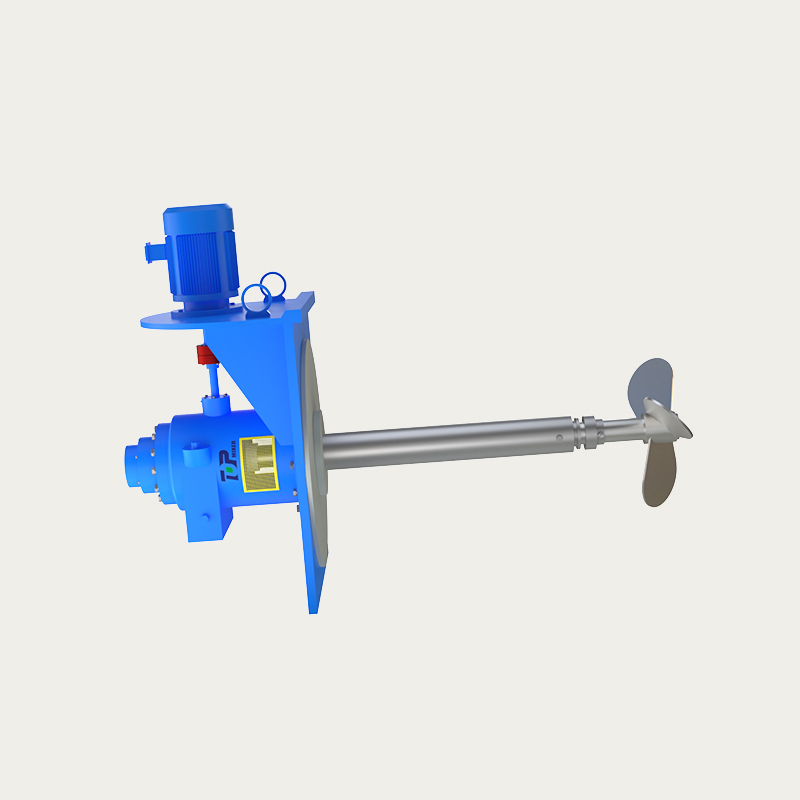
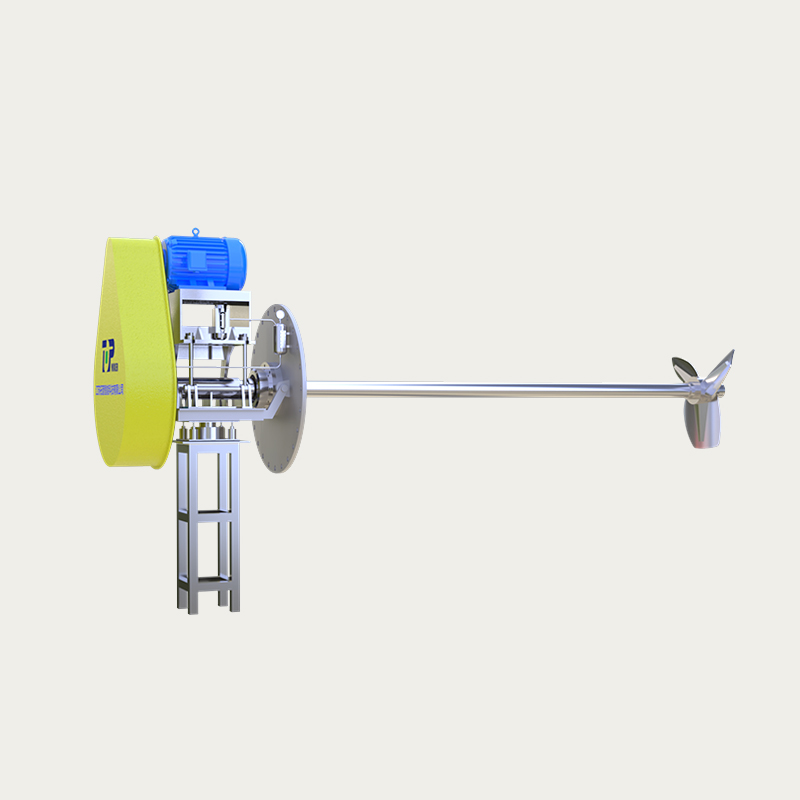
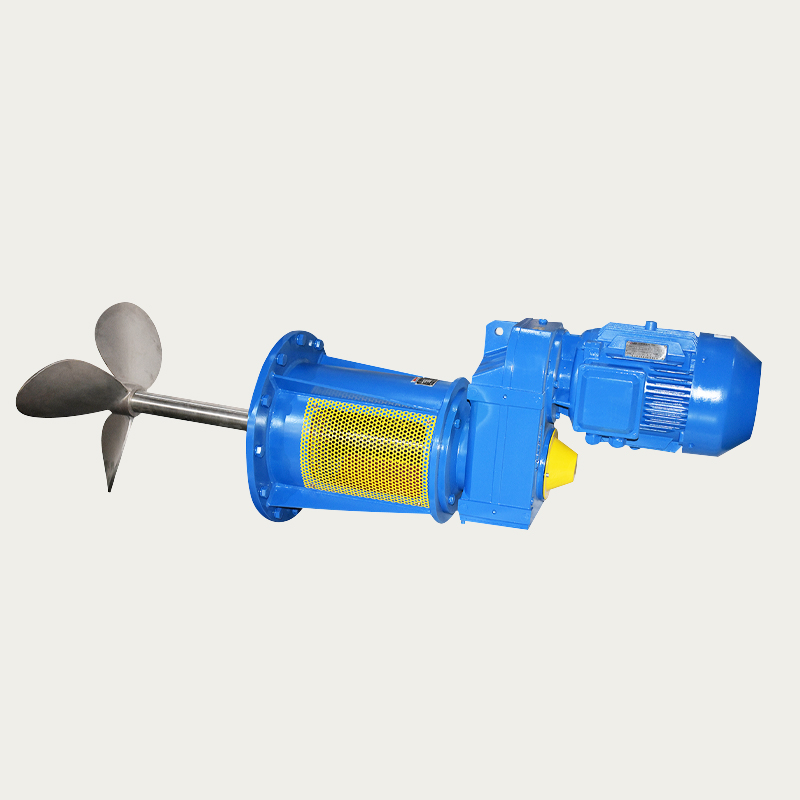
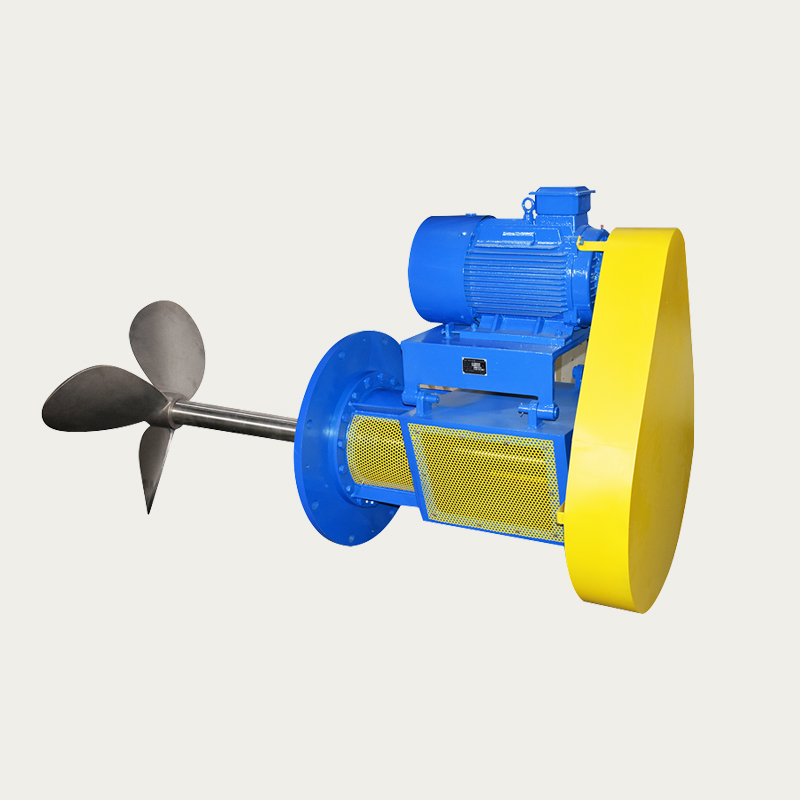
The Side-Entry Mixer, as a highly efficient industrial mixing equipment, significantly improves the efficiency of production lines through its unique design. Compared to traditional top or bottom feeding methods, its side feeding system better adapts to different types of materials, providing a more uniform and efficient mixing effect. The Side-Entry Mixer is widely used in industries such as chemicals, food, pharmaceuticals, coatings, and more. It effectively reduces production cycles, saves energy, improves product quality, and thus significantly enhances the overall efficiency of the production line.
1. Efficient Material Feeding Design, Reducing Mixing Time
One of the key features of the Side-Entry Mixer is its feeding method—materials enter the mixing tank from the side. Compared to traditional top or bottom feeding methods, this design allows for more even distribution of materials, reducing retention time within the equipment, ensuring more uniform mixing, and increasing mixing efficiency. Especially when dealing with high-viscosity or large-particle materials, the Side-Entry Mixer helps reduce material sedimentation, avoiding the efficiency losses caused by material buildup.
Data Support: For instance, in a chemical plant using the Side-Entry Mixer, the optimized side-feeding design reduced the production cycle by 15%. Particularly when handling high-viscosity raw materials, the mixing efficiency increased by 20%, greatly boosting the efficiency of the production line.
2. Uniform Mixing, Ensuring Product Quality
The unique design of the Side-Entry Mixer ensures uniform mixing of materials during the process, avoiding uneven material distribution. For production lines that require high-quality control (such as in the food, coating, and pharmaceutical industries), uniform mixing is crucial. The multi-blade agitator of the Side-Entry Mixer can thoroughly mix materials in a short amount of time, ensuring uniformity of components, reducing the production of non-conforming products, and thereby enhancing product stability and quality.
Practical Example: After introducing the Side-Entry Mixer, a paint factory saw an increase in product uniformity from 88% to over 95%. The quality of the paint became more stable during production, reducing returns and customer complaints. Additionally, the overall efficiency of the production line increased by 18%.
3. Reducing Energy Consumption and Lowering Production Costs
The Side-Entry Mixer not only improves mixing efficiency but also excels in energy savings. With its optimized mixing design, the Side-Entry Mixer can reduce the power consumption required for mixing. Compared to traditional mixers, it can save 10%-15% in energy consumption. For production lines operating for long hours, this can significantly reduce operating costs and improve economic benefits.
Energy Saving Comparison: A pharmaceutical company saw a 12% reduction in energy consumption after adopting the Side-Entry Mixer. Additionally, because mixing times were shortened, the load on the production line was effectively distributed, and the equipment failure rate decreased by 20%.
4. Improving Production Line Flexibility, Adapting to Different Material Mixing Needs
The Side-Entry Mixer is highly adaptable, able to handle different types and viscosities of materials, whether liquids, slurries, or high-viscosity raw materials. Particularly in industries such as chemicals, food, and pharmaceuticals, production lines often need to handle multiple types of materials simultaneously. The Side-Entry Mixer can easily meet the mixing needs of different materials, ensuring production flexibility and versatility.
Flexibility Advantage: In a food processing factory, the adaptability of the Side-Entry Mixer allowed it to handle various types of jam ingredients. By adjusting the mixer’s operating parameters, the company not only improved production efficiency but also ensured consistency in flavor and quality across different jam recipes.
5. Simplified Cleaning and Maintenance, Reducing Downtime
The design of the Side-Entry Mixer focuses on simplifying the cleaning and maintenance process, minimizing downtime on the production line. Its modular design not only makes disassembly and cleaning easier but also prevents material buildup and contamination issues. Especially in industries where production materials are frequently changed, the simple cleaning and maintenance process can maximize production uptime.
Maintenance Cost Analysis: According to feedback from a chemical plant, after using the Side-Entry Mixer, the cleaning and maintenance costs were reduced by 15% compared to traditional mixers. Additionally, the equipment failure rate significantly decreased. With more efficient cleaning, the production line’s downtime was reduced by 10%.
6. Enhancing the Automation Level of the Production Line
Modern Side-Entry Mixers are generally equipped with automation control systems that can automatically adjust operational parameters such as material type, mixing time, and speed. This intelligent operation not only ensures the stability of mixing effects but also helps avoid human errors, improving the level of automation on the production line and reducing dependence on manual intervention.
Automation Effect: After introducing the automation control system in the Side-Entry Mixer, a pharmaceutical company reduced manual intervention by 30%, and production line efficiency improved by 20%. Additionally, automated operations improved the controllability of the production process, reducing the production of non-conforming products.
Summary Table of How the Side-Entry Mixer Enhances Production Line Efficiency:
| Enhancement Factor | Advantages of the Side-Entry Mixer |
| Mixing Efficiency | Efficient and uniform mixing, shortening mixing time, improving production efficiency. |
| Production Cycle | Optimized feeding design reduces material retention time, shortening production cycles. |
| Energy Saving Effect | Reduces energy consumption by 10%-15%, lowering energy use and reducing production costs. |
| Adaptability | Adapts to different material mixing needs, enhancing production line flexibility. |
| Cleaning and Maintenance | Simple design, easy cleaning, reduces downtime, and lowers maintenance costs. |
| Automation Level | Automation control system improves production line stability, reduces manual intervention, and boosts production efficiency. |
The Side-Entry Mixer, with its unique feeding design, uniform mixing effect, and efficient energy performance, significantly enhances the efficiency of production lines. In industries such as chemicals, food, pharmaceuticals, and more, the Side-Entry Mixer not only saves energy and reduces costs but also improves product quality, shortens production cycles, and reduces equipment downtime. By introducing the Side-Entry Mixer, businesses not only enhance the overall efficiency of their production lines but also improve product consistency and market competitiveness.
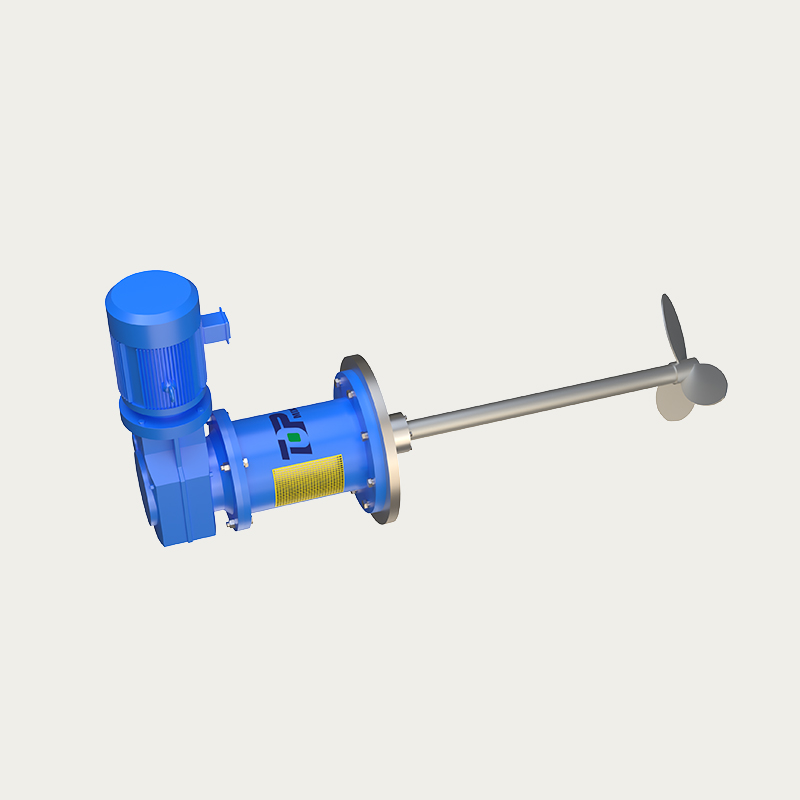
What Are the Advantages of the Side-Entry Mixer?
The Side-Entry Mixer, as an efficient industrial mixing equipment, has become widely used in various industries such as chemicals, food, and pharmaceuticals due to its unique design and excellent performance. Compared to traditional top or bottom feeding mixers, the Side-Entry Mixer offers many significant advantages, including higher mixing efficiency, stronger adaptability, lower energy consumption, and simpler cleaning and maintenance.
1. Efficient Material Mixing Effect
One of the most outstanding advantages of the Side-Entry Mixer is its excellent material mixing effect. Compared to traditional top or bottom feeding mixers, the Side-Entry Mixer can distribute materials more evenly, achieving more efficient mixing. Since materials enter the mixing tank from the side, they come into contact with the mixer more quickly and uniformly, reducing material sedimentation and accumulation. This is particularly prominent when handling high-viscosity materials or slurries containing particles.
Practical Example: A paint production company introduced the Side-Entry Mixer, and the product uniformity increased from 90% to over 95%. The uniform mixing effect of the equipment made the paint coating more even, the stability of the paint quality significantly improved during production, and the return rate decreased by 15%.
2. Shortened Production Cycles, Improved Production Efficiency
Due to innovations in the material feeding design, the Side-Entry Mixer can bring materials into the mixing tank more quickly, accelerating the mixing process. This design effectively reduces the retention time of materials, ensuring faster mixing. Compared to traditional equipment, the Side-Entry Mixer can typically complete the same mixing tasks in a shorter time, significantly improving production efficiency.
Time-Saving Advantage: For example, after a chemical company introduced the Side-Entry Mixer, the production cycle was shortened by 20%. Particularly when handling high-viscosity chemical raw materials, the mixing efficiency increased by 15%-20%, resulting in a substantial increase in the overall output of the production line.
3. Reducing Energy Consumption and Lowering Production Costs
The Side-Entry Mixer not only improves production efficiency but also effectively reduces energy consumption. Since the equipment can complete mixing tasks in a shorter time, it reduces the time required for high-power mixing, thus lowering electricity consumption. The energy-saving effect is especially significant in large-scale production lines, where it can save businesses a substantial amount of energy expenses.
Energy Consumption Comparison: A pharmaceutical company reduced its electricity consumption by 12% after introducing the Side-Entry Mixer. With the improved mixing design, the production line’s power demand was reduced, making the equipment operation more efficient and minimizing environmental impact.
4. Wide Applicability to Different Material Mixing Needs
The design of the Side-Entry Mixer makes it highly adaptable and capable of handling a wide variety of materials, including low to medium viscosity liquids, slurries, and particulate materials. Especially for production tasks that require higher mixing uniformity and mixing intensity, the Side-Entry Mixer can provide ideal mixing effects, ensuring the efficient operation of the production line.
Adaptability Advantage: In a food processing factory, the Side-Entry Mixer was able to efficiently handle various types of jam ingredients while maintaining uniformity in the mixing process. The company improved production efficiency and ensured consistent taste and quality across different batches of jam by adjusting the operating parameters.
5. Simplified Cleaning and Maintenance, Reducing Downtime
The design of the Side-Entry Mixer focuses on simplifying the cleaning and maintenance process, thereby reducing equipment downtime. Since materials enter the mixing tank from the side, the flow of materials inside the equipment is smoother, which reduces material accumulation and buildup, making cleaning more convenient. Additionally, the structure of the Side-Entry Mixer is typically simple, making disassembly and maintenance easy, which helps reduce equipment failure rates and extend the lifespan of the equipment.
Cleaning and Maintenance Efficiency: After using the Side-Entry Mixer, a chemical factory shortened its cleaning cycle from 3 days to 1 day, and annual maintenance costs were reduced by 10%. Due to the mixer’s design that facilitates cleaning, maintenance time was significantly shortened, and the overall operational efficiency of the production line was improved.
6. Automated Control System, Improving Production Line Stability
Modern Side-Entry Mixers are generally equipped with intelligent control systems that can automatically adjust mixing conditions based on the material’s viscosity, mixing time, and speed. This intelligent control not only ensures the stability of the mixing effect but also reduces human error, improving the level of automation on the production line. Automated control allows companies to reduce manual intervention while improving production efficiency and product consistency.
Automation Advantage: After introducing the automated control system of the Side-Entry Mixer, a pharmaceutical company reduced manual intervention by 30%, and the production line efficiency increased by 15%. Furthermore, the introduction of the automation system stabilized the production process and reduced the production of non-conforming products.
The Side-Entry Mixer, with its unique feeding design, efficient mixing effect, energy-saving performance, strong adaptability, and simple cleaning and maintenance, has become an indispensable, high-efficiency mixing device in modern production lines. Whether in chemicals, pharmaceuticals, food processing, or other industries, the Side-Entry Mixer helps businesses enhance production efficiency, reduce operating costs, and ensure product quality stability. By choosing the Side-Entry Mixer, companies can optimize production processes and stand out in a competitive market, boosting overall productivity.
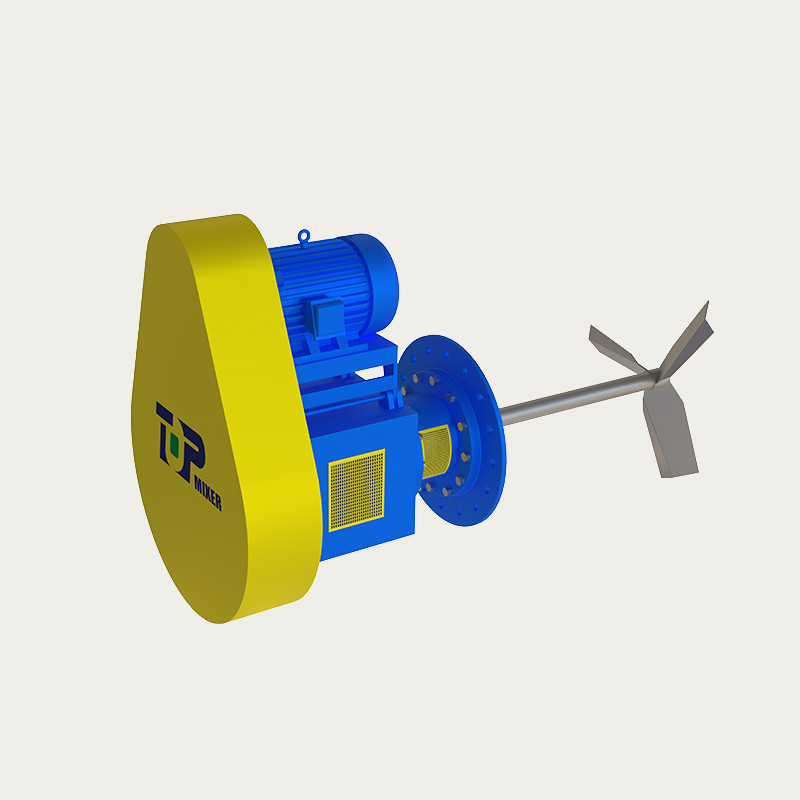
How Does the Side-Entry Mixer Improve Mixing Uniformity?
The Side-Entry Mixer, with its innovative feeding design and unique mixing mechanism, can significantly enhance mixing uniformity. This mixer allows materials to enter the mixing tank from the side, optimizing the material flow path, reducing retention and uneven distribution during the mixing process, and ensuring a uniform mixing result. Compared to traditional top or bottom feeding mixers, the Side-Entry Mixer not only has an advantage in material uniformity but also achieves higher efficiency and lower energy consumption during production.
1. Unique Side Feeding Design
One of the main advantages of the Side-Entry Mixer is its side feeding design. Traditional mixers typically use top or bottom feeding methods, which often lead to material accumulation near the feeding port, making it difficult to distribute the material evenly. The side feeding design of the Side-Entry Mixer allows materials to enter the mixing tank directly from the side, helping distribute the materials evenly throughout the entire mixing area, preventing accumulation during the mixing process, and thus improving the mixing uniformity.
Practical Example: In a chemical plant using the Side-Entry Mixer for high-viscosity material mixing, the accumulation problem near the feeding port was effectively solved, and the mixing uniformity increased from 80% to 95%. This improvement made the produced chemicals more stable in quality and reduced raw material waste.
2. Optimized Mixing Paddle Design
The Side-Entry Mixer typically uses a multi-blade paddle design. This design can mix materials thoroughly in a short amount of time and ensure mixing uniformity. Different types of mixing paddles (such as frame-style, spiral, or blade-type) are suitable for materials with varying viscosities and provide ideal mixing effects, reducing dead zones and material accumulation, thus improving mixing uniformity.
Multi-Blade Paddle: Provides strong shear force and flowability, suitable for high-viscosity or particulate materials.
Spiral Paddle: Suitable for more fluid materials and effectively guides the material to distribute it evenly.
Data Support: In a paint production company, after adopting the Side-Entry Mixer with multi-blade paddles, the coating uniformity of the product increased from 90% to 98%. The optimized paddle design ensured more even distribution of paint color and texture, and the rate of defective products was significantly reduced.
3. Reducing Material Sedimentation and Retention
The design of the Side-Entry Mixer effectively prevents materials from accumulating at the bottom or top of the mixing tank. Traditional mixers often experience material accumulation at the bottom, leading to uneven mixing, especially when handling high-viscosity or large particulate materials. The Side-Entry Mixer’s side feeding and efficient paddle design ensure smoother material flow, reducing material retention and sedimentation, thereby guaranteeing mixing uniformity.
Practical Example: In a food processing factory, the Side-Entry Mixer was used to mix fruit juice, avoiding the material accumulation problem seen in traditional mixers at the bottom of the mixing tank. This made the juice composition more uniform. After this improvement, the juice quality stability increased by 18%, and the product consistency was enhanced.
4. Strong Adaptability to Meet Various Material Needs
The Side-Entry Mixer can handle a wide variety of materials, including liquids, slurries, and particulate materials. When facing materials of different viscosities and particle sizes, the Side-Entry Mixer can adjust mixing parameters (such as speed, mixing time, etc.) based on the material's characteristics, ensuring that each material receives the optimal mixing effect. The design’s strong adaptability ensures that the Side-Entry Mixer provides ideal mixing uniformity for a range of materials.
Adaptability Data: A pharmaceutical company used the Side-Entry Mixer for mixing drug solutions and was able to handle liquids and solid drug ingredients of varying viscosities. In terms of mixing uniformity, the Side-Entry Mixer outperformed traditional mixers, with the uniformity of the drug solution increasing by 25%.
5. Increased Mixing Speed, Shortened Production Cycles
The efficient mixing design of the Side-Entry Mixer not only improves mixing uniformity but also significantly shortens production cycles. Since materials can be evenly distributed in the mixing tank, the mixer can complete material blending in a shorter time, reducing overall downtime in the production line. The high mixing speed and optimized material flow path ensure rapid operation of the production line, improving production efficiency.
Production Cycle Comparison: In a chemical company, after using the Side-Entry Mixer, the mixing time was reduced by approximately 20%. This efficient mixing process not only increased production efficiency but also reduced the costs associated with equipment downtime.
Summary Table of Factors Enhancing Mixing Uniformity in the Side-Entry Mixer:
| Enhancement Factor | Advantages of the Side-Entry Mixer |
| Feeding Design | Side feeding reduces material sedimentation, ensures even distribution, and improves mixing uniformity. |
| Mixing Paddle Design | Multi-blade and spiral mixing paddles adapt to different materials, providing strong shear force and uniform mixing effects. |
| Reducing Material Retention | Side feeding and optimized design reduce material accumulation, preventing uneven mixing and ensuring effective mixing. |
| Adaptability | Capable of handling various types of materials, ensuring optimal mixing uniformity for each material. |
| Production Efficiency | Increased mixing speed, shortened production cycles, and enhanced production line efficiency. |
| Mixing Uniformity | Significant improvement in uniformity during the mixing process, ensuring product quality and stability. |
The Side-Entry Mixer, through its unique feeding design, optimized mixing paddles, reduction of material retention, and strong adaptability, effectively enhances mixing uniformity. In industries such as chemicals, food processing, and pharmaceuticals, the application of the Side-Entry Mixer ensures that materials are evenly mixed during production, thereby improving product quality and reducing the occurrence of defective products. Additionally, the equipment helps improve production efficiency, shorten production cycles, reduce energy consumption, and lower production costs. By choosing the Side-Entry Mixer, companies can enhance overall production line efficiency while ensuring high-quality product output, helping them gain a competitive advantage in the market.
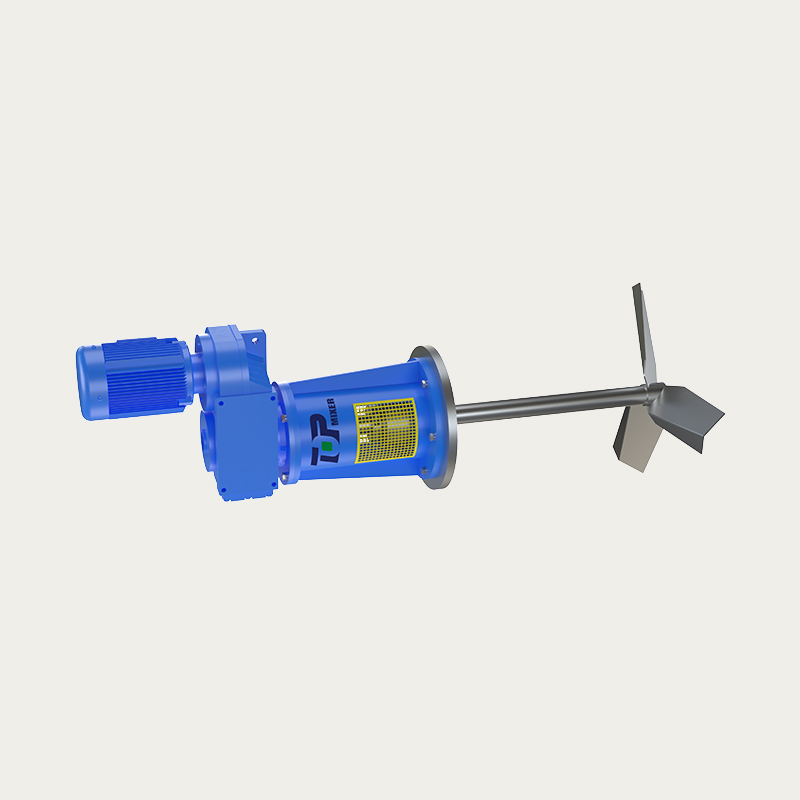
How Does the Side-Entry Mixer Reduce Production Costs?
In modern production processes, optimizing equipment configuration to reduce production costs has become a core focus for many companies. The Side-Entry Mixer, with its unique design and efficient mixing performance, not only enhances production efficiency but also effectively reduces production costs. Compared to traditional mixing equipment, the Side-Entry Mixer helps companies achieve lower production costs by reducing energy consumption, improving material utilization, shortening production cycles, and lowering maintenance and cleaning costs.
1. Reducing Energy Consumption, Lowering Electricity Costs
The high-efficiency mixing design of the Side-Entry Mixer allows materials to be mixed in a shorter time, typically reducing electricity consumption by 15%-20% compared to traditional mixers. The Side-Entry Mixer’s side feeding design and optimized paddle structure allow for faster and more uniform material mixing, which in turn reduces power consumption. This energy-saving effect not only helps reduce production costs but also lessens the environmental burden, making it an important tool for achieving green production.
Energy-Saving Example: After introducing the Side-Entry Mixer into its production process, a chemical plant reduced its electricity consumption by 18%. The power demand of the production line decreased, and the overall efficiency of the equipment was significantly improved, saving approximately ¥100,000 in electricity costs annually.
2. Shortening Production Cycles, Improving Production Efficiency
The length of the production cycle directly impacts production costs. Due to its design features, the Side-Entry Mixer can complete mixing tasks in a shorter time. Compared to traditional equipment, the Side-Entry Mixer reduces material retention and mixing time through efficient mixing paddles and a well-designed feeding system, greatly shortening the production cycle. This not only increases the efficiency of the production line but also maximizes production capacity.
Production Cycle Comparison: After using the Side-Entry Mixer in a food processing plant, the production cycle was shortened by 20%. For example, in jam production, the mixing time was reduced from 45 minutes to 35 minutes, improving production efficiency by 22%. This change means that the production line can complete more tasks in the same amount of time, increasing overall capacity.
3. Improving Material Utilization, Reducing Raw Material Waste
Traditional mixers often lead to material accumulation, sedimentation, and other issues during the mixing process, resulting in material loss. The Side-Entry Mixer’s side feeding design and optimized mixing method reduce material buildup inside the equipment, ensuring uniform mixing and efficient use of materials. This not only improves material utilization but also reduces raw material waste due to uneven mixing, thus lowering production costs.
Material Utilization Improvement Example: After adopting the Side-Entry Mixer, a paint company found that its material utilization increased by 15%. Moreover, the improved mixing uniformity increased the yield of finished products, reducing rework and waste. The company saved approximately ¥500,000 in raw material costs annually.
4. Reducing Equipment Maintenance and Cleaning Costs
The design of the Side-Entry Mixer focuses on simplifying cleaning and maintenance, reducing production line downtime. Its simple structure and side feeding design prevent material accumulation at the bottom of the mixing tank, making cleaning more efficient and convenient. With less downtime and cleaning work, the production line can maintain stable operation for longer periods, thereby reducing equipment maintenance and downtime costs.
Maintenance Cost Reduction: After introducing the Side-Entry Mixer, a pharmaceutical company reduced the cleaning time from 2 hours to 1 hour, and the annual maintenance cost dropped by 12%. The company also saved about ¥80,000 in cleaning costs per year by reducing the use of chemicals during the cleaning process.
5. Lowering Labor Costs, Increasing Automation
Modern Side-Entry Mixers are often equipped with intelligent control systems that automatically adjust mixing time, speed, and other parameters according to material characteristics, reducing the need for manual intervention. This automation not only reduces human errors but also increases the automation level of the production line, decreasing the dependence on manual labor and thereby lowering labor costs.
Automation Improvement Example: After introducing the Side-Entry Mixer with an intelligent control system, a paint production company reduced manual intervention by 40%, significantly lowering operational costs. With the increase in automation, production efficiency improved by 18%, and labor costs were reduced by approximately ¥150,000 annually.
6. Improving Production Consistency, Reducing Defect Rates
The high-efficiency mixing and uniform blending of the Side-Entry Mixer ensure consistent product quality. For industries that require strict quality control (such as food and pharmaceuticals), the stability of the mixer directly affects product yield. By using the Side-Entry Mixer, companies can reduce product quality issues caused by uneven mixing, thereby lowering the costs of rework and scrap.
Quality Consistency Improvement: After introducing the Side-Entry Mixer, a pharmaceutical company significantly improved the consistency of its product quality. The rework rate dropped by 10%, resulting in a reduction of approximately ¥300,000 in scrap costs annually.
Summary Table of Factors Reducing Production Costs with the Side-Entry Mixer:
| Cost Reduction Factor | Advantages of the Side-Entry Mixer |
| Energy Consumption | Energy consumption reduced by 15%-20%, effectively lowering electricity costs. |
| Production Cycle | Mixing time reduced by 20%, improving production efficiency and capacity. |
| Material Utilization | Optimized mixing design reduces raw material waste, improving material utilization and lowering raw material costs. |
| Equipment Maintenance and Cleaning Costs | Cleaning time reduced, maintenance costs reduced by 12%, and downtime minimized. |
| Labor Costs | Automated control reduces manual intervention, saving about 10%-15% in labor costs. |
| Product Consistency | Improved product quality consistency, reduced defect rates, and lower scrap and rework costs. |
The Side-Entry Mixer, with its high-efficiency mixing design, energy-saving operation, and easy maintenance and cleaning features, has become an essential piece of equipment for reducing production costs in many industries. By reducing energy consumption, shortening production cycles, improving material utilization, lowering maintenance costs, and enhancing automation, the Side-Entry Mixer can significantly lower production costs, improve efficiency, and help companies gain a competitive advantage in the market.
How Does the Side-Entry Mixer Adapt to Different Material Mixing Demands?
The Side-Entry Mixer, with its unique feeding method and high-efficiency mixing performance, is capable of meeting the mixing needs of various materials. It is widely used in industries such as chemicals, pharmaceuticals, food, and coatings. Compared to traditional mixers, the Side-Entry Mixer offers exceptional flexibility and adaptability, allowing it to handle various types of materials, including high-viscosity liquids, slurries, particulate materials, and powders. Whether it is uniform mixing of liquids or effective dispersion of particles, the Side-Entry Mixer provides optimal mixing performance, ensuring mixing quality during production.
1. Flexible Feeding Design to Adapt to Different Material Entry Methods
One of the most significant features of the Side-Entry Mixer is its side-entry feeding design. This design allows the mixer to achieve more uniform material distribution when handling different types of materials, preventing the common issue of material accumulation and uneven mixing seen in top-feed or bottom-feed mixers. Side-entry feeding not only improves the mixer's adaptability but also allows adjustment of the feed rate based on the characteristics of different materials, ensuring that each material enters the mixing zone effectively for the best mixing results.
Adaptability Example: In a fertilizer plant, the Side-Entry Mixer was used to process granular raw materials. Thanks to the unique feed inlet design, materials entered the mixing tank uniformly, preventing material accumulation and uneven mixing. As a result, the mixing efficiency improved by 15%, and production efficiency increased by 10%.
2. Powerful Paddle Design for High-Viscosity and Particulate Materials
The paddle design of the Side-Entry Mixer typically features a multi-blade structure that generates strong shear forces, making it ideal for mixing high-viscosity materials. The mixer’s paddles come in various shapes (such as helical, frame-style, or blade-type), enabling the Side-Entry Mixer to process a wide range of materials, from liquids and slurries to powders and particulate matter. For high-viscosity liquids and slurries, the mixer enhances the shear forces in the fluid and accelerates the mixing speed to ensure uniform blending. For materials containing particles, the Side-Entry Mixer effectively disperses the particles, preventing agglomeration during the mixing process.
Data Support: In a pharmaceutical company, the Side-Entry Mixer was used to mix high-viscosity drug solutions. As a result, the uniformity of the mixture improved by 20%, and the rejection rate during production was reduced by 12%. The same equipment also handled particulate materials, improving particle dispersion by 18%.
3. Adaptability to Different Viscosities and Flow Properties
Because the Side-Entry Mixer can adjust mixing parameters such as speed and mixing time based on material characteristics, it can easily adapt to materials with different viscosities and flow properties. For low-viscosity liquids, the mixer can use lower speeds and moderate mixing times for quick blending. In contrast, when dealing with high-viscosity liquids or slurries, the mixer increases the speed and extends the mixing time to ensure full mixing.
Adaptability Example: A food processing plant used the Side-Entry Mixer to mix sauces with varying viscosities. When mixing low-viscosity tomato sauce, the device was set to a lower speed, and the mixing time was 30 minutes. However, when processing high-viscosity cream sauce, the device automatically adjusted the speed and time, extending the mixing time to 45 minutes, but achieving extremely uniform mixing, ensuring consistent product quality.
4. Dead-Zone Free Design for Complete Material Mixing
The Side-Entry Mixer features a dead-zone-free design within its mixing tank, effectively preventing material retention or accumulation during the mixing process. Traditional mixers often create dead zones at the bottom or top of the tank, where materials are not fully mixed, negatively impacting the final blending outcome. The Side-Entry Mixer, with its even material flow path, ensures that every part of the material is fully mixed, avoiding any uneven distribution.
Cleaning and Mixing Effect: In a chemical plant, after using the Side-Entry Mixer, the dead-zone-free design reduced raw material accumulation. The uniformity of the mixed chemicals improved by 25%. Additionally, the easy-to-clean design reduced cleaning time and downtime, which enhanced production efficiency.
5. Intelligent Control System for Precise Adjustment of Mixing Parameters
Many modern Side-Entry Mixers are equipped with intelligent control systems that automatically adjust mixing time, speed, and paddle angles, further improving the accuracy of mixing. Based on the characteristics of different materials, the control system can automatically optimize mixing parameters based on real-time feedback, ensuring the best results during the mixing process. The addition of an intelligent control system not only enhances the mixer's adaptability but also ensures process stability and reduces the impact of human errors on mixing outcomes.
Automation and Intelligence Advantage: In a chemical company, the Side-Entry Mixer's intelligent control system automatically adjusted mixing parameters to meet the needs of different chemical reactions. By using this system, the mixing time and speed during production were precisely controlled, ensuring that the material achieved the optimal mixing effect at each stage, improving product stability and consistency by 15%.
6. Multifunctional Adaptability to Meet Multiple Industry Needs
The Side-Entry Mixer is not only suitable for mixing liquids and slurries but can also handle materials containing solid particles. In industries such as coatings, food processing, pharmaceuticals, and chemicals, the Side-Entry Mixer shows strong adaptability. In the coatings industry, it ensures the uniformity of the paint; in the food industry, it can handle a variety of materials, from fruit juices to sauces; in the pharmaceutical industry, it can effectively mix various drug solutions, ensuring uniform distribution of ingredients.
Industry Adaptability Example: After adopting the Side-Entry Mixer, a paint manufacturing company saw an 18% improvement in the mixing effect of pigments and resins in the paint. The quality and uniformity of the paint improved significantly. Simultaneously, the equipment effectively handled different paint formulations, improving production efficiency by 20%.
Summary Table: How the Side-Entry Mixer Meets Different Material Mixing Needs
| Mixing Requirement | Advantages of the Side-Entry Mixer |
| Liquids and Slurries | Efficient mixing for different viscosities of liquids and slurries, ensuring uniform blending through adjustable mixing parameters. |
| High-Viscosity Materials | Powerful shear paddle design for mixing high-viscosity liquids, ensuring uniform mixing results. |
| Particulate and Powder Materials | Side-entry design effectively disperses particles, preventing agglomeration, ideal for uniform mixing of particulates and powders. |
| Automation and Intelligent Control | The intelligent control system optimizes mixing parameters, improving mixing precision and production stability. |
| Multi-Industry Adaptability | Efficiently mixes different materials in coatings, food, pharmaceuticals, etc., ensuring consistent quality and production efficiency. |
The Side-Entry Mixer, with its unique design, powerful adaptability, and efficient mixing capabilities, meets the mixing needs of different materials. From high-viscosity liquids to particulate materials, and materials with varying viscosities and flow properties, the Side-Entry Mixer provides superior mixing performance by adjusting mixing parameters, optimizing paddle designs, and using dead-zone-free structures. The introduction of intelligent control systems further enhances its adaptability in various production environments, ensuring stable and uniform mixing throughout the process.


- No. 118, Chuangye Road, Jieshou Town, Gaoyou City, Yangzhou, Jiangsu Province, China
- [email protected]
- Landline: +86-0510-83383966 +86-0510-83390667
- Telphone: +86-0510-83390667
- Mr. Chen: +86-18061519769 Mr. Xu: +86-13706183972
- Mr. Lu: +86-18915337056
- Product Link
- Top-Entry Mixer
- Bottom-Entry Mixer
- Side-Entry Mixer
- SIGN UP
- Sign up to be the first to find out the latest news from Top Intelligent Technology
- Subscribe

