

 English
 日本語
日本語 русский


High Speed Disperser | Working Principle, Types, and How to Select the Right One
Content
- 1 What Is a High-Speed Disperser?
- 2 How Does a High-Speed Disperser Work?
- 3 High-Speed Disperser vs. Agitator
- 4 Selecting the Right High Speed Disperser
- 5 Common Operating Issues and Practical Fixes
- 6 Disperser Solutions for Production Lines
- 7 Frequently Asked Questions
- 7.1 Q1: What is the difference between a disperser and a high speed mixer?
- 7.2 Q2: How do I choose a high speed disperser blade?
- 7.3 Q3: What is the typical high speed disperser capacity?
- 7.4 Q4: Can a high speed disperser handle high viscosity?
- 7.5 Q5: Why does the blade sit near the bottom of the tank?
- 7.6 Q6: What safety measures should be followed?
When a batch of paint or adhesive sits in a tank after raw material loading, the dry pigment still floats in lumps. A slow agitator may take 40 minutes to wet those clusters into the resin. A high speed disperser shortens that time to minutes because it puts far more power into a smaller volume of material. The practical result is a smoother slurry, shorter cycle time, and less downstream milling.
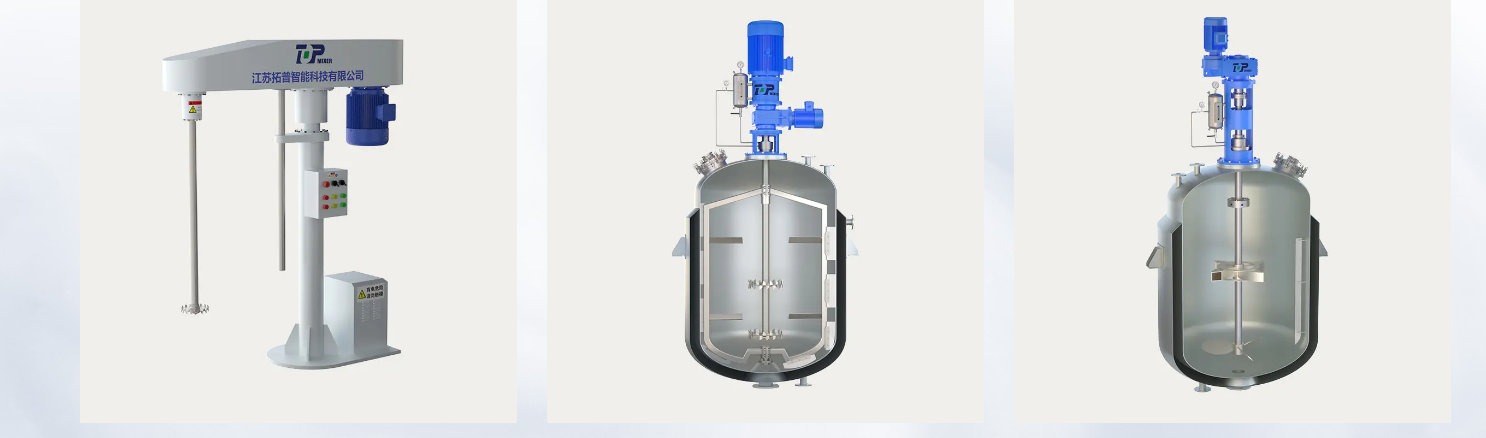
What Is a High-Speed Disperser?
A high speed disperser is a processing unit designed to disagglomerate and wet solids in a liquid carrier. Industry guides often describe it as a high-powered, low-volume pump because it delivers a high energy density per gallon of fluid. The machine normally consists of a motor, a drive shaft, and a saw-tooth blade at the bottom of the tank.
Figure 1. Structural layout of a tank-mounted high speed disperser.
The blade is the only rotating element that touches the product. Its saw-tooth edge generates the high shear that breaks up agglomerates. Because the blade runs close to the tank bottom, it also draws the whole batch into a continuous circulation pattern.
How Does a High-Speed Disperser Work?
The blade spins at high speed and creates a strong velocity gradient between the liquid layers. The saw teeth accelerate the liquid at the blade edge, while the surrounding fluid stays relatively still. The resulting shear forces pull agglomerates apart.
Figure 2. Tip speed ranges commonly quoted for different dispersion applications.
Tip speed is the preferred control variable because it stays constant as the tank volume changes. Disperser suppliers consistently quote 4,000 to 6,000 ft/min as the working range for most paints, inks, and pigment slurries. Lower speeds tend to leave sediment behind, while higher speeds can create excessive vortexing and air entrainment.
High-Speed Disperser vs. Agitator
If the process only needs to keep a blended slurry uniform, a standard agitator is the right tool. If the goal is to disintegrate powder lumps and fully wet particle surfaces, a high speed disperser is required. The conclusion is straightforward: the disperser wins whenever the job includes solid particle dispersion, and the agitator wins when the material is already homogeneous.
| Parameter | High Speed Disperser | Standard Agitator |
|---|---|---|
| Primary function | Break agglomerates and wet particles | Maintain suspension or blend miscible liquids |
| Blade style | Saw-tooth, open design | Propeller, turbine, frame, ribbon |
| Tip speed | 4,000–6,000 ft/min | 500–1,500 ft/min |
| Power density | 2–5 hp per 100 gal | 0.1–1 hp per 100 gal |
| Typical batch stage | Grind paste preparation | Final letdown and uniformity |
In a coatings plant, the disperser often runs first to make a concentrated grind paste. The agitator then takes over after the paste is let down with the remaining resin and solvent. Using the wrong device at the wrong stage increases cycle time and can leave residual agglomerates.
Selecting the Right High Speed Disperser
Three factors determine a workable installation: tank diameter, blade diameter, and motor power. As a practical rule, blade diameter is roughly one-third of the tank diameter. Motor power follows from the batch viscosity and the expected solid load.
| Tank Volume | Motor Power | Blade Diameter |
|---|---|---|
| 200 gal | 10–15 hp | 18–20 in |
| 500 gal | 25–40 hp | 28–32 in |
| 1,000 gal | 50–75 hp | 40–44 in |
- Check the product viscosity at the operating shear rate, not at rest.
- Choose a variable frequency drive when solids loading varies between batches.
- Consider a hydraulic lift if the process requires multiple tank changes during the day.
- Use a supplier that supports the process design with CFD flow analysis to avoid short-circuit flow and dead zones.
Common Operating Issues and Practical Fixes
Dispersers fail more often from operating habits than from machine defects. The main issues show up as batch temperature rise, poor wetting, blade wear, and motor overload.
- Overheating: lower the tip speed or run the disperser in short intervals. A water-jacketed tank also helps.
- Poor wetting: add powder slowly into the vortex to avoid floating agglomerates, and use a wetting agent if needed.
- Blade wear: inspect the saw teeth monthly. A rounded edge reduces shear force and increases batch-to-batch variation.
- Motor overload: start with a low solid load and add the remaining powder only after the base paste is moving.
- Air entrainment: keep the blade below the surface and avoid excessive vortex depth.
Disperser Solutions for Production Lines
For a dedicated high speed dispersion stage in paint, ink, or battery slurry production, the FL series high speed disperser provides a self-contained batch unit with a compact footprint.
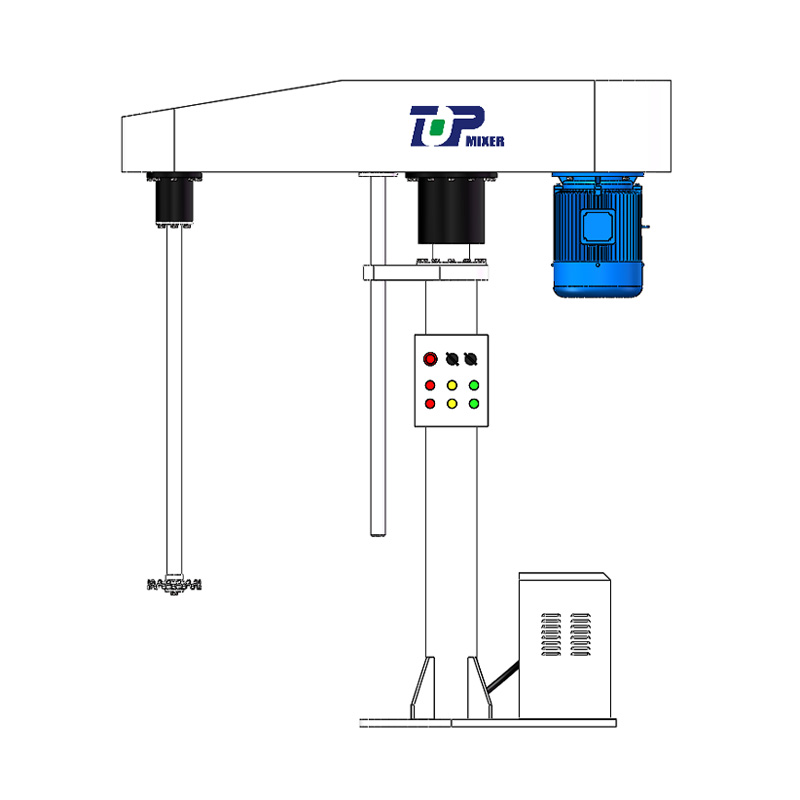 TOPH51 Series FL High Speed Disperser for Paint, Ink, and Battery SlurryThe FL series offers a self-contained batch unit with a compact footprint, ideal for high-speed dispersion in chemical processing. Its toothed dispersion tray ensures efficient mixing and particle size reduction.View Product →
If the process calls for a top-entry design that fits into an existing tank, the FS1 series offers a convenient stationary or hydraulic-lift configuration with the same saw-tooth blade approach.
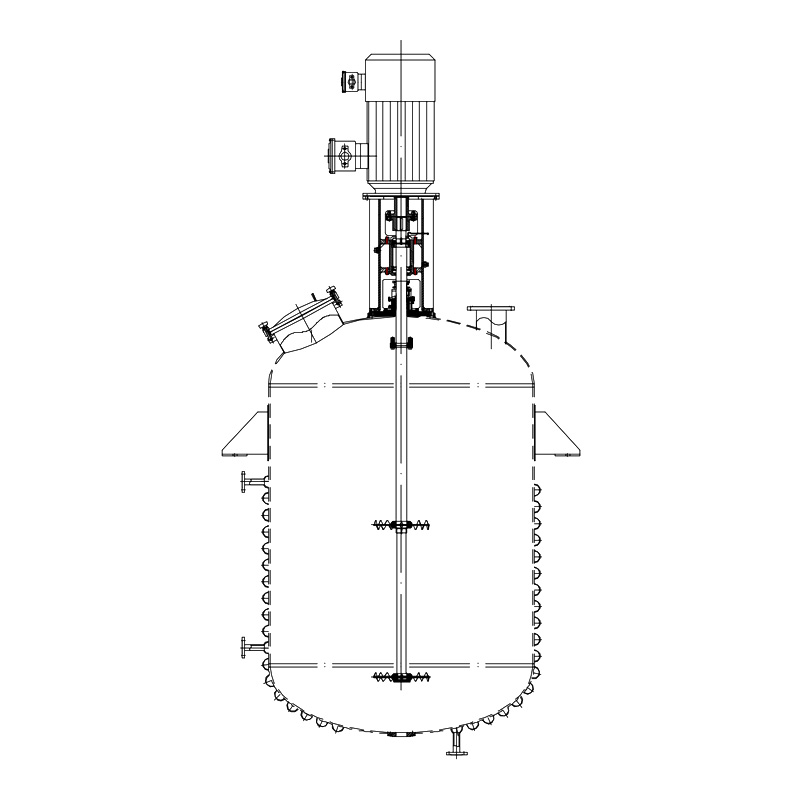 TOPA005 FS1 Series High Speed Disperser with Stationary or Hydraulic-Lift ConfigurationThe FS1 series provides a top-entry design for existing tanks, with stationary or hydraulic-lift options. It features high-efficiency impellers, variable frequency drive, and robust construction for reliable operation.View Product →
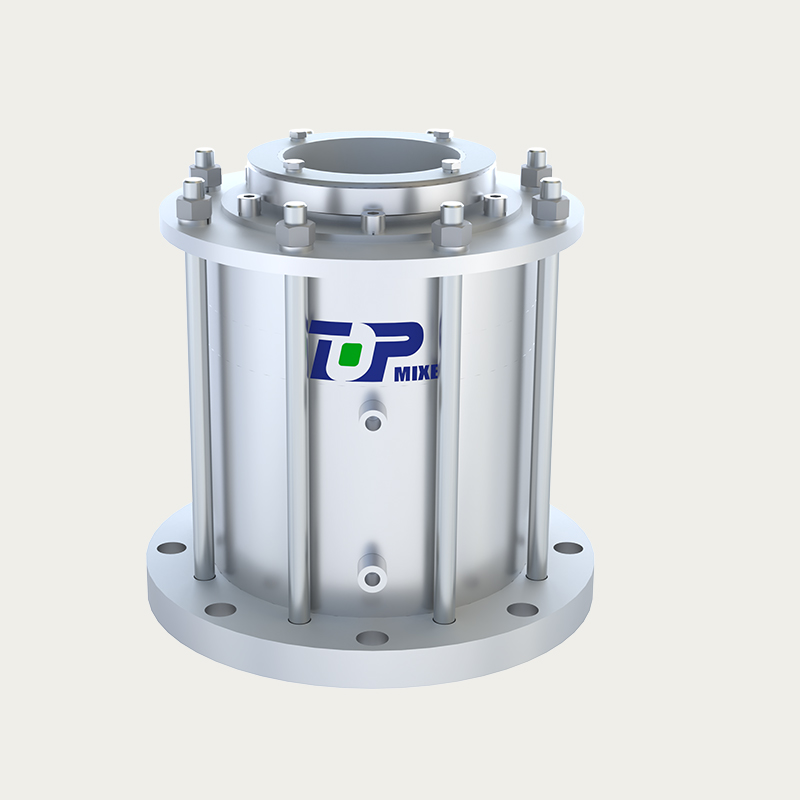
Both machines are supplied with a variable frequency drive and custom blade geometry. Application experience from the company's chemical industry case studies indicates that the disperser is only part of the solution; the mixing chamber, feed point, and shaft seal must be coordinated as a system.
Frequently Asked Questions
Q1: What is the difference between a disperser and a high speed mixer?
A high speed disperser is designed to break agglomerates and wet solids. A high speed mixer mainly keeps liquids or fine solids in motion. The disperser uses a saw-tooth blade and much higher tip speed.
Q2: How do I choose a high speed disperser blade?
Start with a saw-tooth blade for most dispersion work. For sticky pastes, a double-wave or custom profile can help. The blade diameter should be about one-third of the tank diameter.
Q3: What is the typical high speed disperser capacity?
Batch units range from laboratory containers below 50 liters to production tanks above 2,000 liters. Motor power scales from 5 hp to more than 100 hp depending on viscosity and solids content.
Q4: Can a high speed disperser handle high viscosity?
It can handle moderately high viscosity, but extremely thick pastes need a slower, torque-driven mixer or a three-shaft machine. Viscosity above 50,000 cP usually requires a different process approach.
Q5: Why does the blade sit near the bottom of the tank?
The blade works best when it is close to the tank bottom because it creates a circulation loop that pulls material from above down into the shear zone. This avoids dead areas where solids can accumulate.
Q6: What safety measures should be followed?
Lock out the drive before inspecting the blade, keep the tank sealed to prevent solvent vapor buildup, and follow the manufacturer's guidelines for earthing and grounding.


- No. 118, Chuangye Road, Jieshou Town, Gaoyou City, Yangzhou, Jiangsu Province, China
- [email protected]
- Landline: +86-0510-83383966 +86-0510-83390667
- Telphone: +86-0510-83390667
- Mr. Chen: +86-18061519769 Mr. Xu: +86-13706183972
- Mr. Lu: +86-18915337056
- Product Link
- Top-Entry Mixer
- Bottom-Entry Mixer
- Side-Entry Mixer
- SIGN UP
- Sign up to be the first to find out the latest news from Top Intelligent Technology
- Subscribe

