

 English
 日本語
日本語 русский


High Shear Mixer Buyer's Guide: Rotor-Stator Selection, Duty and Sizing
Content
A batch that should be a stable emulsion still shows visible droplets on a dip slide after forty minutes of stirring, and every attempt to fix it by raising the agitator speed simply warms the product up. The agitator is doing its job — it moves the whole tank — but it is not doing the one thing the recipe actually needs: putting a large amount of energy into a very small volume of liquid.
That is what a high shear mixer is for. The short version, before the detail: if your goal is a target droplet or particle size, you need rotor-stator shear; if your goal is blending, suspension or heat transfer, a conventional impeller will do it for less money and less heat. Most disappointing high shear installations are not badly built machines. They are the right machine applied to the wrong duty.
 |
 |
What a High Shear Mixer Actually Does
Shear is a velocity gradient — the difference in speed between two layers of fluid divided by the distance between them. Inside a rotor-stator workhead, the rotor tip sweeps past a stationary stator wall across a gap measured in millimetres. A tip speed of 20 m/s across a 1 mm gap corresponds to a local shear rate on the order of 20,000 reciprocal seconds. In the bulk of the same tank, an impeller discharge zone rarely exceeds a few hundred. Those two or three orders of magnitude are the whole story of high shear mixing.
Energy density, not shaft speed
Motor power on its own tells you very little. Shear rate scales roughly with tip speed, while power in turbulent flow scales with something close to the cube of tip speed. Doubling speed doubles the shear the product sees but asks for roughly eight times the power, and nearly all of that extra energy becomes heat in the product. A modest rotor-stator head can beat a much larger agitator at making an emulsion, and lose badly to it at blending. Sizing has to start from the unit operation, not from the kilowatt rating.
Batch and inline are two different machines
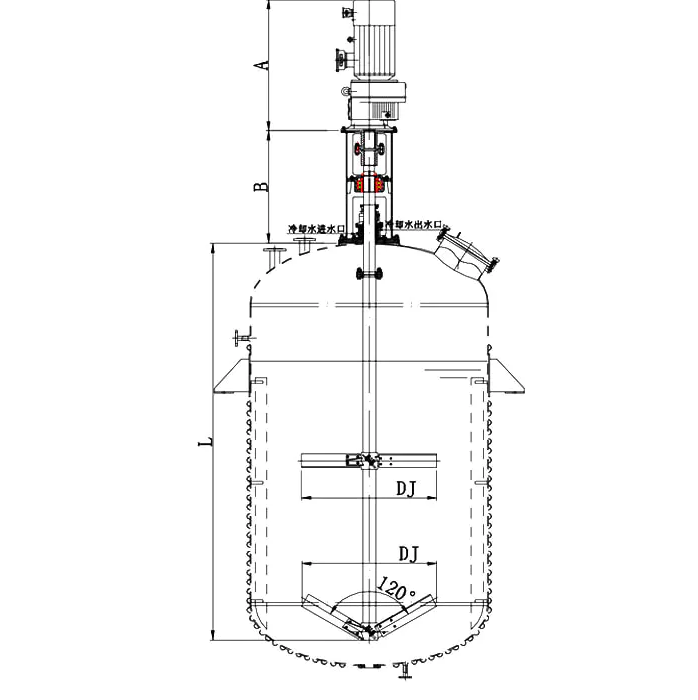
- A batch high shear mixer carries the workhead into the vessel, usually on a top-entry shaft. The whole batch circulates through the shear zone many times, so the recipe has a clear endpoint and one vessel does everything.
- An inline high shear mixer pumps product through a chamber containing the rotor and stator. It may run as a single pass or as a recirculation loop, and it gives far better temperature control because the shear zone holds only a small volume of product at a time.
Either way, the high shear zone is small, and the rest of the vessel still has work to do: feeding product into the head consistently, avoiding dead zones in the corners, and keeping solids off the bottom. That is the question flow modelling answers before any steel is cut, which is why the CFD work described on this site's fluid dynamics service page is usually the first step in a difficult dispersion project.
 |
 |
 |
 |
High Shear Versus Conventional Agitation: A Decision Table
Most specification arguments come from treating all mixing as one operation. It is really three operations that happen to share a tank.
| Parameter | Conventional impeller | High-speed disperser | Rotor-stator head |
|---|---|---|---|
| Primary job | Bulk flow, blending, suspension, heat transfer | Wetting out powders, breaking agglomerates | Emulsification, fine dispersion, de-agglomeration |
| Typical tip speed | 2-8 m/s | 10-20 m/s | 15-25 m/s |
| Realistic size target | Not applicable | Tens of micrometres | Single digits to low tens of micrometres |
| High-viscosity capability | Good with the right geometry | Limited | Poor in batch mode; use inline or planetary |
| Heat added per batch | Low | Moderate | High |
| Scale-up risk | Low | Moderate | Moderate to high; pilot testing is advised |
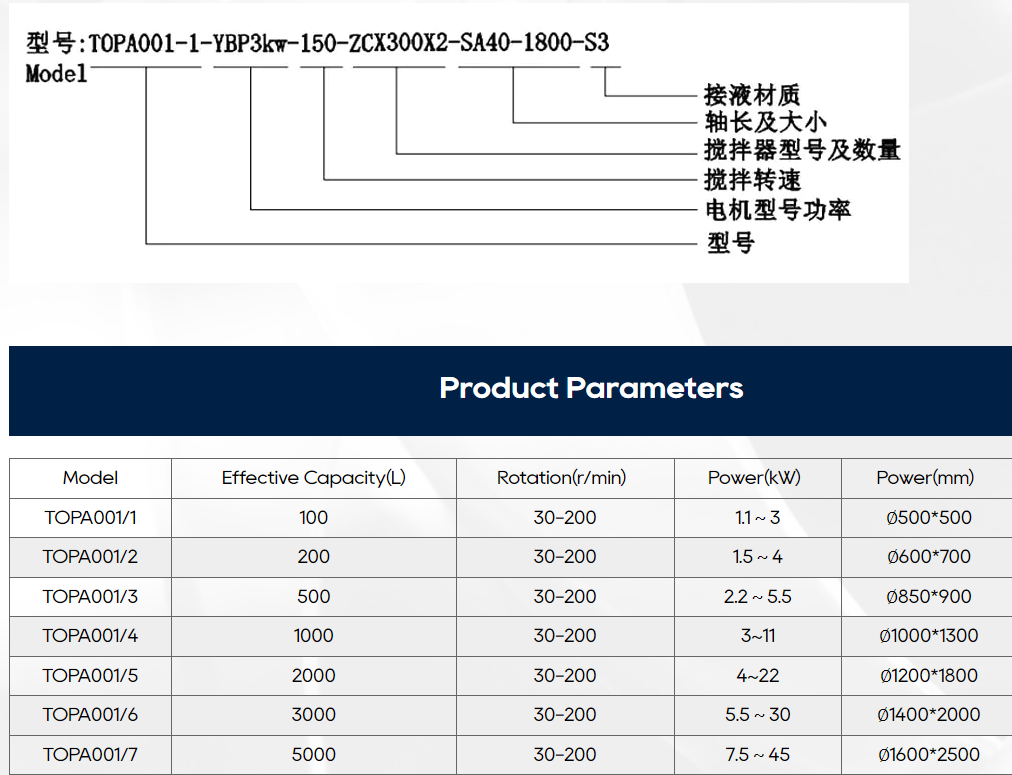
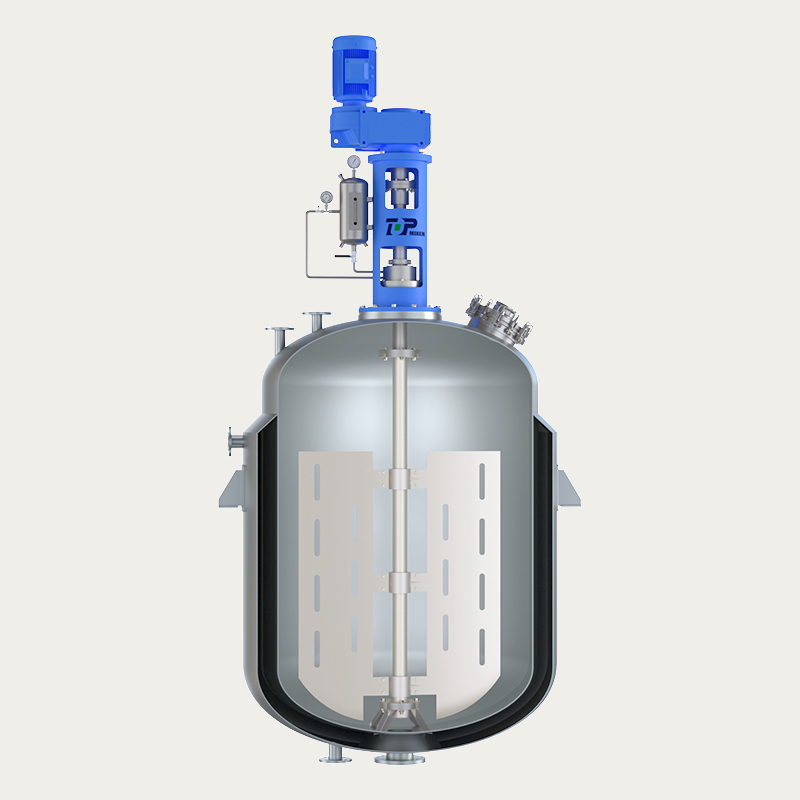
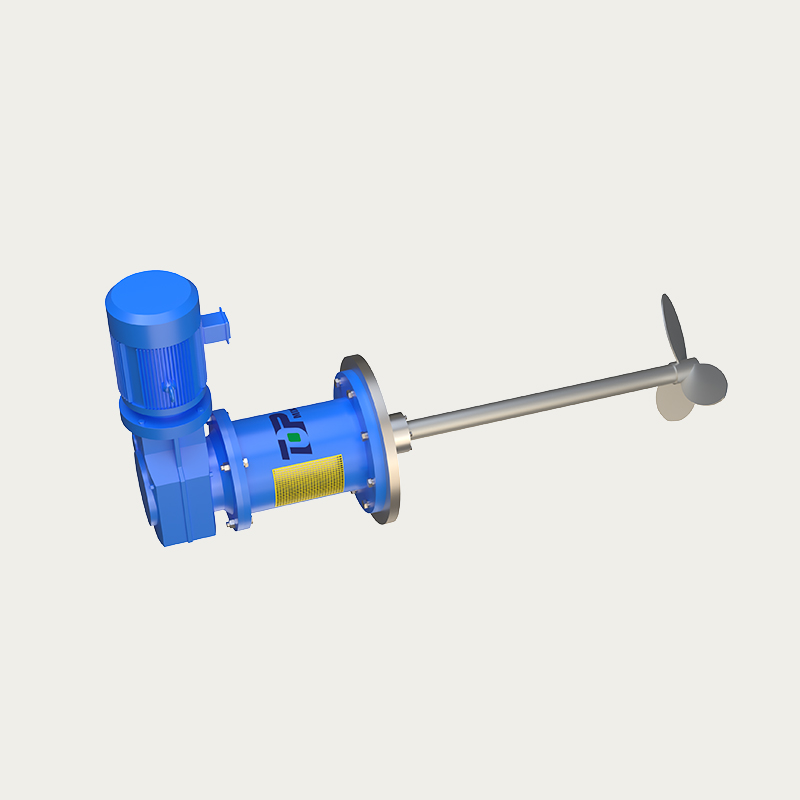
None of this makes a conventional agitator obsolete. A properly sized top-entry unit is the correct machine for blending, suspension and heat transfer, and pairing it with a separate high shear head for the dispersion step is often cheaper and more flexible than forcing one machine to cover both duties. Units such as the TOPA001DR top-entry mixer are designed around that bulk-flow job, with seal and bearing arrangements sized for continuous service rather than for peak shear.
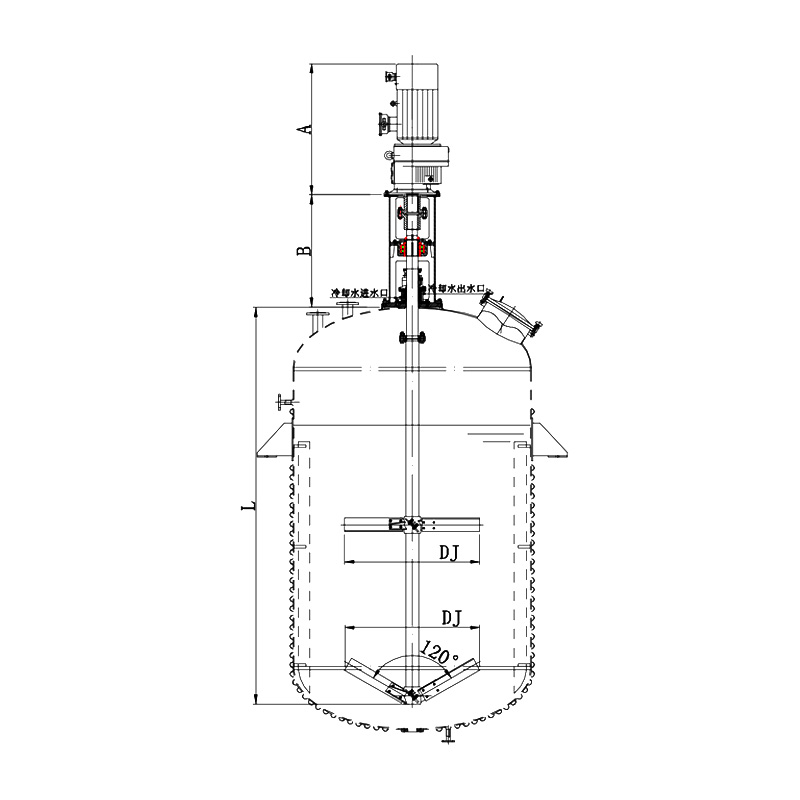 TOPA001DR Top-Entry Mixer for Bulk Blending and SuspensionTop-entry DR series mixer for blending, suspension and heat transfer, with vertical drive, simple compact structure, and impeller/seal options for continuous bulk-flow duties.View Product →
Matching the Workhead to Viscosity and Solids
Viscosity decides which mixer families are available at all, because it controls whether fresh product can flow into the shear zone. In a rotor-stator head the gap is fixed and narrow; if product will not drain into it, the head simply spins in a cavity of its own making.
- Below roughly 5,000 cP, propellers, pitched-blade turbines and inline rotor-stators all work, and inline is usually the most energy-efficient because a pump feeds the shear zone instead of relying on bulk flow.
- Between 5,000 and 50,000 cP, disperser discs and multi-stage heads come into play. Confirm the product can be pumped if you plan an inline loop, and watch motor current during start-up on a settled batch.
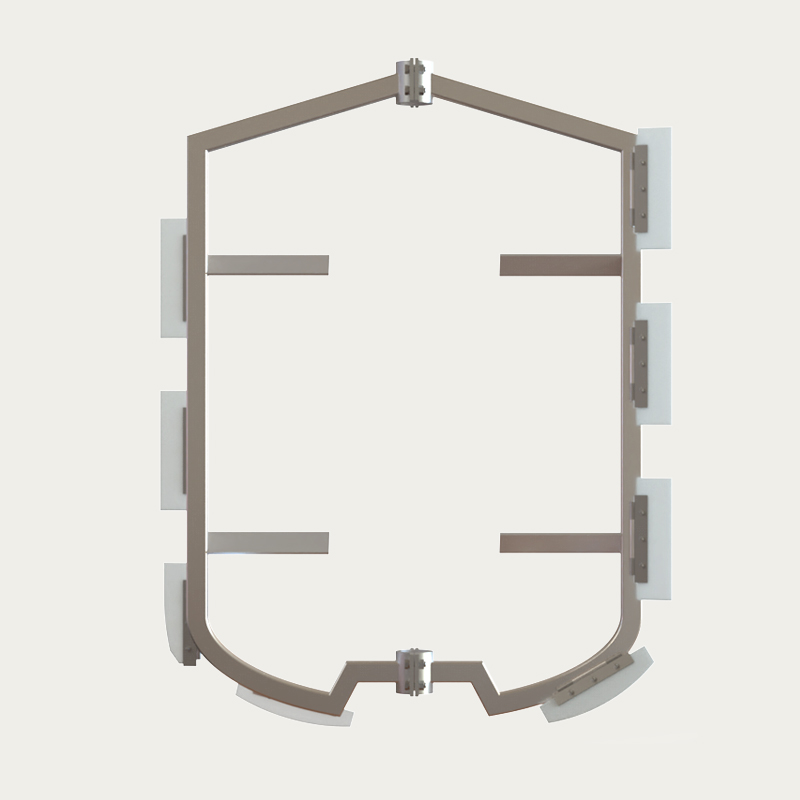
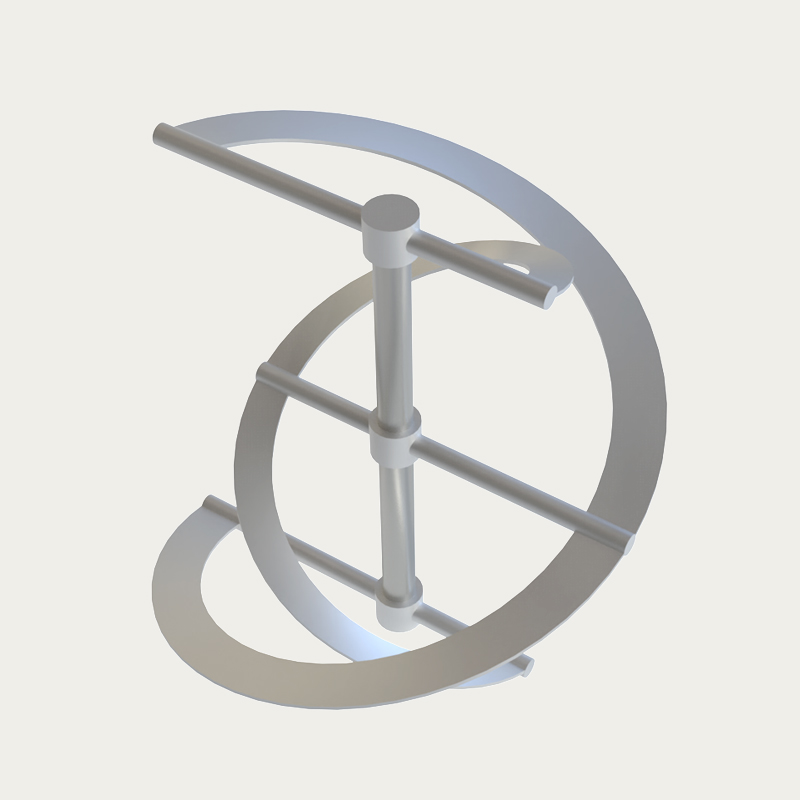
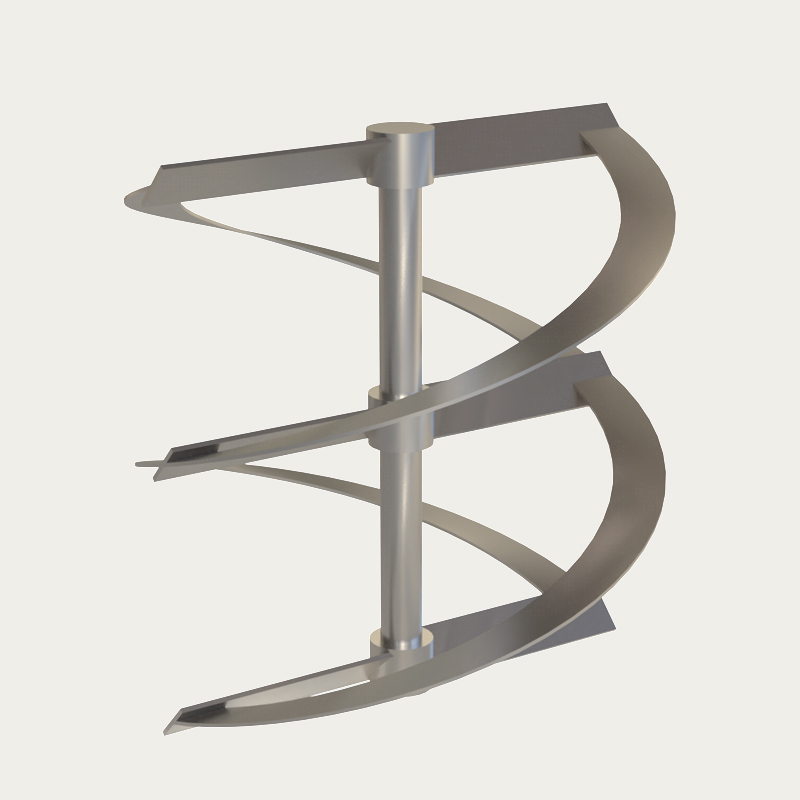
- Above 50,000 cP, frame, anchor-with-scraper, ribbon and planetary geometries take over. Mechanical shear is no longer the limiting factor — heat transfer through a nearly stagnant film is, and that is what scrapers and ribbons address.
Solids add a second constraint. Cohesive powders must be wetted before they can be dispersed, and a disperser disc deliberately pulls a vortex at the surface so powder is drawn into the liquid rather than floating. A rotor-stator head breaks down agglomerates very effectively once they are wetted, but it cannot wet out a floating raft of pigment. For that first step, high-speed dispersers such as the FS1 series are the usual answer, with the rotor-stator head brought in afterwards for fine dispersion.
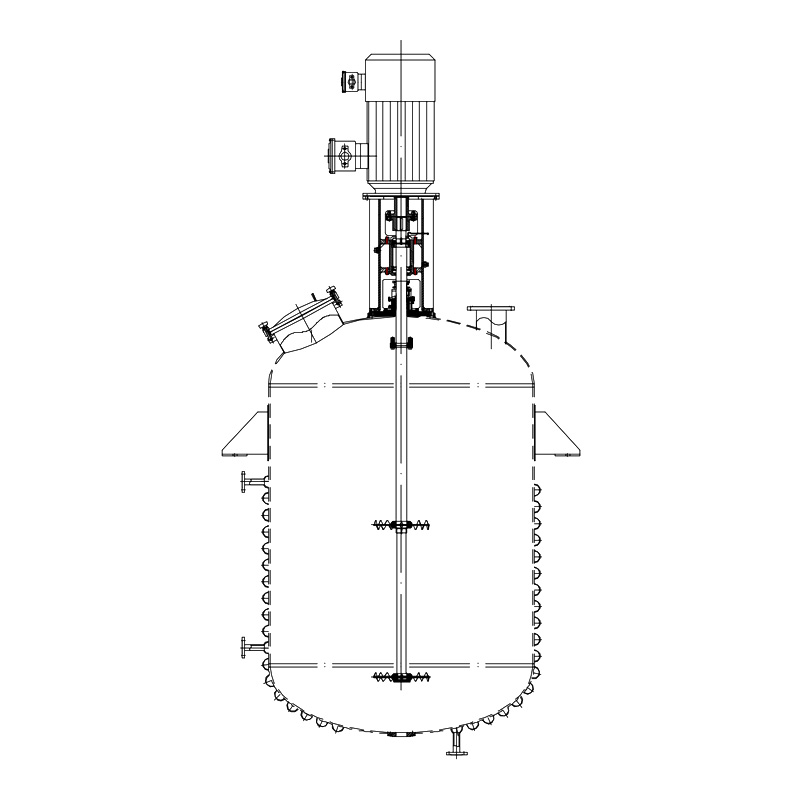 TOPA005 FS1 Series High Speed Disperser for Powder WettingFS1 series top-entry disperser for wetting cohesive powders before fine dispersion, with high-speed impeller, compact drive, and multiple seal options for mixing duties.View Product →
Inline or Batch: Choose on Heat, Not on Convenience
A high shear head concentrates its energy into a small volume, and that energy ends up as heat. In a batch arrangement the entire batch passes through the hot zone over and over, so a temperature-sensitive recipe can be damaged long before the dispersion target is reached.
An inline loop changes that arithmetic. Because only a small volume sits in the shear zone at any moment, heat can be removed between passes through a jacketed vessel or a plate exchanger, and the loop can run as long as the recipe needs without cooking the product. Inline units also clean in place more easily and are simpler to instrument for continuous production.
The trade-off is flexibility. A batch head can be raised, cleaned and reused for a different recipe within minutes; an inline skid is committed to a flow rate and a product family. Inline rotor-stator units such as the ZJH series homogenizer are built around the recirculation idea — a small shear chamber, a pump and a loop, so temperature control stays with the tank rather than with the mixer.
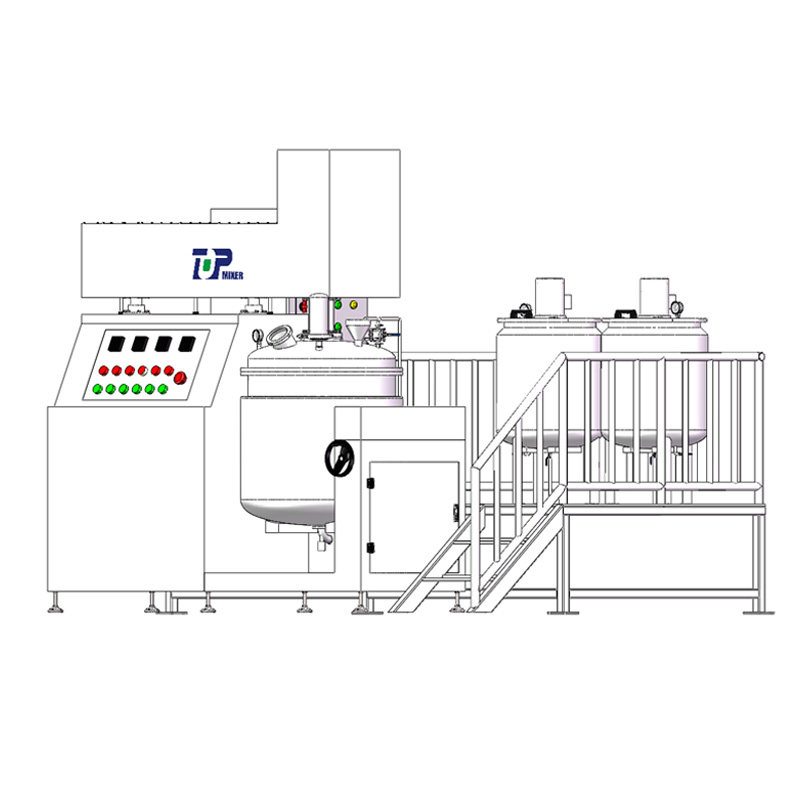 TOPH61 Series ZJH Homogenizer for Creams, Ointments and ToothpastePatented ZJH recirculation homogenizer for high-viscosity creams, ointments and toothpaste, using internal/external circulation, vacuum emulsification, and automated processing in compact sanitary systems.View Product →
What to Specify Before You Buy
- Target droplet or particle size, plus the measurement method you will accept. "Fine" and "well mixed" are not specifications, and a laser diffraction result is not the same evidence as a microscope image.
- Viscosity at process temperature, not at room temperature. A product that reads 200 cP when cold can behave very differently at 70 °C, and the workhead gap has to suit both.
- Batch size range and turndown. If one machine must handle 20% of nominal batch, the shear zone may not stay submerged and the motor may be badly oversized.
- Tip speed range, drive and start-up behaviour. Variable frequency control is normal on a high shear head, and a torque limit protects the shaft when a settled batch starts.
- Wetted materials and seal strategy. Abrasive solids, aggressive CIP chemistry and vacuum duty all push the shaft seal decision, and a mechanical seal on a pressure balance tank or siphon tank is a very different service requirement from a simple lip seal.
- A pilot trial on your own product. Head geometry, gap and stator slot pattern interact with rheology in ways that are hard to predict from data sheets alone.
If you want to go deeper into workhead geometry and how stator design changes droplet size, the site's own overview of high shear emulsifier design covers the practical details.
Frequently Asked Questions About High Shear Mixers
The rule that survives contact with real projects is simple: decide which unit operation you are buying — flow, dispersion or emulsification — and buy a machine that is good at that one thing. Mixing problems rarely stay solved when a single workhead is asked to excel at all three.


- No. 118, Chuangye Road, Jieshou Town, Gaoyou City, Yangzhou, Jiangsu Province, China
- [email protected]
- Landline: +86-0510-83383966 +86-0510-83390667
- Telphone: +86-0510-83390667
- Mr. Chen: +86-18061519769 Mr. Xu: +86-13706183972
- Mr. Lu: +86-18915337056
- Product Link
- Top-Entry Mixer
- Bottom-Entry Mixer
- Side-Entry Mixer
- SIGN UP
- Sign up to be the first to find out the latest news from Top Intelligent Technology
- Subscribe

