

 English
 日本語
日本語 русский


Double Planetary Mixer Selection Guide: Viscosity Limits, Specs and Scale-Up
Content
- 1 What a Double Planetary Mixer Actually Does
- 2 The Viscosity Window: Where a Double Planetary Mixer Earns Its Cost
- 3 Specification Checklist: The Numbers That Decide the Machine
- 4 How a Double Planetary Mixer Compares with Other Mixers
- 5 Lab, Pilot, Production: Getting Scale-Up Right
- 6 Where Double Planetary Mixers Are Used
- 7 Testing, Acceptance and the Risks Worth Pricing In
- 8 Common Specification Mistakes
- 9 Double Planetary Mixer FAQ
A 300-litre batch of silicone sealant is running. The jacket is at 120 °C, the centre of the batch reads 65 °C, and after forty minutes there is still a band of un-dispersed pigment clinging to the vessel wall. More mixing time will not fix it, because the material next to the wall never entered the mixing zone in the first place.
That is exactly the problem a double planetary mixer is built for. Two vertical blades turn on their own axes while the pair travels slowly around the vessel, so the blades physically sweep material that refuses to flow on its own. Where a conventional agitator relies on the liquid to carry mixing energy, a planetary mixer delivers it by geometry. If your product sits above roughly 5,000 cP, holds a yield stress high enough to stand still in the tank, or carries a filler loading that settles out under a propeller, this is normally the right machine. Below that threshold, it is usually the expensive machine.
What follows covers where that boundary sits, how to size the unit, what belongs in the specification, and the details that cause the most trouble after installation.
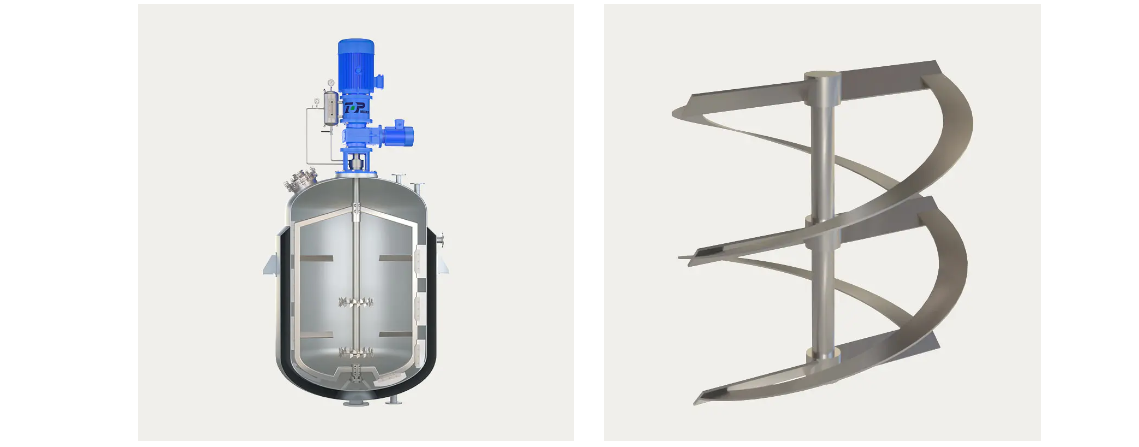
What a Double Planetary Mixer Actually Does
In a standard agitator, mixing depends on flow. The impeller pushes liquid, and the moving liquid drags the rest of the batch along. In a paste, a gel or a slurry at 75% solids, that chain breaks at the first link: the material has a yield stress, so it stays where it is until something touches it.
A double planetary mixer guarantees that contact. Two vertical blades are suspended from a carrier inside the vessel. The carrier rotates slowly around the vessel axis, and each blade simultaneously rotates about its own axis, usually at a different speed. The two overlapping paths cover the whole cross-section of the tank instead of one ring around a shaft. A separate scraper arm, or scrapers mounted on the blade frames, continuously peels material off the wall and the bottom and folds it back into the active zone. That is also why heat transfer performs better than the viscosity suggests: the wall film is constantly renewed rather than insulating the batch.
The word "double" refers to the two blades, not to two motors and not to two vessels. Single-blade planetary mixers exist, and a planetary disperser is a different machine again, pairing a planetary blade with a high-speed shaft for wetting powders into liquid. If a quotation says "double planetary mixer" without stating which configuration it is, ask before comparing prices.
A typical industrial unit includes:
- A vacuum- or pressure-rated lid with charging ports, sight glass and often a powder funnel or bag-dump connection
- A jacketed vessel, dimple or half-pipe, for heating and cooling
- A planetary carrier drive with variable-frequency control, usually with an independent scraper drive
- Two blades in a geometry matched to the product: rectangular, helical or sigma-shaped
- Bottom discharge valve, hydraulic press-out or a tilting frame, depending on how the product flows
- Vacuum pump set, condenser and receiver when solvents are stripped under vacuum
The Viscosity Window: Where a Double Planetary Mixer Earns Its Cost
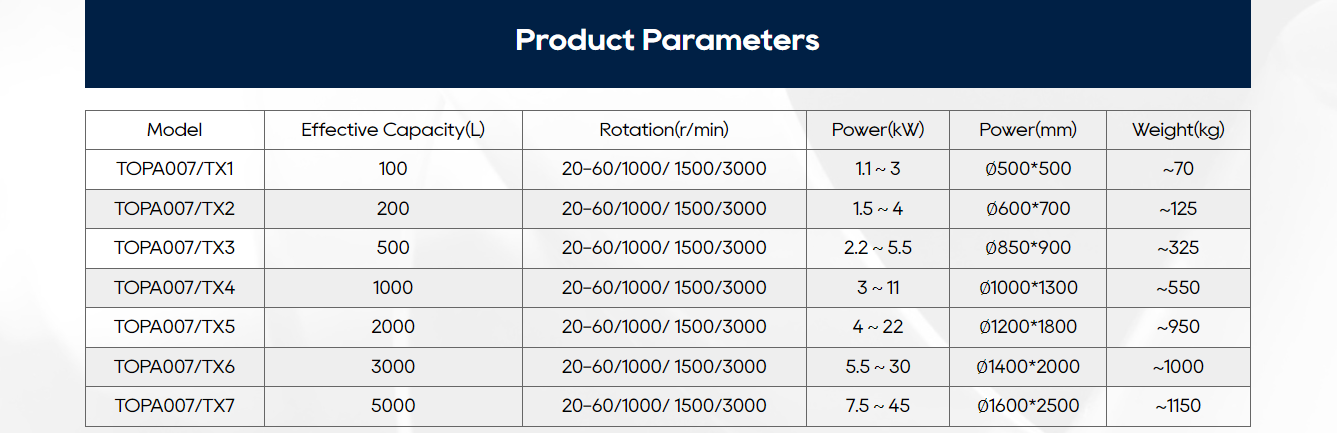
The practical working range starts at roughly 5,000 cP and runs to several million cP. Below about 5,000 cP you are usually paying for torque you do not need, and a high-speed disperser or pitched-blade turbine will mix faster, cost less and clean more easily. Between roughly 10,000 cP and 2,000,000 cP the planetary design is normally the most efficient route to a uniform batch.
Viscosity alone does not tell the whole story. Yield stress matters at least as much: a 30,000 cP material that flows under its own weight behaves very differently from a 30,000 cP gel that holds its shape in the tank. Filled systems behave differently again, because filler content, particle size and whether the solids are abrasive all influence blade geometry, wall gap and wear materials. Two formulas with the same viscometer reading can need two different machines.
The lower edge of the window is softer than it looks. Some plants run planetary mixers at 1,000 to 2,000 cP simply because they need vacuum degassing and want one vessel for several products. If you intend to use a single machine across a product family, size it for the worst case, meaning the thickest, coldest and most heavily filled batch you will ever run, and accept that it will be slower than necessary on the thin ones.
Specification Checklist: The Numbers That Decide the Machine
These are the parameters that move both price and performance. Bring real values from your own process rather than averages from a product catalogue.
| Parameter | What to specify | Why it drives cost or performance |
|---|---|---|
| Working capacity | 60 to 80% of total vessel volume | Blades need material to engage; overfilling removes freeboard for vacuum and foam |
| Design torque | Worst-case viscosity at the lowest process temperature | Torque, not motor power, sizes the gearbox, shaft and bearings |
| Wall gap | 1 to 5 mm for scraping blades, wider for non-scraping designs | Sets residual film, heat transfer rate and wear rate |
| Vacuum rating | Ultimate pressure stated together with the shaft seal type | Vacuum is usually limited by the seal: single mechanical, double mechanical or magnetic drive |
| Temperature control | Jacket medium plus required heat-up and cool-down rates | Wall film thickness limits heat transfer more than jacket area does |
| Discharge method | Valve, hydraulic press-out or tilting frame | Determines whether the vessel empties and how much product is left behind |
| Wetted materials | 304 or 316L, hard-facing or ceramic for abrasive fillers | Abrasion shortens blade life more often than corrosion in paste products |
| Control package | VFD, recipe control, torque and temperature trending | A recorded torque trace is the cheapest batch consistency check available |
How a Double Planetary Mixer Compares with Other Mixers
If the product is thick and needs vacuum, the planetary design usually wins. If the job is wetting powder into a thin liquid, a high-speed disperser wins and costs a fraction as much. The comparison below is qualitative and reflects how these machines are normally designed, not a ranking of individual suppliers.
A high-speed disperser creates its shear in a narrow zone around a fast disc, which is ideal for breaking down powder agglomerates in a low-viscosity vehicle but ineffective once the material stops circulating. A ribbon blender moves dry powders and heavy pastes well but offers almost nothing in the way of vacuum operation or temperature control. An anchor or frame agitator in a jacketed reactor gives good heat transfer and simple maintenance, yet it cannot disperse or degas.
Hybrid machines that combine a planetary blade with a high-speed shaft exist for products that need both wetting and high-viscosity handling. Decide on the basis of the worst-case rheology in your product list, not the average of it.
Lab, Pilot, Production: Getting Scale-Up Right
Laboratory and formulation work
Small planetary units of a few litres are formulation tools. Their job is to prove that a formula can be mixed at all, to test blade geometry and to establish the temperature and vacuum sequence. What they cannot tell you is the mixing time at production scale, because surface-to-volume ratio changes dramatically between a 5-litre bowl and a 1,000-litre vessel.
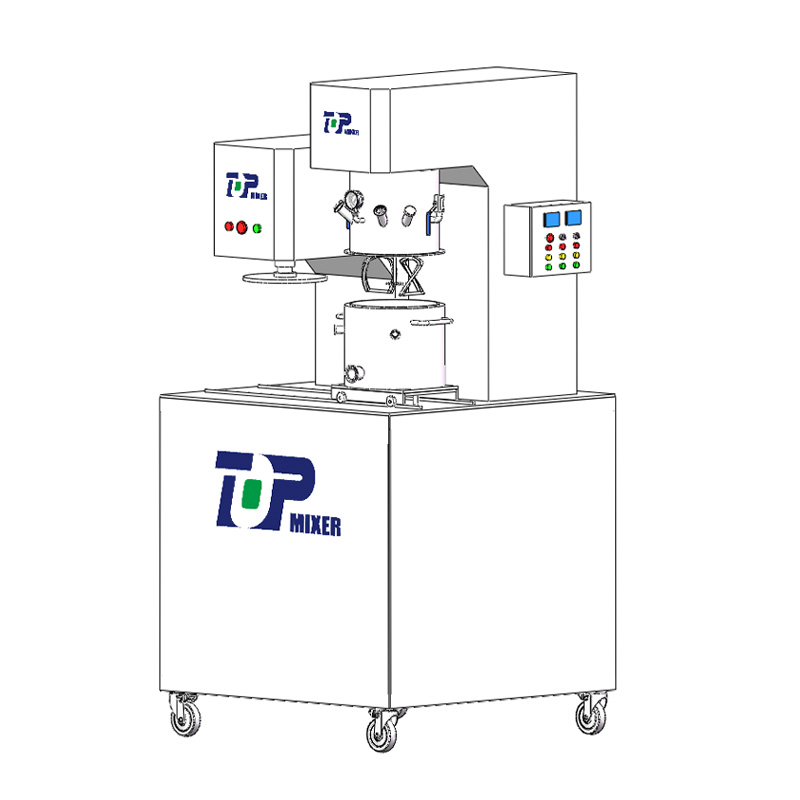 TOPH2011 Series SXJ Experimental Double Planetary MixerLaboratory dual-planetary mixer is a new and efficient mixer developed by Top Company in response to the needs of colleges and universities, research units, and factor...View Product →
Pilot scale
Pilot machines of roughly 10 to 100 litres are where scale-up rules are tested. Keep geometric similarity with the production unit wherever possible, meaning the same blade-to-vessel diameter ratio and, ideally, a comparable wall gap, so that constant tip speed and constant torque per unit volume remain meaningful as reference points. A pilot unit with a different blade shape tells you very little about the full-size machine.
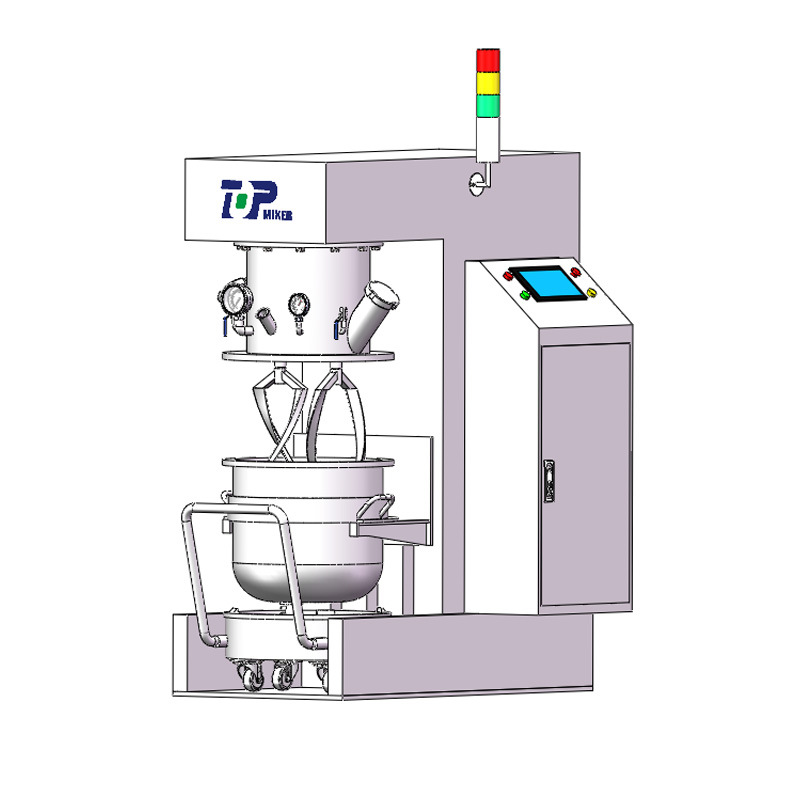 TOPH2012 Series ZXJ Pilot Planetary MixerThe ZXJ medium-pilot planetary mixer is a new and efficient chemical homogeneous mixing equipment. It has a great output torque and is especially suitable for very tho...View Product →
Production scale
At several hundred litres and above, drive sizing and discharge design become the dominant cost drivers, and vacuum system selection matters more than blade cosmetics. Ask for the torque trace from a full-scale trial on your own material, and treat a torque-limited acceptance test as a condition of purchase.
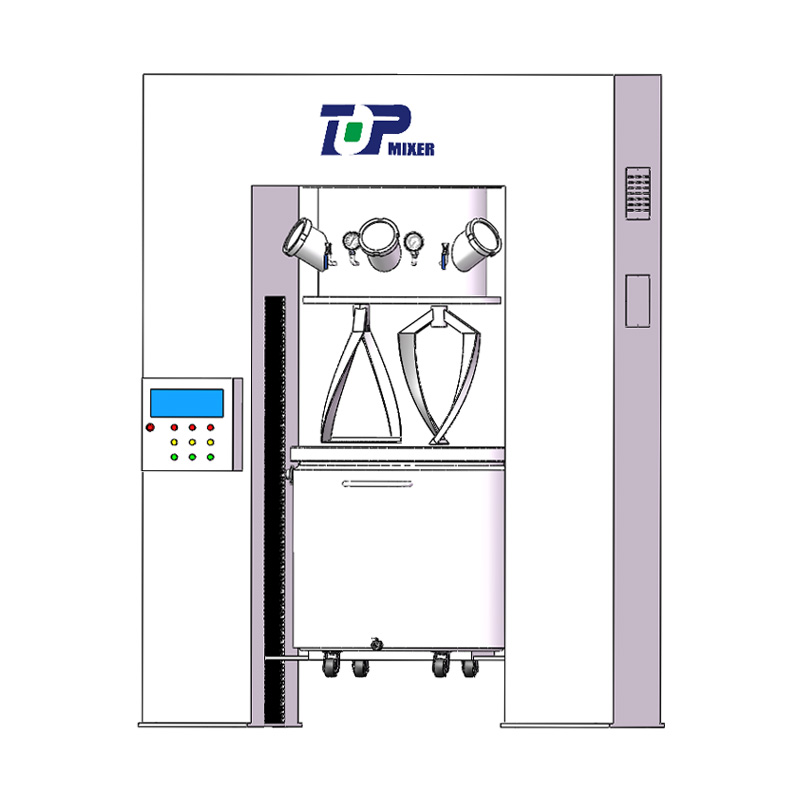 TOPH2014 Series LGXJ Industrial Double Planetary MixerLGXJ Dual Planet Powered Mixer is a new mixing equipment developed by Top Company on the basis of the GXJ Dual Planet Mixer, which is specially developed for the lithi...View Product →
Where Double Planetary Mixers Are Used
The same machine appears across industries that share one property: a highly filled, high-viscosity product that has to be homogeneous.
- Adhesives and sealants: silicone, polyurethane and MS-polymer systems, where fillers and catalyst must be distributed without shearing the polymer chain
- Lithium battery electrodes: cathode and anode slurries are wetted and degassed under vacuum; one example of how this is applied is described in these lithium battery slurry projects
- Electronics: thermal interface materials, solder pastes and conductive adhesives, all with very high metal loading
- Pharmaceuticals and cosmetics: ointments, gels and creams that need low-shear mixing with tight temperature control
- Food: sauces, pastes, nut butters and confectionery masses
- Speciality chemicals and composites: resin pastes, colour concentrates and filled polymer systems
Testing, Acceptance and the Risks Worth Pricing In
The cheapest insurance is a mixing trial on your own formulation, run in the size you intend to buy or one step down. Suppliers with in-house flow modelling, such as the CFD flow-field analysis used to verify blade geometry and baffle positions, can predict dead zones before steel is cut, but the model still has to be confirmed with a physical batch.
Acceptance criteria should be measurable rather than descriptive:
- Sampling at three or more points, top, middle and bottom, tested for viscosity, colour or filler content within an agreed tolerance
- A vacuum hold test at the specified ultimate pressure for a defined period
- Temperature uniformity across the batch after a fixed mixing interval
- Torque and power traces recorded and repeatable across three consecutive batches
- An emptying test measuring how much product remains after discharge
Then price in the items that rarely appear in a quotation: seal and scraper life as consumables, spare part availability, cleaning time between products, and whether the supplier can reproduce the same geometry at the next scale up. In multi-product plants, changeover time usually costs more over five years than the difference between two competing quotations.
Common Specification Mistakes
- Sizing the drive on average viscosity instead of the worst-case batch.
- Ignoring yield stress, so the mixer cannot start a settled or gelled batch.
- Buying on total vessel volume rather than working volume, then finding the batch never covers the blades.
- Specifying a vacuum level without naming the shaft seal that has to hold it.
- Treating discharge as an afterthought, then discovering the vessel cannot be emptied without manual work.
- Skipping the trial, which remains the only reliable way to confirm mixing time, temperature profile and homogeneity.
Double Planetary Mixer FAQ


- No. 118, Chuangye Road, Jieshou Town, Gaoyou City, Yangzhou, Jiangsu Province, China
- [email protected]
- Landline: +86-0510-83383966 +86-0510-83390667
- Telphone: +86-0510-83390667
- Mr. Chen: +86-18061519769 Mr. Xu: +86-13706183972
- Mr. Lu: +86-18915337056
- Product Link
- Top-Entry Mixer
- Bottom-Entry Mixer
- Side-Entry Mixer
- SIGN UP
- Sign up to be the first to find out the latest news from Top Intelligent Technology
- Subscribe

