

 English
 日本語
日本語 русский


Magnesium Hydroxide Slurry Storage and Handling: A Complete Guide to Preventing Settling
Content
- 1 What Is Magnesium Hydroxide Slurry?
- 2 Why Storage and Agitation Are Non-Negotiable
- 3 Selecting the Right Agitator for a Slurry Tank
- 4 Piping, Valves, and Pumping: Preventing Plugged Lines
- 5 Unloading and Receiving: What to Check
- 6 Maintenance and Common Failure Modes
- 7 Cost and Procurement: Getting the Value Equation Right
- 8 Frequently Asked Questions about Magnesium Hydroxide Slurry
- 8.1 What is the typical solids content of magnesium hydroxide slurry?
- 8.2 Why does magnesium hydroxide slurry need continuous agitation?
- 8.3 What is the viscosity of magnesium hydroxide slurry?
- 8.4 Can I use a top-entry mixer for large slurry tanks?
- 8.5 How long can magnesium hydroxide slurry be stored without degrading?
- 8.6 What is a safer alternative to caustic soda for neutralization?
When a storage tank of magnesium hydroxide slurry sits idle over a long weekend, the suspended particles begin their slow migration toward the bottom. By Monday morning, the bottom third of the tank can be a dense, paste-like layer that standard pumps cannot pick up. This scenario happens in wastewater plants, FGD scrubbers, and chemical dosing systems every year — and it is almost always avoidable.
The short version: magnesium hydroxide slurry is an excellent, low-corrosion source of alkalinity, but only if you store it, agitate it, and deliver it correctly. In the sections below, we walk through the storage tank, agitation requirements, piping choices, and equipment selection so you can avoid the settling trap.
What Is Magnesium Hydroxide Slurry?
Magnesium hydroxide slurry is a non-carbonate alkaline suspension made by grinding or precipitating Mg(OH)₂ in water. It typically ships at 56–58% solids by weight, and it is used in acid neutralization, heavy-metal precipitation, flue-gas desulfurization, and pH adjustment in municipal and industrial wastewater.
Because Mg(OH)₂ has low solubility and a relatively low pH of about 10.5, it is far less corrosive to workers and equipment than caustic soda or hydrated lime. Yet on an equal-alkalinity basis, 1 gallon of magnesium hydroxide slurry replaces about 2.85 gallons of 34% hydrated lime slurry, according to Magnesia Specialties. That compact alkalinity makes it an efficient choice for high-volume alkaline dosing.
| Parameter | Mg(OH)₂ Slurry (58%) | Hydrated Lime Slurry (34%) | Caustic Soda (50%) |
|---|---|---|---|
| Approximate pH | 10.5 | 12.4 | 13.5 |
| Typical solids | 56–58 wt% | 30–40 wt% | 50 wt% |
| Main handling concern | Settling, pump wear | Scaling, heat | Corrosive, exothermic |
| Relative volume for equal alkalinity | 1.0 | 2.85 | Concentration dependent |
The compact alkalinity of Mg(OH)₂ is a real cost advantage, but it comes with a trade-off: the material is a suspension that requires constant attention. Without it, the slurry behaves less like a chemical and more like a solid that only looks like a liquid.
Why Storage and Agitation Are Non-Negotiable
Magnesium hydroxide slurry is unstable by nature. Its particles have a higher density than water, and they settle steadily when the flow stops. A production disturbance or weekend shutdown can create a settled layer that is extremely difficult to resuspend. In extreme cases, the layer hardens into a crust that has to be manually broken out.
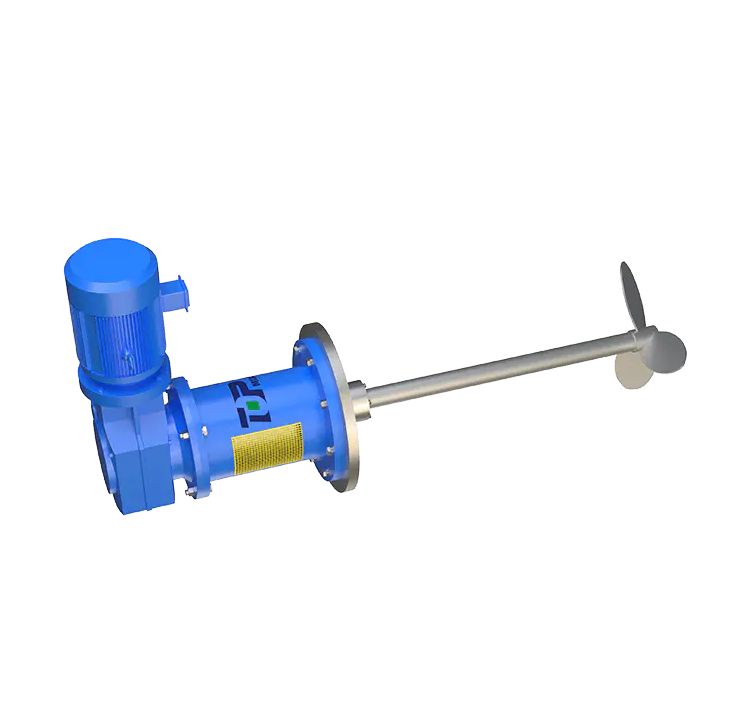
The most common mitigation is continuous agitation through a properly sized mixer. For large storage tanks, a magnetic side-entry mixer keeps fluid rotating without the seal leakage typical of shaft penetration. It is also easy to retrofit on existing tanks.
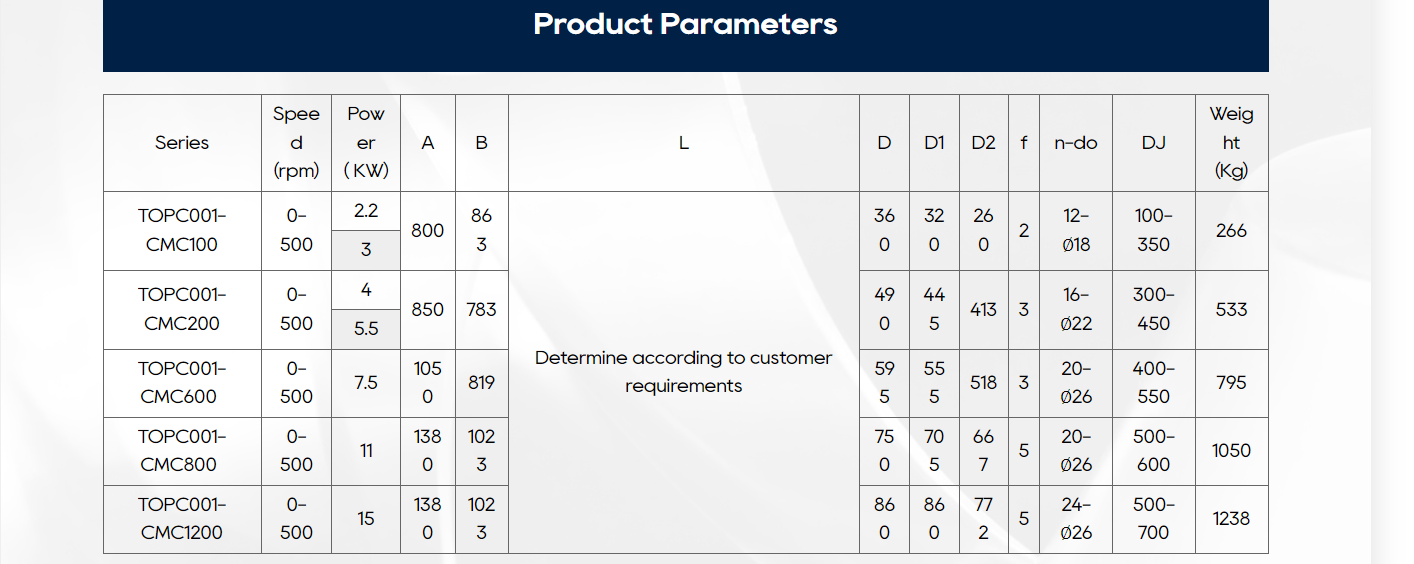
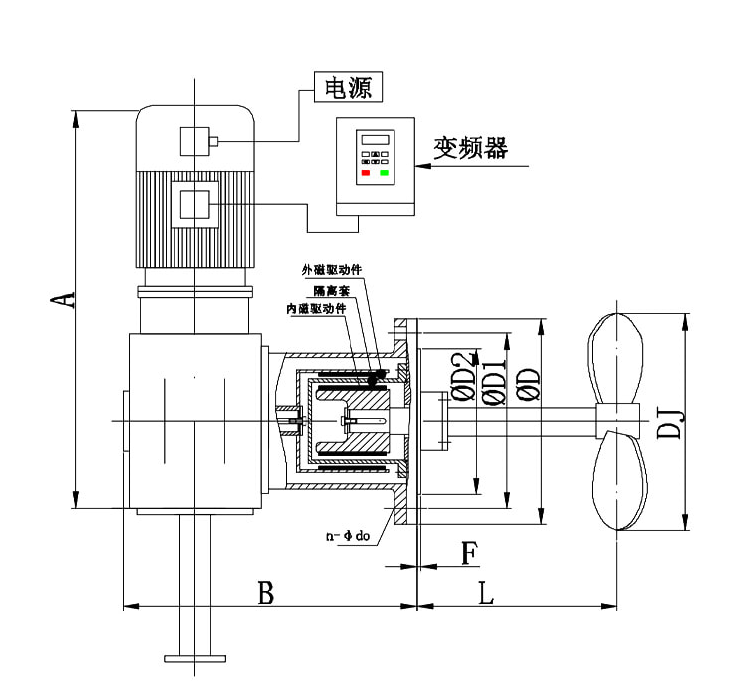
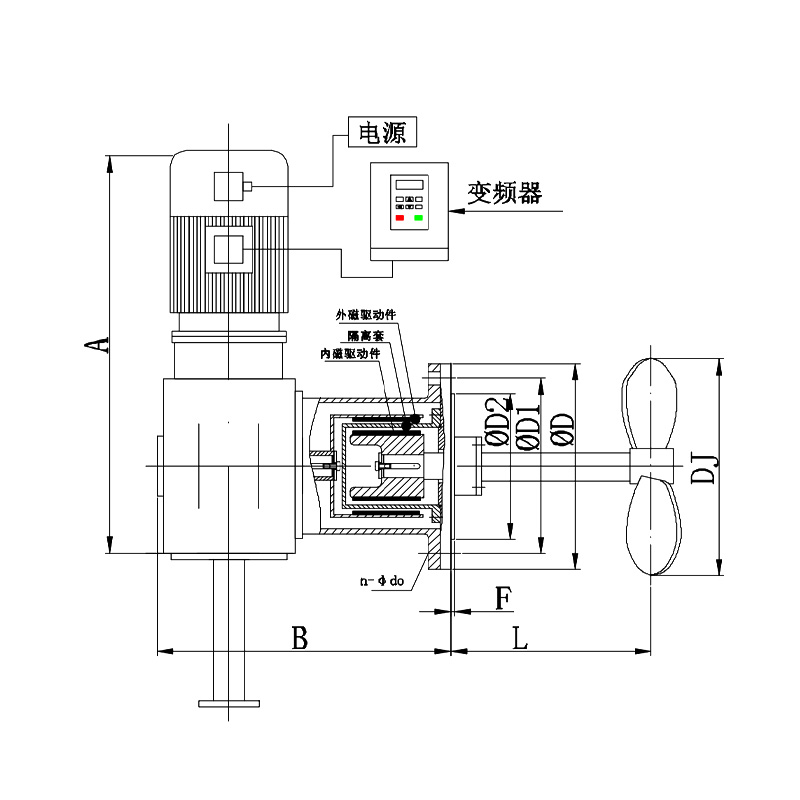 TOPC001 CMC Series Magnetic Side-Entry Mixer for Zero-Leakage AgitationThis side-entry mixer uses a magnetic coupling with static sealing to achieve permanent zero leakage, making it suitable for hazardous or toxic media. Its low power consumption makes it an efficient choice for large storage tanks requiring continuous agitation.View Product →
 |
 |
When choosing an agitation system, the goal is to maintain a uniform suspension at the lowest practical energy input. A low-pitch impeller that moves the entire tank volume is better than a high-shear blade that only stirs a localized zone. The chart below shows why Mg(OH)₂ slurry is so attractive compared with lime.
Selecting the Right Agitator for a Slurry Tank
There is no universal agitator for magnesium hydroxide slurry. The right choice depends on tank diameter, liquid level, solids concentration, and how quickly the slurry is withdrawn. We always recommend starting with a CFD-based mixing analysis to model flow velocities and shear rates before committing to a motor size or impeller diameter. That type of engineering review is part of our normal proposal process — you can see how we approach it on our mixing technology page.
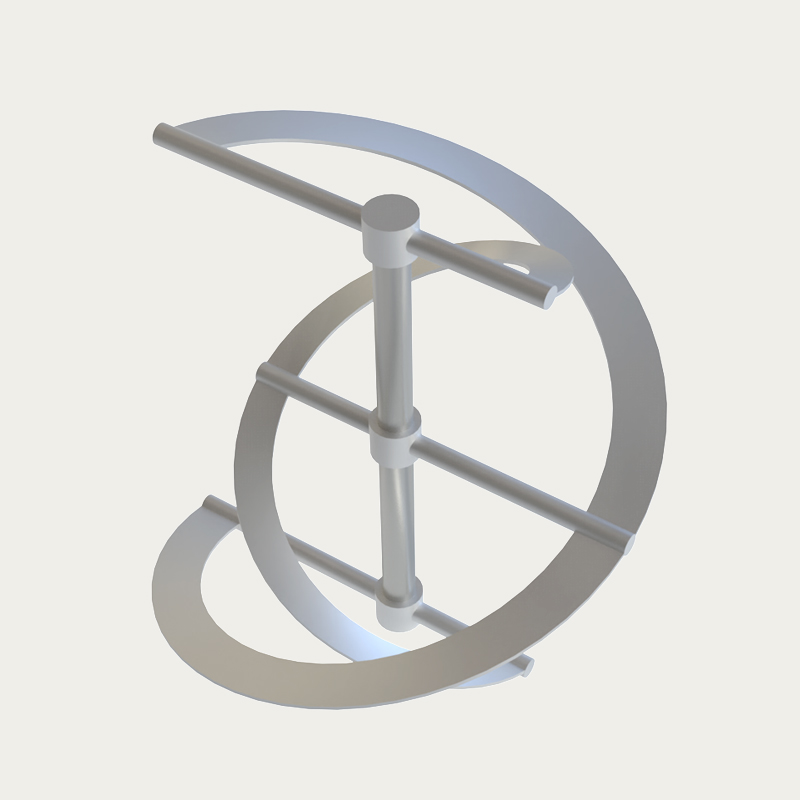
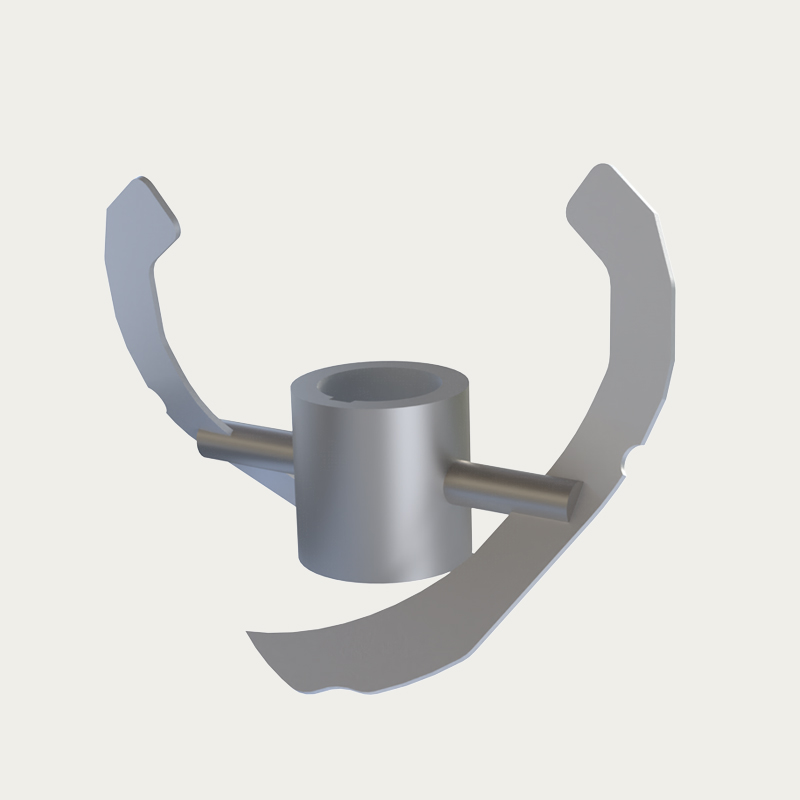
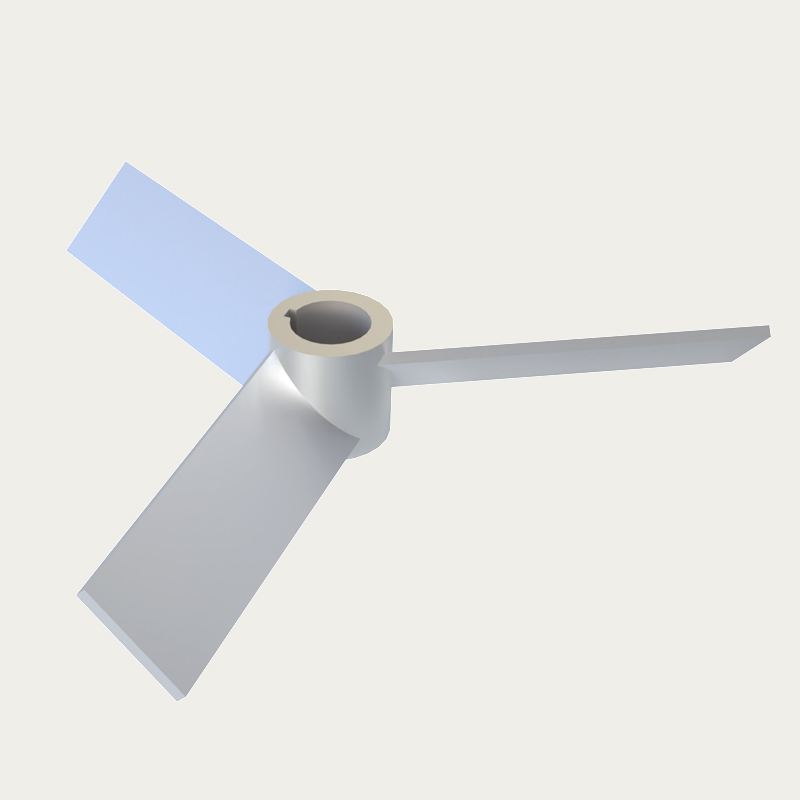
For storage tanks in the 1,000–10,000 gallon range, a top-entry mixer with a marine-style propeller or hydrofoil impeller is usually sufficient. In smaller tanks, a direct-drive motor with a variable frequency drive gives operators the flexibility to adjust speed as the slurry level drops.
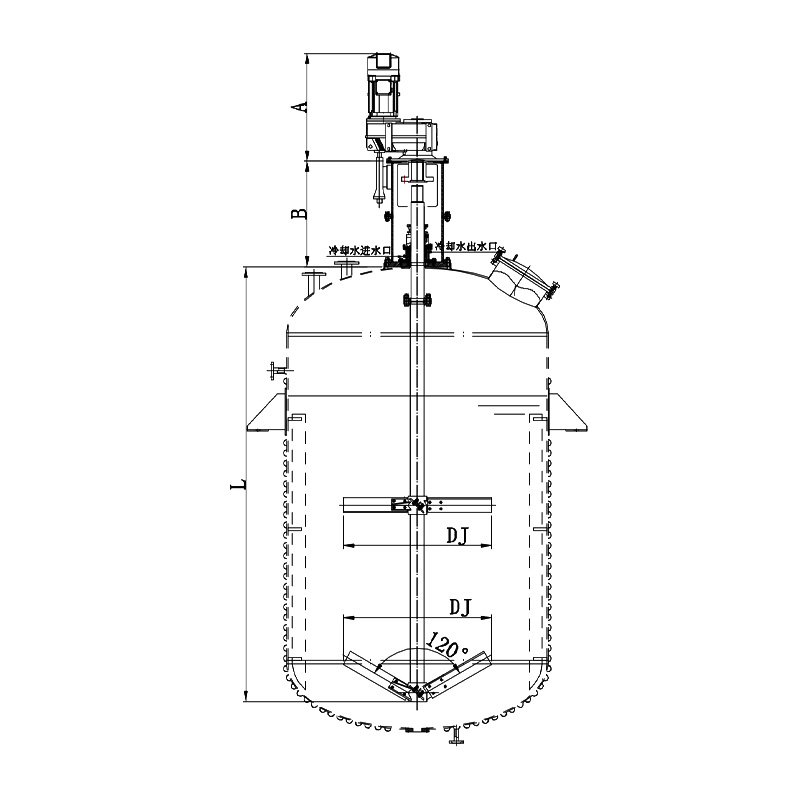 TOPA004 Top-Entry Mixer with Online Mechanical Seal ReplacementThis top-entry mixer ranges from 0.37 to 45 kW and features an original impeller design that boosts discharge volume. Its online seal replacement capability simplifies maintenance, making it practical for production reactors handling continuously fed slurry.View Product →
For production reactors that continuously feed slurry into a process, the impeller must be sized not only for suspension but also for rapid blending. In those cases, the tank often needs baffles to convert swirl into vertical flow, particularly if the slurry is fed through a bottom nozzle.
Piping, Valves, and Pumping: Preventing Plugged Lines
The shortest distance between the storage tank and the injection point is not always the easiest path. Magnesium hydroxide slurry needs pipe runs that are as short as possible, with large-radius elbows and no pockets where solids can drop out. Here are the rules we recommend to every plant engineer:
- Use full-port ball valves or knife-gate valves in slurry lines; standard globe valves create dead zones.
- Install a recirculation loop that keeps the slurry velocity above 1 m/s (3 ft/s) in the header pipe.
- Choose pumps that tolerate abrasive solids. Progressing cavity pumps are ideal for 56–58% slurry; peristaltic or hose pumps also work well. Avoid high-speed centrifugal pumps.
- Place drain valves at every low point, and flush lines with clean water before prolonged shutdowns.
Slurry that is allowed to cool and thicken in a dead leg can block a 2-inch line in less than an hour. A simple preventive measure is to schedule a 5-minute recirculation cycle two or three times a day, even when no dosing is occurring.
Unloading and Receiving: What to Check
When a delivery of magnesium hydroxide slurry arrives, do not simply connect the hose and pump it in. A few minutes of inspection can prevent weeks of operating problems.
- Verify the certificate of analysis to confirm the solids content and particle size distribution.
- Sample the slurry before unloading. If a clear liquid layer sits on top and the lower layer is stiffer than expected, the tank may have settled during transport.
- Start the storage tank agitator before offloading and keep it running throughout the transfer.
- After transfer, check the tank level and re-sample to confirm the average solids content has not shifted.
Some plants also perform a simple “pour test”: a well-suspended slurry should form a uniform ribbon when poured from a cup, not separate into water and lumps. It is a quick low-tech check that catches most early signs of separation.
Maintenance and Common Failure Modes
Most magnesium hydroxide slurry emergencies trace back to one of three components: the mixer, the pump, or the tank drain. A worn impeller loses its pumping capacity slowly, so operators often mistake the result for a thickening problem when the real issue is a damaged blade.
| Symptom | Likely Cause | Corrective Action |
|---|---|---|
| Motor current is high but tank bottom settles | Impeller is pumping in a local channel, not the full tank | Increase speed or add a draft tube / lower impeller position |
| Pump loses prime regularly | Air entrainment from a broken vortex in the tank | Install a vortex breaker or adjust impeller depth |
| Seal leaks black slurry | Mechanical seal worn by abrasive particles | Use a magnetic drive mixer or flush the seal with clean water |
| Line pressure rises quickly | Partial plugging at a valve or elbow | Dismantle and clean the line; increase line size |
Inspect the agitator every three months if the plant runs continuously. Check blade thickness, especially at the leading edge, and compare vibration levels with baseline readings. A well-maintained slurry system can run for decades without a major failure.
Cost and Procurement: Getting the Value Equation Right
Pricing for magnesium hydroxide slurry varies with solids content, distance from the production site, and delivery volume. A price quoted on a per-gallon basis is misleading unless the solids content is stated. Two suppliers can look identical until you convert both quotes to a cost-per-unit-of-alkalinity basis.
Garrison Minerals notes that their customers typically receive a 56–58% solids slurry that is only a few days old. Freshness matters because aged slurry can thicken, and the extra handling cost can erase a purchasing discount. When comparing vendors, ask for a recent sample and measure viscosity at your expected storage temperature.
One practical tip: use the alkalinity factor when comparing prices. If magnesium hydroxide slurry costs $0.50 per gallon, and 34% lime slurry costs $0.20 per gallon, the lime price is not actually lower — 2.85 gallons of lime carry the same alkalinity, so the equal-alkalinity cost for lime is $0.57 per gallon. This simple calculation prevents buyers from overpaying for the cheaper-looking reagent.
Frequently Asked Questions about Magnesium Hydroxide Slurry
What is the typical solids content of magnesium hydroxide slurry?
Most commercial grades contain 56–58% Mg(OH)₂ by weight. Some industrial customers use 50–65% depending on application, but 56–58% is the industry sweet spot.
Why does magnesium hydroxide slurry need continuous agitation?
Mg(OH)₂ particles are heavier than water and settle continuously. Without agitation they form a dense, hard-packed bottom layer that is difficult to resuspend.
What is the viscosity of magnesium hydroxide slurry?
It depends on solids content and particle size. A 58% slurry feels like a medium-thick paste at 20°C, with viscosity rising sharply above 60% solids.
Can I use a top-entry mixer for large slurry tanks?
Yes, but for tanks above 30,000 gallons a side-entry mixer is often more energy-efficient and easier to maintain. Top-entry mixers are best for 1,000–10,000 gallon tanks.
How long can magnesium hydroxide slurry be stored without degrading?
With continuous agitation, most suppliers recommend using it within 2–4 weeks. Without agitation, separation can begin in a matter of days.
What is a safer alternative to caustic soda for neutralization?
Magnesium hydroxide slurry is significantly safer to handle, with much lower pH and heat release, while still providing long-lasting pH control for acid streams.
For more practical operating tips, see our frequently asked questions.


- No. 118, Chuangye Road, Jieshou Town, Gaoyou City, Yangzhou, Jiangsu Province, China
- [email protected]
- Landline: +86-0510-83383966 +86-0510-83390667
- Telphone: +86-0510-83390667
- Mr. Chen: +86-18061519769 Mr. Xu: +86-13706183972
- Mr. Lu: +86-18915337056
- Product Link
- Top-Entry Mixer
- Bottom-Entry Mixer
- Side-Entry Mixer
- SIGN UP
- Sign up to be the first to find out the latest news from Top Intelligent Technology
- Subscribe

