

 English
 日本語
日本語 русский


What is the difference between a top-entry and side-entry mixer?
Content
- 1 What Is a Top-Entry Mixer and How Does It Work?
- 2 Top-Entry vs Side-Entry Mixer: Full Comparison
- 3 Impeller Types for Top-Entry Mixers: Selecting the Right Geometry
- 4 Industries That Rely on Top-Entry Mixers
- 5 How to Size a Top-Entry Mixer: Key Engineering Parameters
- 6 Materials of Construction and Hygienic Design for Industrial Agitators
- 7 Frequently Asked Questions About Top-Entry Mixers
A top-entry mixer mounts vertically on the lid or roof of a tank and drives the impeller downward through the liquid, while a side-entry mixer mounts horizontally through the tank wall and drives the impeller at an angle into the fluid. The distinction determines flow pattern, installation complexity, maintenance access, and suitability for specific process conditions. For most general-purpose industrial blending, agitation, and homogenization applications — particularly in tanks above 5,000 liters — a top entry mixer provides superior mixing uniformity and greater versatility across fluid viscosities. Side-entry mixers excel in large-volume storage tanks where energy efficiency and low-shear blending at scale are the primary requirements.
This guide covers the full comparison across design, flow dynamics, impeller selection, application fit, and sizing — with practical data to support procurement decisions for engineers, plant operators, and anyone evaluating industrial mixing equipment for a new or retrofit installation.
What Is a Top-Entry Mixer and How Does It Work?
A top entry mixer is a vertically oriented industrial mixing device in which the drive motor, gearbox, and shaft assembly are mounted on a platform or flange at the top of the process vessel. The shaft extends downward into the tank, carrying one or more impellers that rotate to impart kinetic energy to the liquid contents. The resulting flow pattern — typically axial (downward pumping) or radial (outward pumping) depending on impeller geometry — drives continuous circulation of the tank contents from top to bottom and back.
The vertical orientation of a top feed mixer allows direct access to the full depth of the tank, enabling uniform mixing across the entire vessel volume. This is the defining mechanical advantage over side-entry configurations, which introduce rotational motion at a fixed horizontal plane and rely on swirling flow to achieve vertical distribution. For processes requiring tight blend time control, suspension of settled solids, or consistent heat transfer through agitation, the top-entry design consistently delivers more predictable and controllable outcomes.
Modern heavy duty top entry mixers accommodate a wide range of viscosities — from water-thin liquids at under 1 cP to thick slurries and pastes exceeding 100,000 cP — by matching impeller type, shaft speed, and motor torque to the specific rheological demands of the process fluid. This adaptability makes them the default choice for chemical processing, water treatment, food production, pharmaceutical manufacturing, and mining applications worldwide.
Top-Entry vs Side-Entry Mixer: Full Comparison
Understanding which configuration best suits a given application requires comparing the two designs across multiple performance and operational dimensions. The table below summarizes the key differentiators that guide selection decisions in engineering practice.
| Attribute | Top-Entry Mixer | Side-Entry Mixer |
|---|---|---|
| Mounting Position | Vertical, top of vessel | Horizontal, tank sidewall |
| Flow Pattern | Axial or radial, full depth | Horizontal swirl, limited vertical |
| Viscosity Range | 1 cP to 1,000,000+ cP | Typically below 1,000 cP |
| Ideal Tank Volume | 100 L to 500,000+ L | Best above 100,000 L |
| Energy Efficiency (large tanks) | Moderate | High |
| Seal Complexity | Moderate (top flange seal) | Higher (pressurized sidewall penetration) |
| Maintenance Access | Easy (motor accessible at top) | Requires draining or access platform |
| Solid Suspension | Excellent | Limited |
| Retrofit Flexibility | High (standard nozzle flanges) | Requires sidewall modification |
Performance Radar: Top-Entry vs Side-Entry Mixer
The radar comparison makes clear that top-entry and side-entry mixers are optimized for fundamentally different process conditions rather than being direct substitutes. The top entry agitator configuration dominates on mixing uniformity, viscosity range, and solid suspension — the three most critical parameters for chemical reaction vessels, batch processing tanks, and slurry handling applications. Side-entry mixers lead on energy efficiency for very large volumes, reflecting their lower shaft speed and reduced motor requirements when blending low-viscosity fluids in storage tanks exceeding 500,000 liters. For the majority of industrial process mixing applications — particularly in chemical, water treatment, and pharmaceutical sectors — the top-entry design provides a broader and more capable performance envelope.
Impeller Types for Top-Entry Mixers: Selecting the Right Geometry
The impeller is the primary functional component of any industrial agitator. Its geometry determines the ratio of axial to radial flow, the shear intensity applied to the fluid, the power number (a dimensionless measure of energy consumption), and ultimately the mixing outcome for a given process. Selecting the correct impeller type is as important as specifying the motor power — an oversized motor driving the wrong impeller will waste energy and may damage shear-sensitive materials.
Common Impeller Types and Their Applications
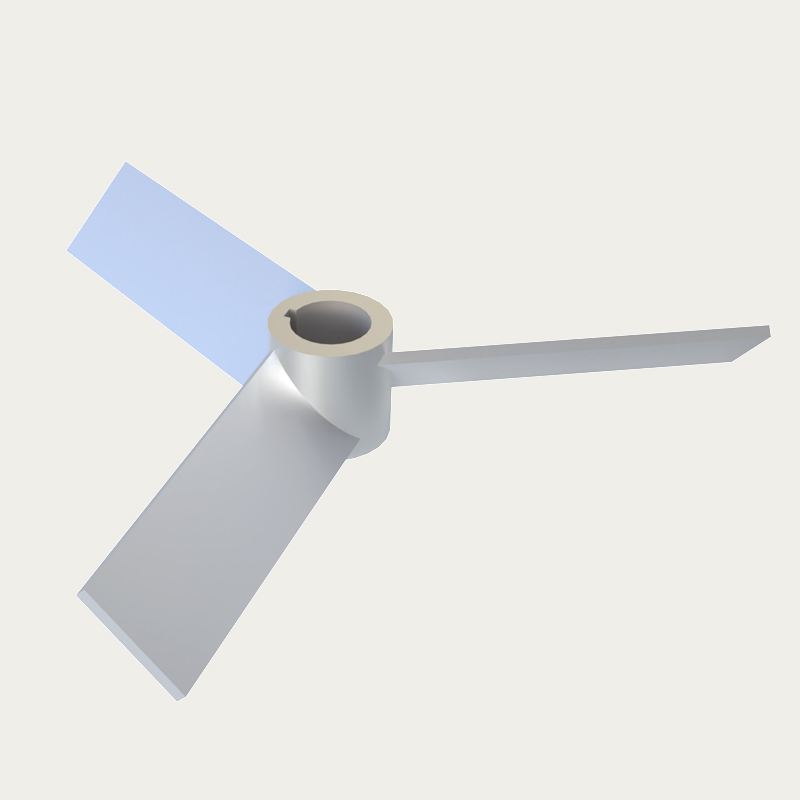
- Hydrofoil Impeller (e.g., A310, A315 geometry): High axial flow efficiency at low power numbers (Np ≈ 0.3–0.6). Ideal for low-viscosity blending, heat transfer, and solid suspension in chemical tank mixers and water treatment mixers. Produces minimal shear — suitable for fermentation and biological processes.
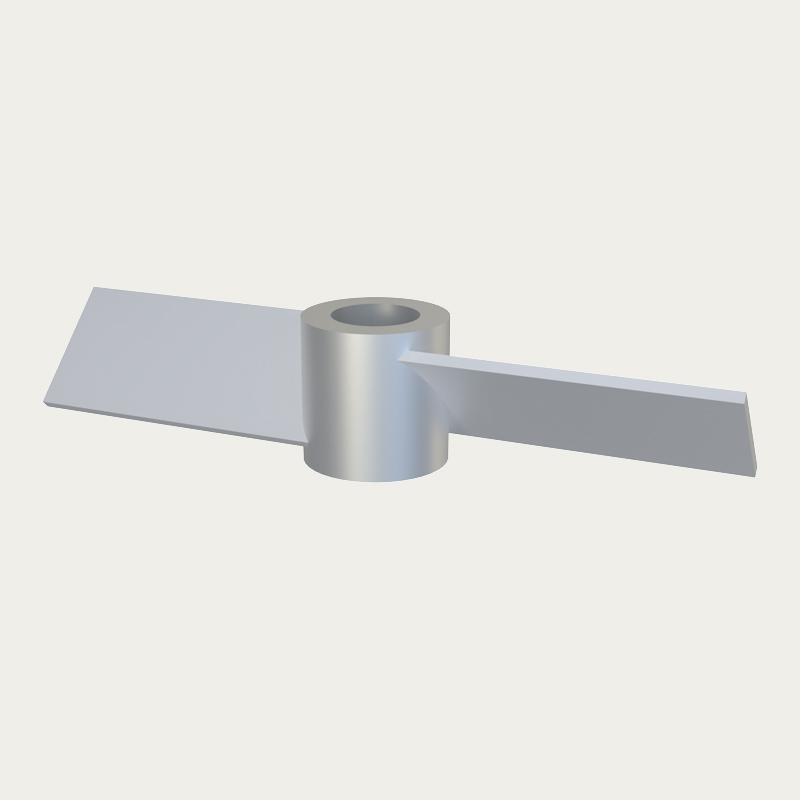
- Pitched-Blade Turbine (PBT): Balanced axial-radial flow, power number Np ≈ 1.2–1.5. Versatile across viscosities from 1–10,000 cP. The most widely specified impeller for general-purpose tank agitator applications including mixing, blending, and moderate solid suspension.
- Rushton Turbine (Radial Flow): High-shear radial discharge, power number Np ≈ 5.0. Optimized for gas dispersion and liquid-liquid emulsification. Standard choice for aerated bioreactors and extraction vessels. High energy input per unit volume.
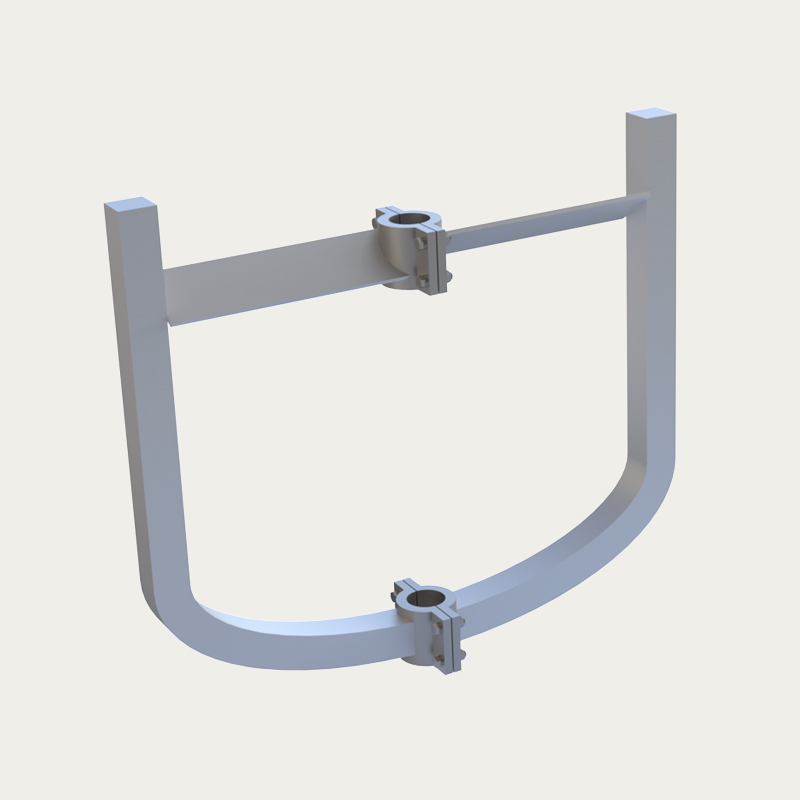
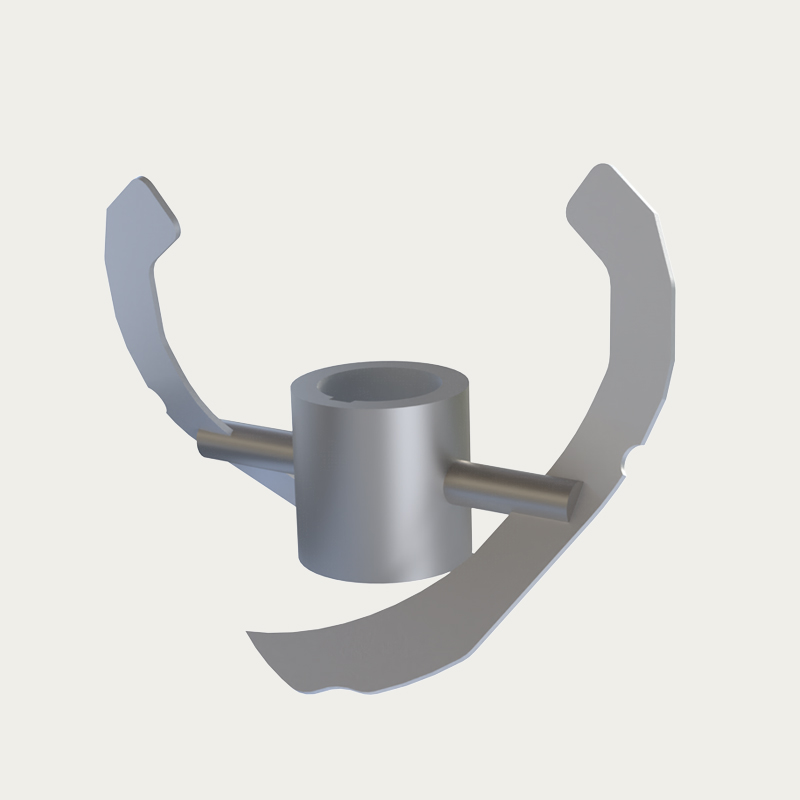
- Anchor Agitator: Designed for high-viscosity fluids (10,000–100,000 cP+). Large-diameter, close-clearance blade that sweeps the full tank wall, preventing dead zones and promoting heat transfer in jacketed vessels.
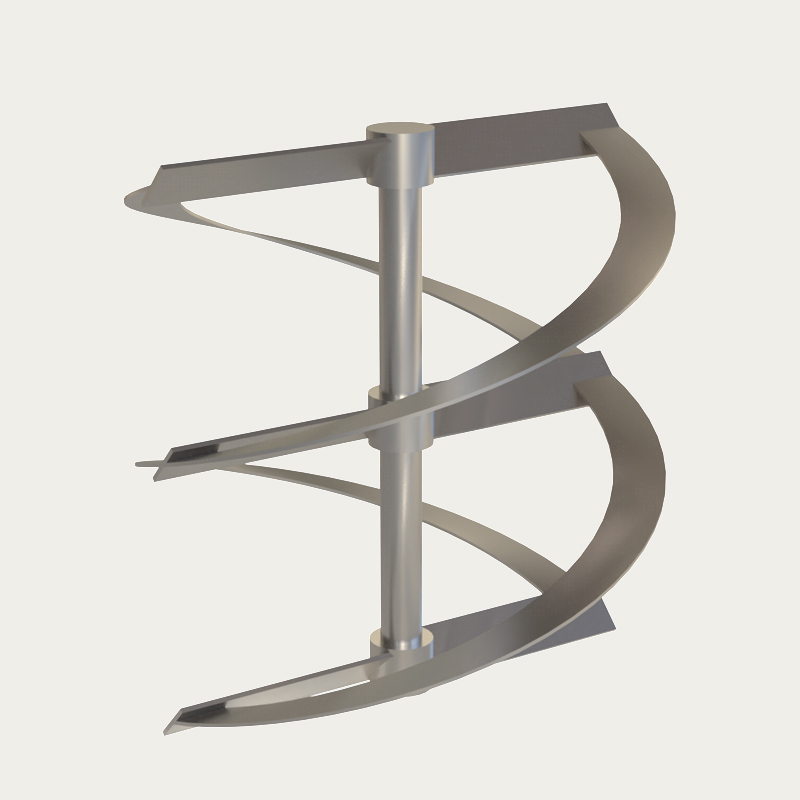
- Helical Ribbon: The preferred geometry for very high-viscosity pastes and gels (100,000 cP+). Rotating ribbon structure creates a toroidal flow pattern that folds material continuously from wall to center, achieving uniform blending without high-speed rotation.
Impeller Suitability Score by Fluid Viscosity Range (0–100)
The hydrofoil impeller scores highest overall because its aerodynamic blade profile converts rotational energy into directed axial flow with minimal turbulent losses, making it the most energy-efficient option for low-to-medium viscosity applications that represent the majority of industrial mixing workloads. The pitched-blade turbine's strong second-place score reflects its genuine versatility — it handles a wide viscosity range, performs adequately for both blending and solid suspension, and is straightforward to specify and source from any top entry mixer manufacturer. For custom industrial mixer projects with unusual fluid rheology or demanding process requirements, impeller geometry should be determined through computational fluid dynamics (CFD) modeling or pilot-scale testing rather than catalog selection alone.
Industries That Rely on Top-Entry Mixers
Top entry agitators serve as critical process equipment across a diverse range of industries. Their ability to handle everything from thin process water to thick polymerization batches makes them the dominant mixing technology in facilities where process consistency, scalability, and mechanical reliability are non-negotiable requirements.
Top-Entry Mixer Deployment by Industry Sector (%)
Chemical processing accounts for over one-third of all top entry mixer deployments globally, driven by the diversity of reaction vessels, blending tanks, and storage agitators required across the sector's vast product range. Water and wastewater treatment represents the second-largest segment, where water treatment mixers are used for coagulant dosing, sludge homogenization, equalization tank agitation, and nutrient blending in biological treatment stages. The pharmaceutical sector, while smaller by volume, is among the most technically demanding — requiring stainless steel agitators with hygienic design, validated cleaning protocols, and precise speed control for batch consistency in GMP environments.
How to Size a Top-Entry Mixer: Key Engineering Parameters
Correct mixer sizing is the most consequential engineering decision in any agitated tank system. Under-powered mixers fail to achieve blend time targets or suspend solids; over-powered units waste energy, increase mechanical wear, and may damage shear-sensitive product. The sizing process involves four interdependent parameters: tank geometry, fluid properties, process objectives, and power input.
Step-by-Step Sizing Process
- Define tank geometry: Record working volume (liters), tank diameter (T), and liquid height (H). For standard mixing, H/T ratios between 0.8 and 1.2 indicate a single impeller is sufficient; ratios above 1.5 typically require multiple impellers on a common shaft.
- Characterize the fluid: Determine density (kg/m³), viscosity (cP or Pa·s), and any non-Newtonian behavior (pseudoplastic, thixotropic, etc.). Viscosity drives the transition between turbulent (Re > 10,000) and laminar (Re < 10) mixing regimes.
- Specify the process objective: Define the target outcome — bulk blending, solid suspension, gas dispersion, or heat transfer. Each objective maps to a different impeller type and D/T ratio (impeller diameter to tank diameter, typically 0.25–0.50).
- Calculate power requirements: Use the dimensionless Power Number (Np) for the selected impeller: P = Np × ρ × N³ × D⁵ where P is power (W), ρ is fluid density (kg/m³), N is rotational speed (rev/s), and D is impeller diameter (m).
- Apply safety factor and select motor: Apply a 1.25–1.5× safety factor to the calculated power to accommodate viscosity variation, startup torque, and future process changes. Select the next standard motor size above this value.
Jiangsu Top Intelligent Technology Co., Ltd. (Wuxi Top Mixing Equipment Co., Ltd.), established in 2003, is a China-based industrial mixer factory and top entry mixer supplier specializing in mechanical mixing equipment and industrial intelligent control systems. As a technology-driven enterprise, the company provides full engineering support for mixer sizing, impeller selection, and custom industrial mixer design for applications across chemical, pharmaceutical, water treatment, food processing, and mining sectors. Their product range covers both standard catalogue units and fully engineered ODM/OEM configurations.
Relative Motor Power Requirement vs Fluid Viscosity (Normalized, 1 cP = 1.0)
Motor power requirements scale non-linearly with fluid viscosity, accelerating sharply as the process fluid moves from turbulent into transitional and then laminar flow regimes. At 100,000 cP — a viscosity typical of polymer melts and heavy adhesives — the required motor power is approximately nine times that needed for the same tank volume of water. This steep scaling relationship is why viscosity characterization is the single most important input to any industrial mixing equipment specification process. Engineers who underestimate fluid viscosity at operating temperature, or who fail to account for non-Newtonian flow behavior (where apparent viscosity increases under shear), routinely end up with undersized agitators for mixing tanks that cannot achieve design blend times or solid suspension targets.
Materials of Construction and Hygienic Design for Industrial Agitators
Material selection for an industrial agitator shaft, impeller, and wetted components must account for fluid chemistry, operating temperature, regulatory requirements, and cleaning protocols. The wrong material choice can result in corrosion-induced contamination, mechanical failure, or process yield losses from catalytic reactions between fluid and equipment surface.
- 316L Stainless Steel: The standard material for food, pharmaceutical, and chemical stainless steel agitators. Higher molybdenum content (2–3%) compared to 304 SS provides superior resistance to chloride-induced pitting corrosion. Surface finish Ra ≤ 0.8 µm is standard for hygienic applications; Ra ≤ 0.4 µm for USP/EP pharmaceutical service.
- Hastelloy C-276: Specified for highly aggressive chemical environments including concentrated acids, oxidizing media, and mixed acid/chloride systems. Carries a significant cost premium but eliminates corrosion risk that 316L cannot address.
- Duplex Stainless Steel (2205): Combines austenitic corrosion resistance with ferritic high strength. Suitable for high-chloride environments in water treatment and marine applications where weight and cost efficiency matter.
- PTFE/PP Lined Components: Used where metal contamination of the process is unacceptable — typically in semiconductor, fine chemical, or high-purity water applications. Lined shafts and impellers provide chemical inertness at the cost of reduced mechanical strength.
Frequently Asked Questions About Top-Entry Mixers
Below are the most common questions from engineers, plant operators, and procurement teams evaluating top entry mixer and industrial agitator solutions.
Q1: What is a top-entry mixer?
A top entry mixer is an industrial mixing device mounted vertically on the top of a tank or vessel. The motor and gearbox sit above the tank, driving a shaft and impeller downward into the liquid. It is used for blending, agitation, solid suspension, and heat transfer across a wide range of industries and fluid viscosities.
Q2: What is the difference between a top-entry and side-entry mixer?
A top-entry mixer mounts vertically on the tank roof and produces full-depth axial or radial flow suitable for a wide viscosity range. A side-entry mixer mounts horizontally through the tank wall, generating horizontal swirling flow best suited to low-viscosity fluids in very large storage tanks where energy efficiency at scale is the priority.
Q3: Which impeller is best for mixing?
For low-viscosity blending and solid suspension, a hydrofoil or pitched-blade turbine is typically the most efficient choice. For gas dispersion, a Rushton turbine is standard. High-viscosity fluids require anchor or helical ribbon impellers. The optimal selection always depends on fluid properties, process objectives, and tank geometry — there is no single universal answer.
Q4: How do you size a top-entry mixer?
Sizing requires tank volume and geometry, fluid density and viscosity, impeller type and D/T ratio, and target process outcome. Power is calculated using P = Np × ρ × N³ × D⁵. A 1.25–1.5× safety factor is applied before motor selection. For complex or non-Newtonian fluids, CFD modeling or pilot testing is recommended.
Q5: Why is my mixer vibrating excessively?
Excessive vibration in a tank agitator typically signals shaft imbalance, impeller damage or fouling, worn bearings, seal failure, or operation at a shaft critical speed. Check impeller condition and balance first, then inspect bearings and mechanical seal. If vibration onset is sudden, shutdown and inspection are recommended before continued operation to prevent shaft fatigue failure.
Q6: How often should industrial mixers be maintained?
For most continuous-duty industrial mixing solutions, bearing inspection and lubrication should be performed every 2,000–4,000 operating hours. Mechanical seals typically require inspection every 6–12 months. A comprehensive annual overhaul covering impeller, shaft, gearbox oil, and coupling alignment is standard practice for mixers in critical process applications.
Q7: What motor size is required for a top-entry mixer?
Motor size is determined by fluid viscosity, impeller diameter, rotational speed, and tank volume using the power equation P = Np × ρ × N³ × D⁵. Typical installations range from 0.25 kW for small laboratory tanks to 200+ kW for large industrial reactors handling high-viscosity fluids. Motor sizing should always include a startup torque analysis — gearbox selection depends on both running torque and peak startup torque requirements.
Q8: What industries use top-entry mixers most?
Top entry mixers are most widely used in chemical processing (35% of deployments), water and wastewater treatment (22%), food and beverage production (16%), pharmaceutical manufacturing (12%), and mining/mineral processing (10%). Their ability to handle both low and high-viscosity fluids across a wide tank volume range makes them suitable for virtually any industry requiring controlled liquid agitation or blending.


- No. 118, Chuangye Road, Jieshou Town, Gaoyou City, Yangzhou, Jiangsu Province, China
- [email protected]
- Landline: +86-0510-83383966 +86-0510-83390667
- Telphone: +86-0510-83390667
- Mr. Chen: +86-18061519769 Mr. Xu: +86-13706183972
- Mr. Lu: +86-18915337056
- Product Link
- Top-Entry Mixer
- Bottom-Entry Mixer
- Side-Entry Mixer
- SIGN UP
- Sign up to be the first to find out the latest news from Top Intelligent Technology
- Subscribe

